


The UK is about to enter a week of mainly dry weather, which brings the drought conditions back into focus.
Storm Austen and Storm Boelo brought welcome rain last weekend. Abbey St Bathans in SE Scotland recorded 77.6 mm during Storm Austen, while 134.4 mm was recorded by the A87 in the NW Highlands during Boelo.There has been some easing and part recovery in Britain with changes to drought status and water scarcity levels but parts of SE Britain remain in severe drought.
"The rainfall improved river flows and reservoir storage, but significant water resource pressures remain." EA
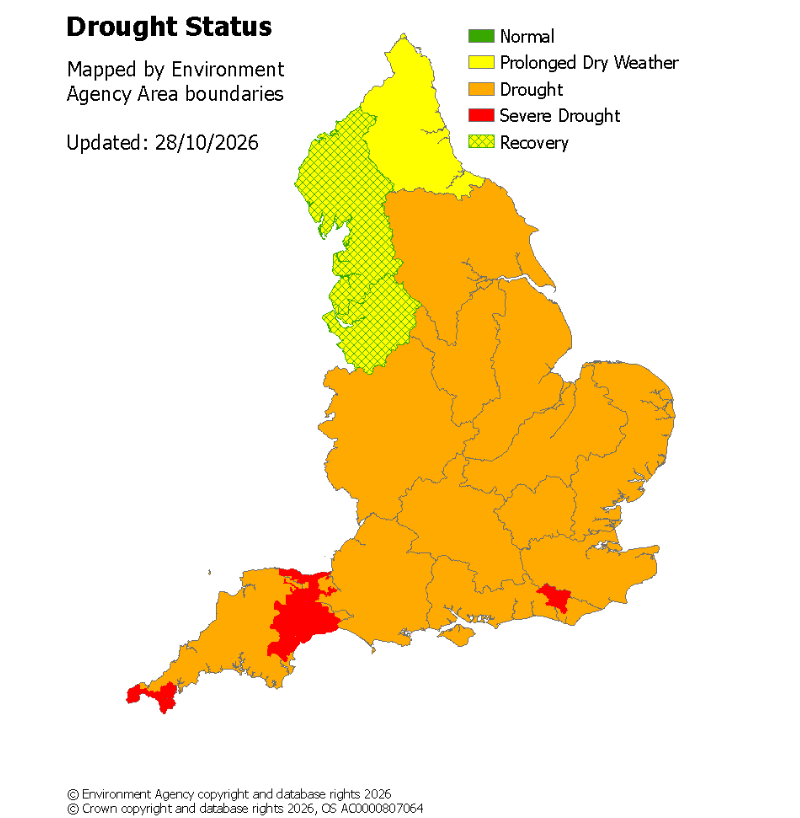
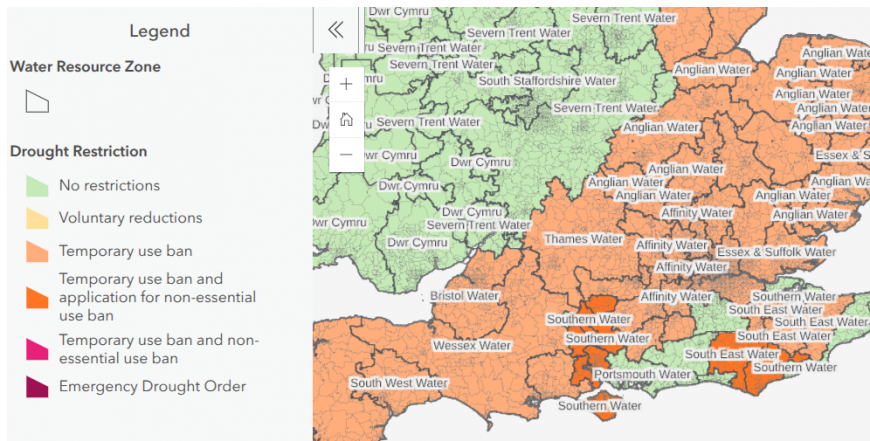
This means that restrictions continue in specific locations, whereas more widely the pleas to use water wisely persist. Cumbria and Lancashire, Greater Manchester, Merseyside and Cheshire moved to recovery on 28 October.
Stormy weather can also cause power outages that in turn can impact water treatment works temporarily resulting in water supply interruptions. However, we should all have three days worth of food and water stored anyway. (Be Ready campaign).
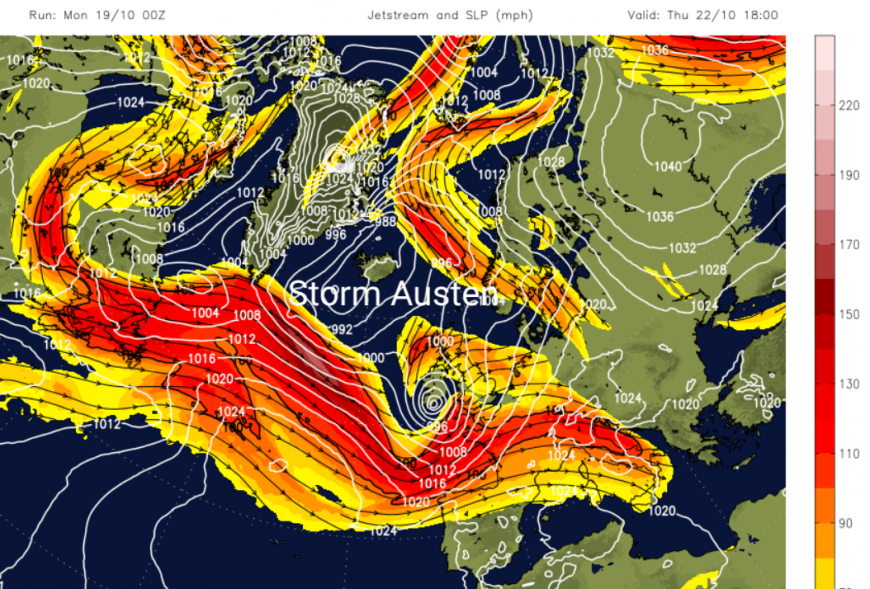
A strong jetstream helped three areas of low pressure develop last week; Austen, Boelo and a third low for Monday night into Tuesday. As we move into November, the jetstream is shifting further north near Iceland as high pressure builds over the UK.
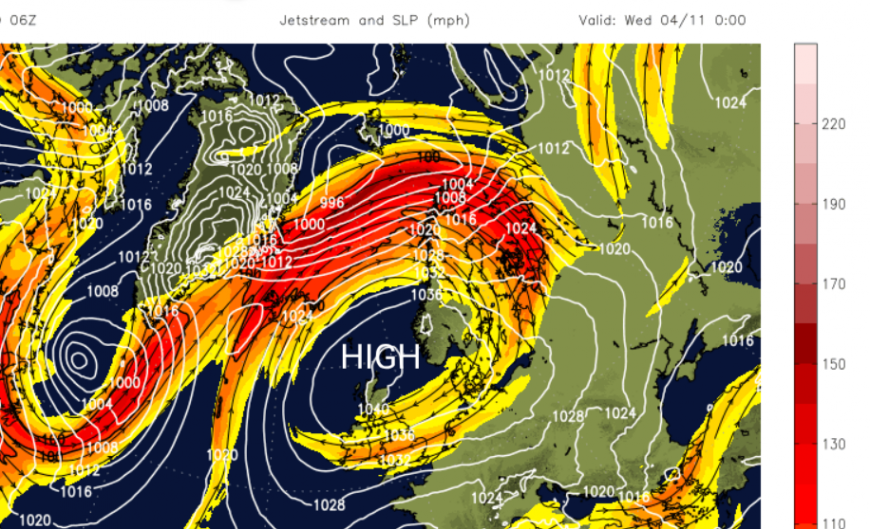
There will be frontal rain in the far northwest Scotland on Saturday morning which drifts over more of mainland Scotland and brushes Northern Ireland later in the day. This front will weaken over northern England, then the Midlands, on Sunday 1st. Around the high pressure, showers will arrive off the North Sea for eastern England and particularly Kent by Monday night. This E/NE showery flow will bring outbreaks of rain at times midweek but it won’t amount to much, and isn’t enough to get to the 120% of average rainfall needed to offset the deficit from earlier this year.
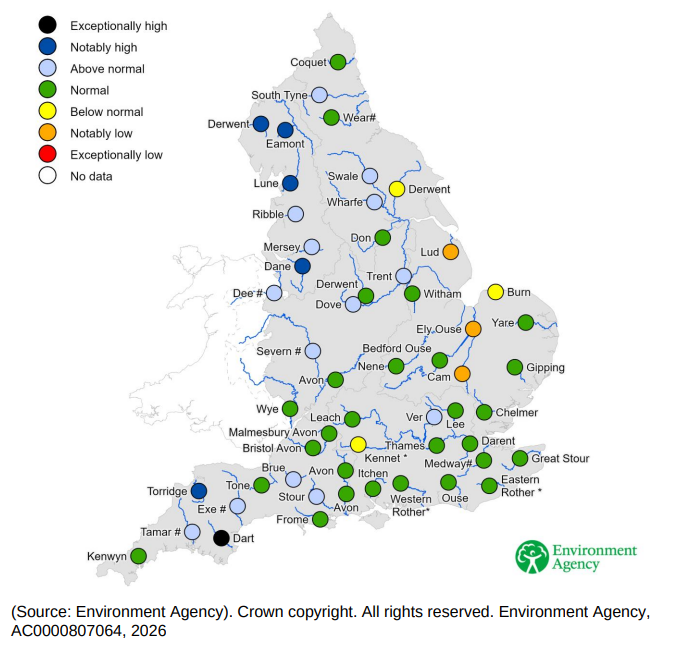
River levels Wednesday 21 October to Tuesday 27 October 2026 EA
Those in Severe Drought are: parts of Devon and Cornwall and Wessex Areas that are supplied by Wimbleball reservoir, Kenninck, Tottisford & Trenchford (KTT) and Venford reservoirs, and Stithians and Drift reservoirs and parts of Solent and South Downs and Kent and South London Areas that are supplied by Ardingly reservoir.
At this time of year into winter, we need a good amount of rain to refill the rivers, reservoirs and to replenish the groundwater in aquifers. England’s drought is the worst in decades in parts of the south. One weekend with heavy rain is not going to undo the months of water deficit. The dry soil has absorbed some of the downpours, and where there was heavy and persistent rain, often it will just run off into the sea.
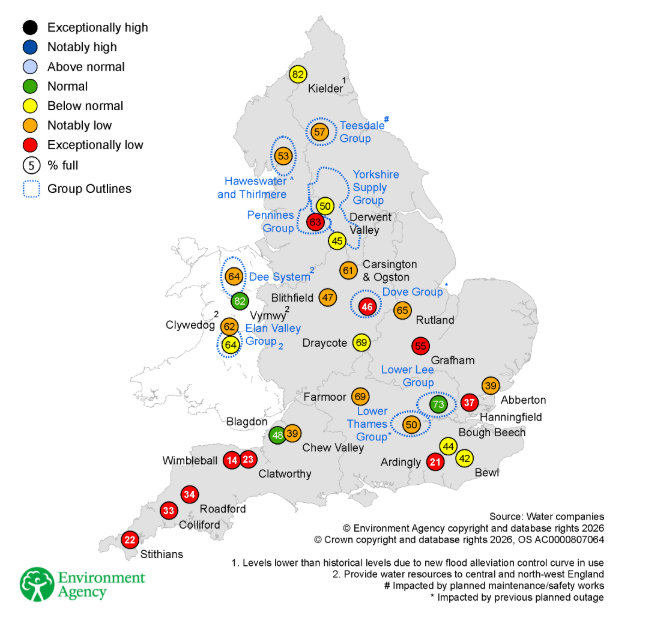
Groundwater levels decreased at most sites, as soils need to be saturated before rainfall can effectively recharge resources. Ten reservoirs or reservoir groups are now classed as exceptionally low, see above.
Mid month, about 80% of England was in drought which covered around 50 million people. Other areas in southern England had moved to Severe Drought with ongoing discussions around how to protect public water supplies.
Even with decent rain falling last weekend, we would be expecting significant rain in October. People and businesses continue to use water, taking from the supplies. England needs more than average rainfall, over six months.
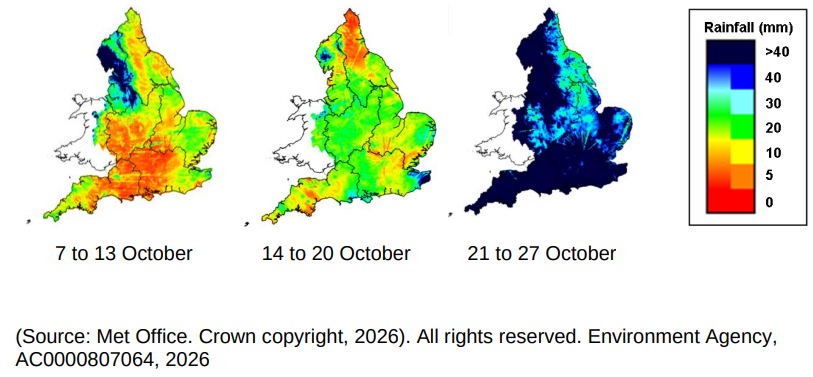
Wednesday 21 October to Tuesday 27 October 2026 was the wettest reporting week across England since October 2024. Rainfall totals for October to date (27th) range from 99% of the long-term average (LTA) in central England to 120% in the northwest.
Wales has been recovering from drought with no restrictions remaining for Welsh Water customers.
“The restrictions were introduced as a short-term emergency measure following several weeks of exceptionally high demand for drinking water during the warm weather…We remain concerned for environment, land management, agriculture and water users.”
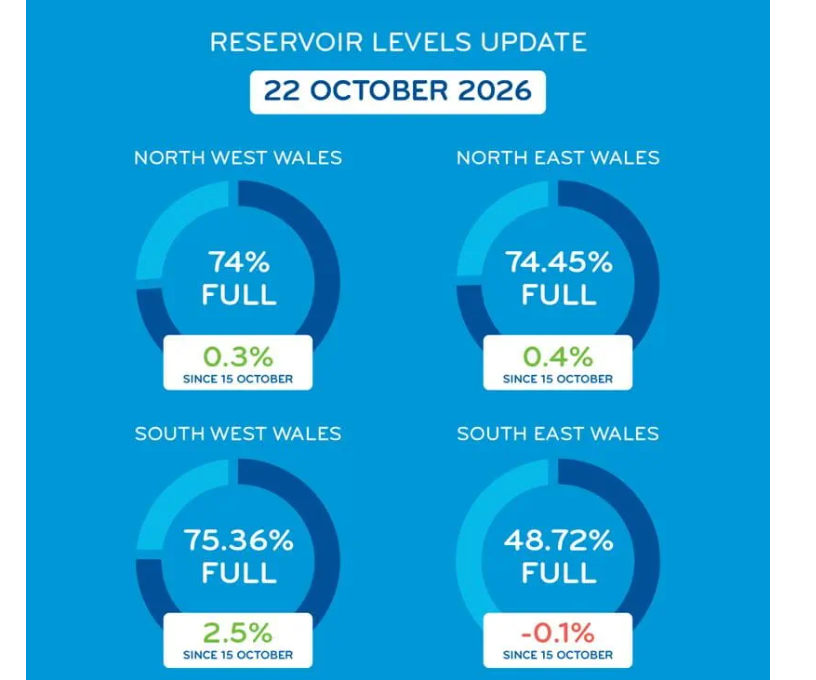
Reservoir levels from before the storms
“We fully expect that the impacts of the hot, dry summer will be felt for some time. These include ongoing pressures on those dependent on groundwater resources, including terrestrial habitats and species, and those on private water supplies. We also expect the continued knock-on impacts from dry, hot summer to the agricultural sector.” Welsh Water
Water supplies in Wales are now in a healthy position but this dry week could stall the recovery, after the welcome rain from the stormy October weekend. Wales has very little dependence on groundwater supplies which respond in a slow, steady way. “This reliance on surface waters can increase vulnerability to short periods of low rainfall as river levels change more quickly than groundwaters.”
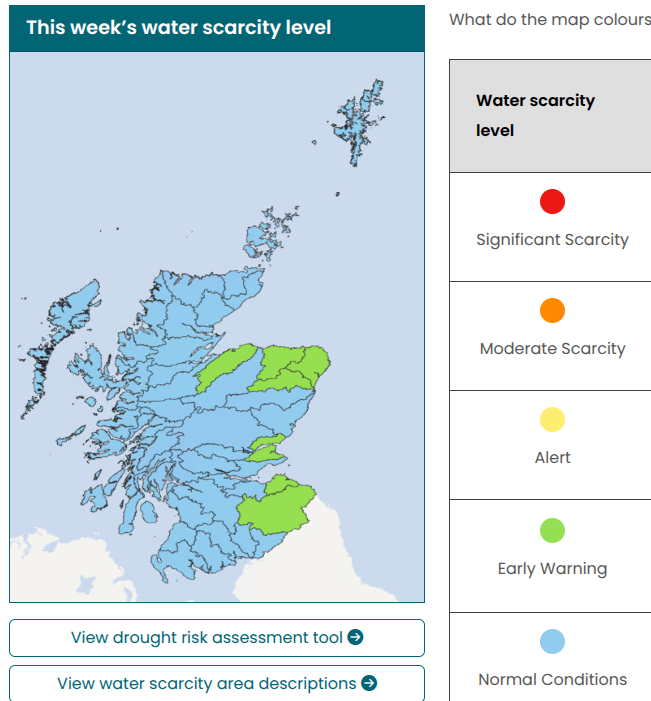
In Scotland, there has been decent rainfall especially in the west. Austen brought around two inches of rain to parts of Lothian which is needed as groundwater levels remain very low in eastern Scotland. Longer term rainfall deficits remain in the east and there have been issues with very dry summers in recent years.
The water scarcity levels have settled as SEPA end their weekly water scarcity reporting for 2026.
“It has been another significant drought year for eastern Scotland. Rainfall and snow over autumn and winter will be critical for the water scarcity risk into 2027.” SEPA
What is being done?
There is more monitoring of reservoir and river levels in England, and more compliance checks on businesses that abstract water from rivers and groundwater stores. Maintaining public water supplies has taken priority over environmental protections, as water is moved between some areas in southern England. Restrictions on use continue for households and businesses in some regions.
When we have lengthy dry and hot months this leads to water supply issues but when heavy rain does arrive, there can be flooding, especially in autumn when fallen leaves block the drains. We’ve not heard anything yet from the new Flood and Drought Resilience Taskforce. This should be the time of year when autumn rains replenish our natural stores. That won’t be happening for the start of November.
The advice across the UK remains to use water wisely, it is a precious resource.
Loading recent activity...