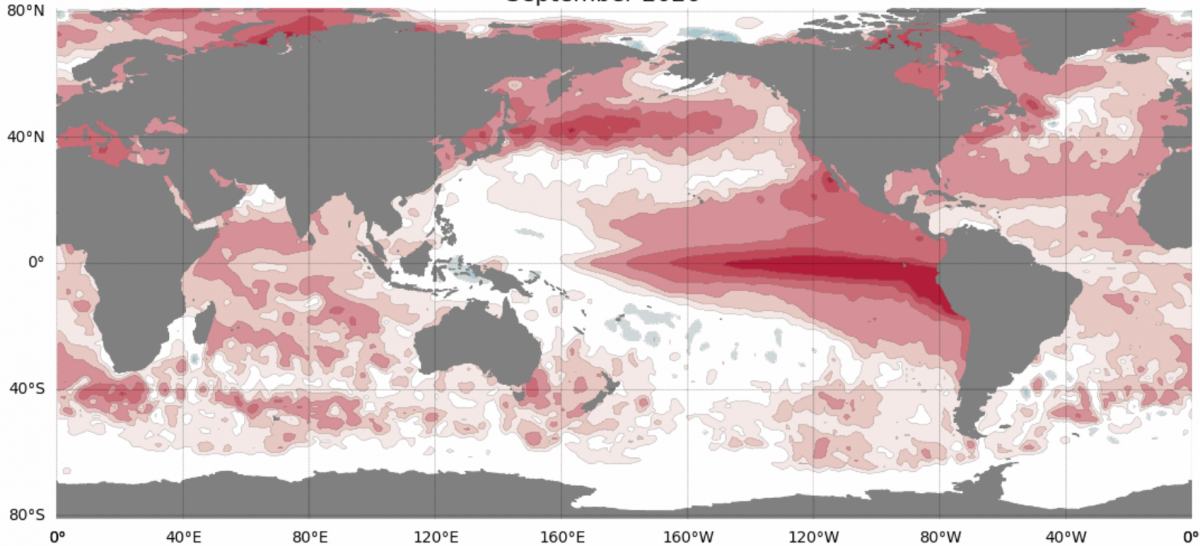


Image above - Difference from average, Sea Surface Temperature for September 2026 BoM
Preparation and resilience are in the news, sometimes slightly mockingly, as news articles reference what should be in your “stockpile” for an unspecified event. Others have brought British humour to the topic, starting their list with porridge oats but ending with 345 bottles of wine “ to help take the edge off” and 890 bags of Hula Hoops (@eyestoriesuk). Community resilience plans are being worked on locally. Where could people head to or contact, if there was a lengthy power outage, to a community hub building or local government building? This would vary for towns, cities, rural villages and the Islands.
You could read the National Risk Register and see the top issues that are worrying the UK government currently. Maybe not just before bed-time. We are being asked to store enough non-perishable food for three days and water. Also, to think about what might happen if the power went out for a while, also communications and maybe the water supply. We have had provisionally the hottest summer on record for the UK, no surprise for those in England and Wales where drought was also declared. Suffolk and Cairngorm National Park saw the emergency services battle wildfires this summer and the impacts on local people and businesses.
We know that our climate is changing and heating. This is impacting the world in different ways, with the poorest people bearing the brunt of this. Our changing climate and extreme weather events can lead to flooding, heatwaves and drought, energy fluctuations, and food insecurity, displacement and war. Also biodiversity losses and health impacts.
UN: “Fossil fuels – coal, oil and gas – are by far the largest contributor to global climate change”, as they are used by humans to produce electricity and heat. We have another layer brewing now, a natural variation, but one that is surging in ways not seen in our lifetime, El Niño.
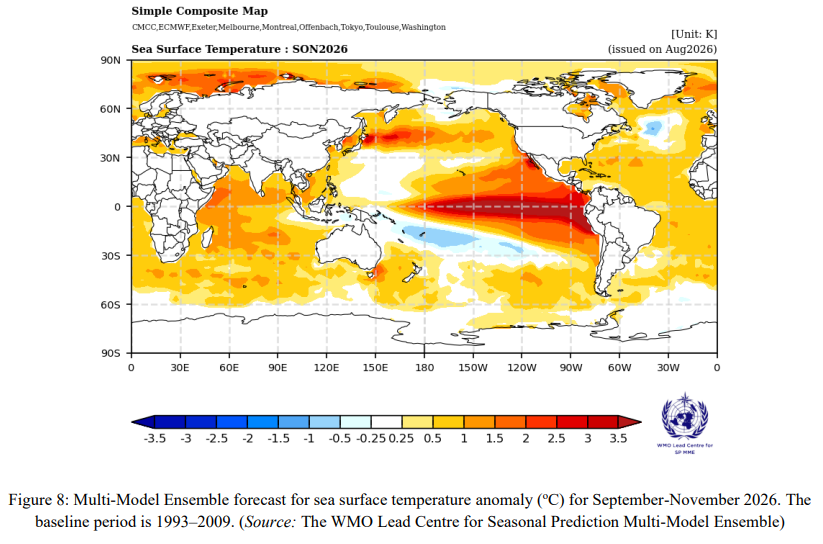
The El Niño that is developing is being called “super”, “historic”, “unprecedented”. 2026 is producing the strongest El Niño in decades. Possibly the largest since the 19th century and is being driven by exceptional ocean heat
UN “The El Niño climate phenomenon is strengthening, and the risks are growing. The World Meteorological Organisation (WMO) forecasts that it will persist through February 2027 and intensify into a very strong event in the coming months.
This could significantly shift rainfall and temperature patterns worldwide, fueling floods, drought and extreme heat. WMO calls for more preparedness and early warnings to save lives and livelihoods.”
We have daily/weekly weather, our seasons and variations within these. Our global climate is changing and heating, but there are other variations to layer onto Climate Change.
The phrase ‘El Niño' may be familiar, but this is the ENSO cycle, the 'El Niño Southern Oscillation', where 'Southern Oscillation' is the term for atmospheric pressure changes between the east and west tropical Pacific that accompany both El Niño and La Niña episodes in the ocean.
“Such events are a consequence of strong and extensive interactions between the ocean and atmosphere. They are associated with widespread changes in the climate system that last several months, and can lead to significant socio-economic impacts affecting infrastructure, agriculture, health and energy sectors, for example.”
UN Secretary-General António Guterres “El Niño is being supersized before our eyes. The science leaves no room for doubt: the planet is in uncharted waters, and those waters are heating up. Sea surface temperatures are rising, temperatures keep climbing, and the world is in the danger zone of extreme weather.”
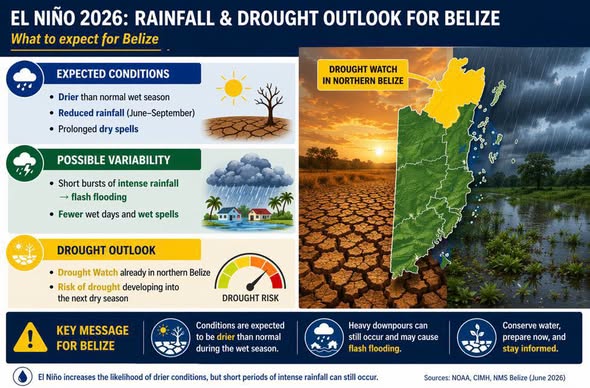
The impacts are already being witnessed: drier regions, which raises the risk of drought and wildfires, traffic in the Panama Canal is being reduced due to low rainfall, with daily auction slots becoming highly sought after. “The ongoing Indian monsoon season has seen less rainfall than normal, and satellite rainfall estimates show that parts of East Africa, Central America and SE Asia are experiencing record dry conditions during what should be their rainy seasons.” University of Reading.
Other areas will see higher rainfall leading to flooding and landslides. El Niño also changes the conditions for cyclone seasons; the current Atlantic season has been suppressed thanks to increased wind shear. In the Pacific, with warmer waters, there can be more typhoons/hurricanes.
“We are already seeing disruption and devastation from droughts and floods, and we expect these impacts to increase as El Niño intensifies,” said WMO Secretary-General Celeste Saulo.
In Australia, the Bureau of Meteorology (BoM) has had a webpage dedicated to ENSO forecasting for many years. You may see the Niño3.4 index value mentioned; this is one chosen sea region for monitoring Sea Surface Temperature (SST) changes.
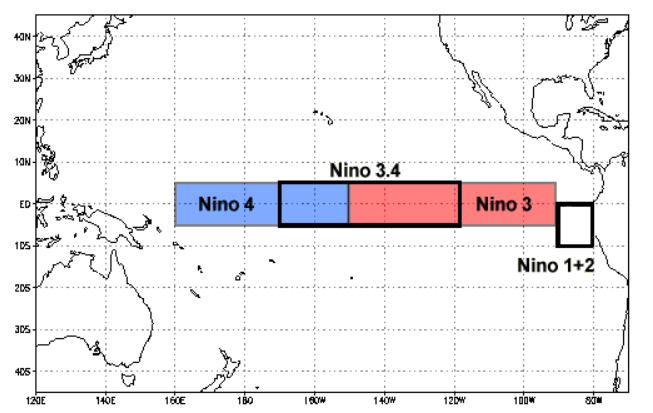
“El Niño is firmly established. Both oceanic and atmospheric indices reflect values consistent with a strong El Niño, with further intensification likely during spring. The latest relative Niño3.4 index value for the week ending 30 August 2026 is +2.45 °C, well above the El Niño threshold (+0.80 °C)... Relative-Niño3.4 values are forecast to reach levels above the warmest observed since reliable records began in 1950.” BoM
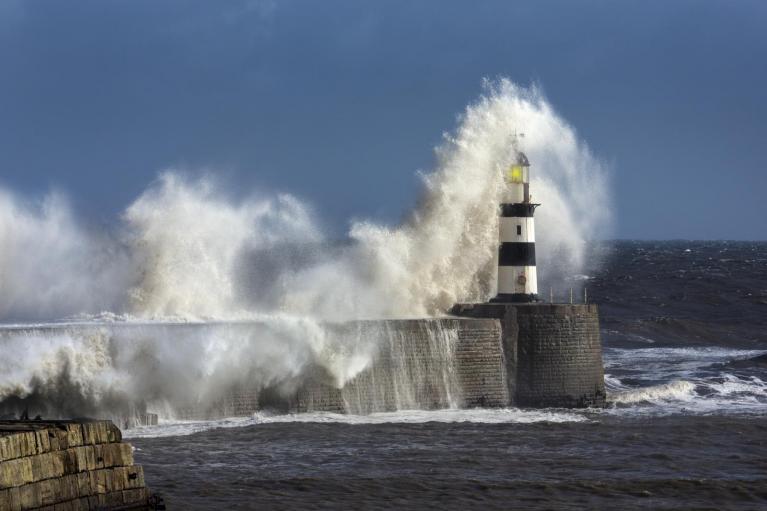
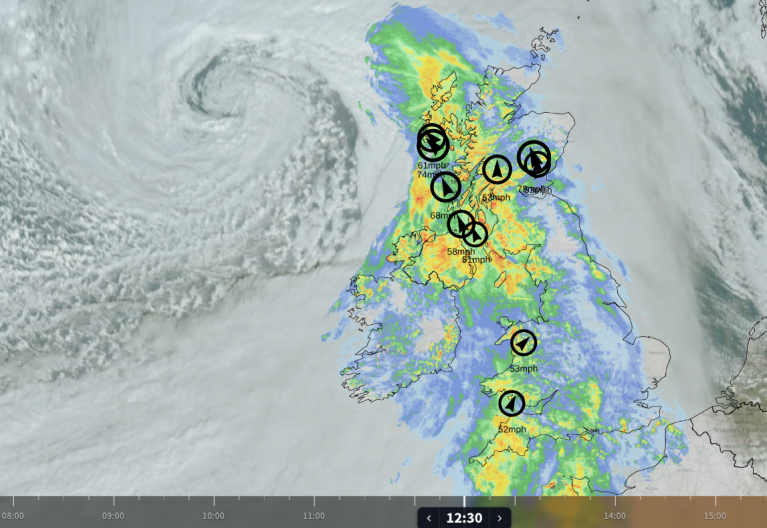
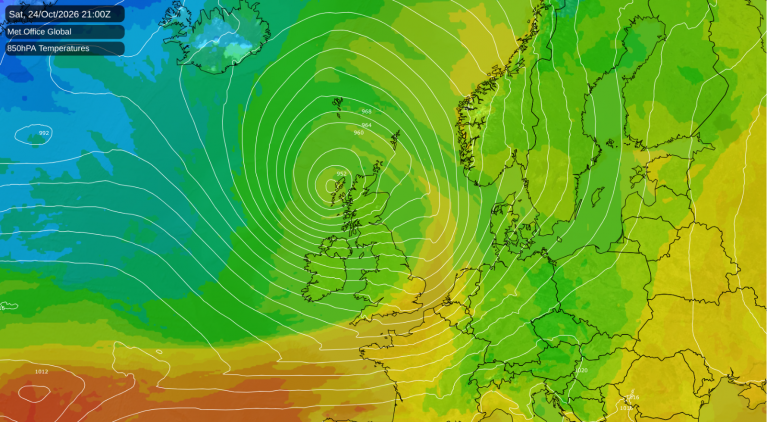
Around the world, areas that are already truly struggling are likely to suffer further from this extra layer. Not only the effects of climate change, but also these enhanced El Niño conditions. For the UK and NW Europe, there is the possibility of a wetter and more stormy autumn and early winter. The impacts of a strong El Niño are less clear for our part of the Earth. Sometimes late winter can be much colder. Stormier weather would bring heavy rain, so again we veer dramatically from heavy rain and flooding in winter to hardly any rain with drought in summer, then possibly back to too much rain. Stormy weather brings the risk of disruption and power outages.
"El Niño events release a lot of heat from the ocean into the atmosphere, adding to the overall climate change direction of travel, so 2027 is set to be the warmest year on record.” University of Reading. This would overtake 2024, which is currently the hottest year on record, so far.
We often forget, once the weather changes, what we have endured. As the autumn rains begin, will the drought and yellow grass of summer fade from our minds? Or that ‘someone’ will sort all this, keeping the electricity, gas, and water supply going. The mobile phone signal, the internet, our ability to pay electronically at our fingertips. The local resilience planning and your emergency three-day stores are part of a bigger picture.
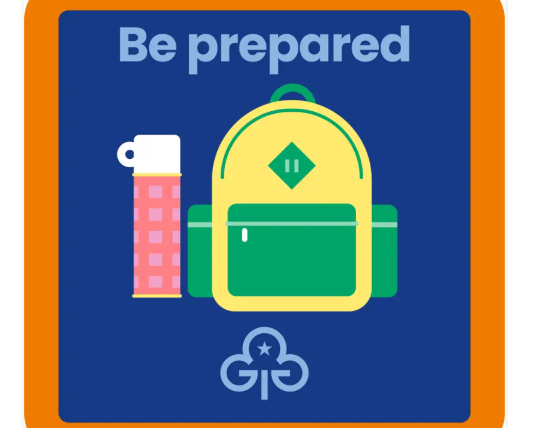
Back in 2018, Girlguiding launched a set of new badges, including their “Be Prepared” interest badge. The first clause was to pack a 72-hour bag. Getting the young members to think about what they would need if displaced or flooded, or perhaps stuck in a lengthy power cut. We invited SEPA, the Scottish Environment Protection Agency, along to help us, and it was one of those sessions that really stood out, hopefully not in a scary, but thought-provoking way.
Last month, the UK government asked people to begin preparing an emergency grab bag, and advised households to store emergency supplies, including bottled water and non-perishable food, to survive for three days during a national emergency. I’ve been volunteering for Girlguiding for decades and now have a new focus to revisit the topic with my Ranger Guides. And why not start that conversation?
“If an emergency did happen in your area, how would you manage? Emergencies such as flooding, fires and power cuts can affect us all. There are simple and effective steps you can take to be more prepared.” GOV.UK
As World War II started, people were told to prepare by building shelters in their gardens. Imagine how that felt and was received. Some will have got on with it, others would have sneered from their kitchen window, others lived in the countryside so this bit of advice might not have been so relevant.
National Archives: “Experts said that bombing would kill hundreds of thousands of people. So new plans were made for mass evacuation, the construction of large public shelters, and the erection of small units in private gardens (“Anderson” shelters) and inside houses (“Morrison” shelters). Although the War began in September 1939, bombing of Britain did not start immediately. People developed a false sense of security and were not keen to have shelters. Once heavy bombing began, from the summer of 1940 onwards, shelters became more popular.”
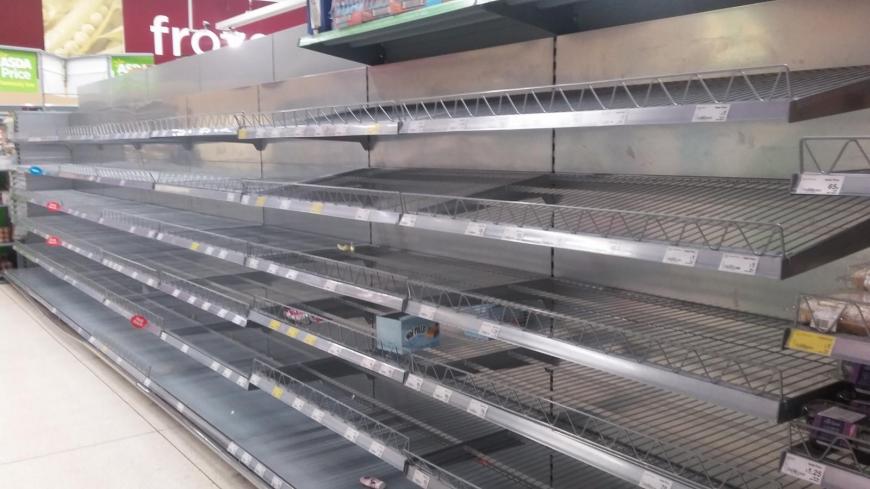
When the Beast from the East was clearly on its way in 2018, trusted forecasters could say with high confidence that a spell of severe cold and significant snow was coming for eastern Britain. It was going to disrupt food and milk supply routes, but some people were still surprised when the delivery trucks could not get through. Warnings and advice can be given, and resilience plans can be worked on, but some people will respond and others won’t. That is life.
Iberia and SW France were hit by a widespread power outage in April 2025, with the resulting blackout causing traffic chaos in cities and bewilderment into the evening. Think about the COVID-19 pandemic; few would have imagined that.
Digital failures, cyber attacks, energy network disruption, terrorism, water contamination, heatwaves, storms and flooding. The list goes on with a whole lot of planning. Whatever plague may befall us, we are being encouraged to prepare.
Household stores
The current advice is to buy a few bits each week and create a store of foodstuffs and water. There are other items listed too. Any of us could experience a power cut in an autumn storm. Those who live in more rural areas expect a power cut a few times a year. In towns and cities, we are far too comfortable with the fact that our electricity and water should continue. Those who lived through the 70s will remember the rolling blackouts. Are GenZ on this? Torches, a battery-powered or wind-up radio, and knowing how to turn off your electricity and water supply. Apparently, your gas shut-off valve is next to your gas meter!
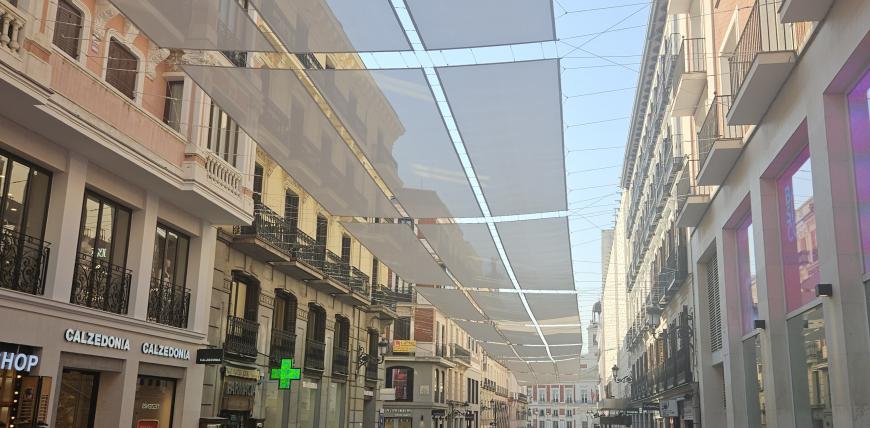
Climate Change and this natural layer of El Niño (although a supersized one) compound existing vulnerabilities. If you can afford air-con, then heatwaves aren't as stressful or harmful, the same if you can go to an air-conditioned workplace. If you have a garden or a nearby park with shelter under trees, this can make a difference rather than being confined to poorly built high-rise flats. Is the healthcare provision of good quality, and able to function?
We consume a lot of gas here in the UK, but don’t have much domestic gas storage capacity, which makes the UK exposed to market volatility. The latest update to the national Risk Register does add seven new risks but says, “The disruption of Russian gas supplies to Europe risk has been removed as reliance on Russian gas imports has significantly reduced.” Does this update link to the decision to approve the Jackdaw gas field which could be operating by winter 2026/27? So more fossil fuels.
It’s a complicated picture politically. Short-term and long-term decisions and investments whilst balancing demands from the voting public. Another addition to the Register is “interference in UK democratic process – to explore threats to democracy and potential interference.”
What can you do?
The warning systems for countries around the world has been a focus for the UN, “Early Warnings for All” and here in the UK, developing the emergency alerts and severe weather warnings and flood warnings has been important work. Learn about how they function and what they mean. Buy a few bits and a bottle of water; start your store - maybe make a list of the use-by dates too. Volunteering locally is also a great way to get involved in all sorts of projects or community decision-making.
Loading recent activity...