


It's Brussels Sprout harvest time. Over a quarter of all UK sprouts will be delivered to supermarkets and greengrocers ready for your Christmas Dinner.
Brussels sprouts are a steady, slow-growing crop fond of a sunny, but not too hot, summer. Ideally, this should be followed by autumn rains and then a cold snap before the main Christmas harvest. They have been enjoying “the sunniest year on record for the UK” Met Office. Many crops have been impacted this year by drought, but there was rain in autumn and quite a lot in December, which hasn’t been ideal for the tractors trying to reach our Christmas veg. Harvesting is a slow and expensive business but time-critical for the festive peak. Milder weather can mean that the crop matures early and the sprouts are larger. Grading for size and quality is part of the expense; sprouts can be too big or too small for the market. In October 1992, Bernard Lavery of Llanharry, Rhondda Cynon Taff, Wales grew a sprout that weighed 8.3 kg (18 lb 3 oz). A world record as the heaviest Brussels sprout!
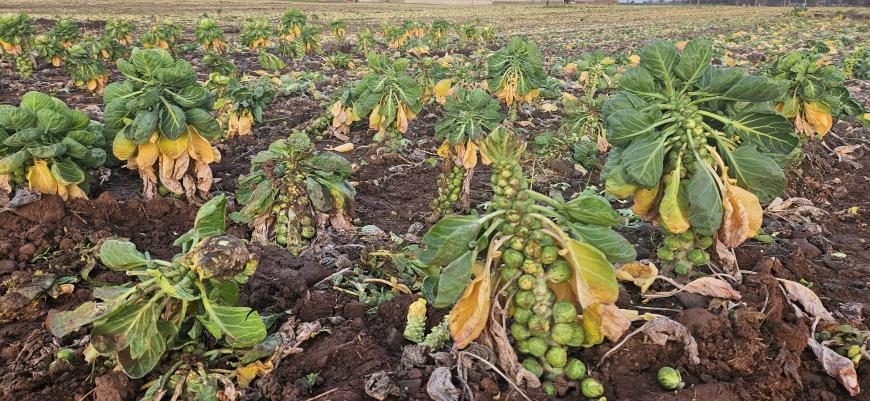
The fields of eastern Scotland and Lincolnshire are emptying of these quirky brassicas. These coastal areas offer some protection from frosts. The squat stalks with wide leaves and ‘buttons’, the sprouts, are attached to the main stem.
Brussels sprouts get a hard press, but if you like them, you love them. And would a traditional Christmas dinner be the same without a few of these green miniature ‘cabbages’ nestled on the plate? If you were put off sprouts as a child, the news is that they are now much improved. Modern Brussels have undergone breeding work in the 1990s to reduce the bitterness (and help with resistance to pests). There is no need to boil sprouts for long, which was often the memory from school dinners. Now these brilliantly timed winter vegetable can be sweeter rather than bitter and are a source of vitamins C and D, folic acid and dietary fibre. You can always head off for a walk after Christmas dinner if you are feeling the effects of that fibre. It's looking cold but mostly dry for Christmas Day 2025 in the UK.
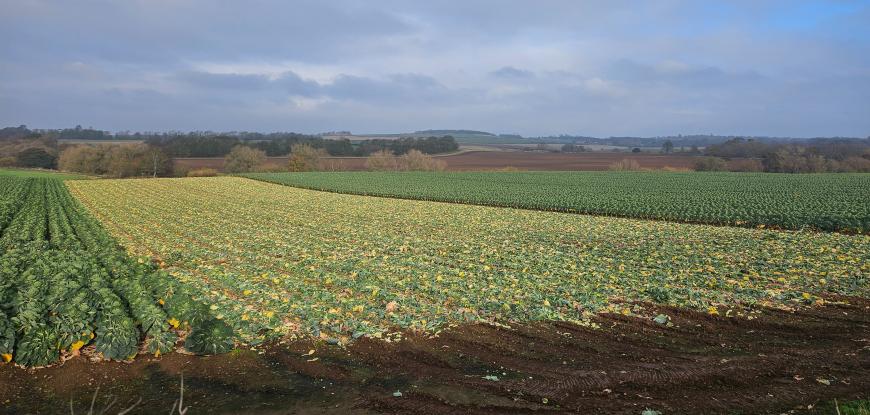
Sprouts vary in size up the stalk, with the largest ones nearest the ground and a reduction in size skyward. The large saucer-like leaves are designed to catch and hold rainwater, supplying the plant and the growing sprouts. This can make the harvesting very wet for pickers, thanks to the mini lagoons of water.
They are a hardy and robust plant but do take six months to grow here in the UK. Their name comes from a historical popularity in Belgium with a similar cool (rather than tropical) climate. They are a classic winter vegetable and benefit from a frost. They need fertile, well-drained soil but that should have some moisture when planting. In 2024, high rainfall delayed some planting due to waterlogged fields. Full sun for the summer months, with a gentle heat but if there is a lack of rain, the fields will be irrigated. Autumn rain is important and that did arrive, even though eastern Scotland has continued with a rather dry year overall. And there was a cold dip with frost as we moved into the second half of November.
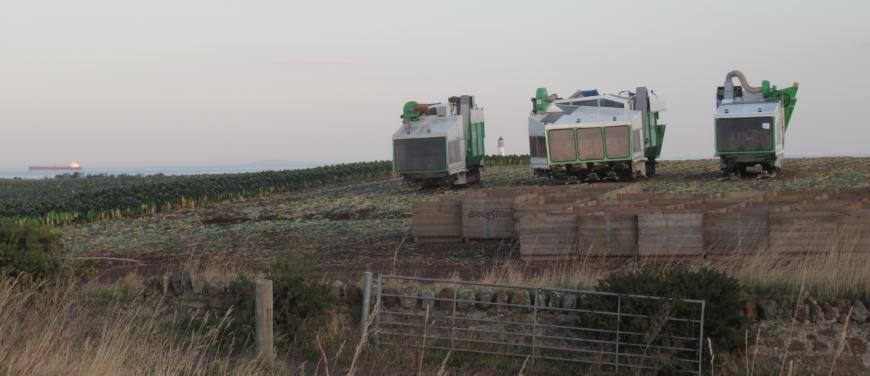
As the weather cools down, the plants redirect their energy from growth of green leaves and the buttons, to survival. The tops of the stalks are also mechanically chopped at this stage to help focus energy. The size and the flavour then improve as bitter starches convert into sugars. It can’t get too cold, as sprouts are damaged below -10C, so if a particularly severe frost is forecast, backgarden growers can bring in some and keep them in the fridge. For large scale growers, the whole lifecycle of these sprouts is about timing and climate. The cooler weather is important for sweet, tight sprouts.
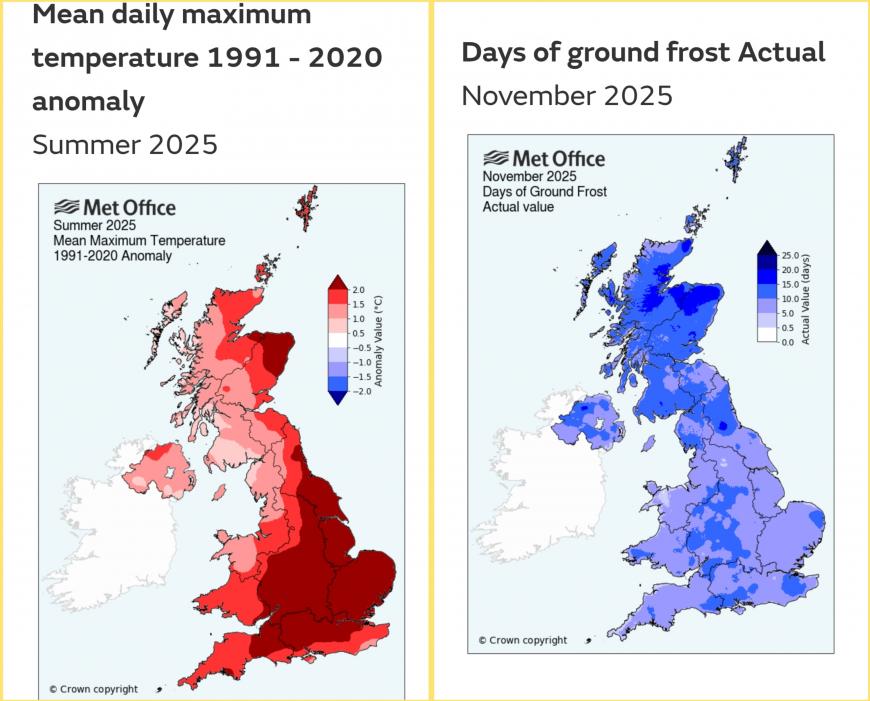
Areas with harsher winters won’t support sprout growing or the crop has to be harvested in late autumn, and there are varieties which have a slightly shorter growing season. Similarly, when planting the small plugs out in spring, they must avoid the frosts. Frosts would stress the delicate plants, so farmers in Fife wait until mid-April to try to avoid the cold. If the plants were repeatedly frosted, they might stall and later bolt, all without any sprouts. Staying mild through autumn also affects the taste and harvest timing.
Five fun facts about Brussels sprouts from the University of Warwick
Tell your server that as they try to spoon extras onto your plate. Overall, they are a wonderful, nutritious winter vegetable and they have been through a lot to get to your table. Eat your sprouts, just a few, go on!
Loading recent activity...