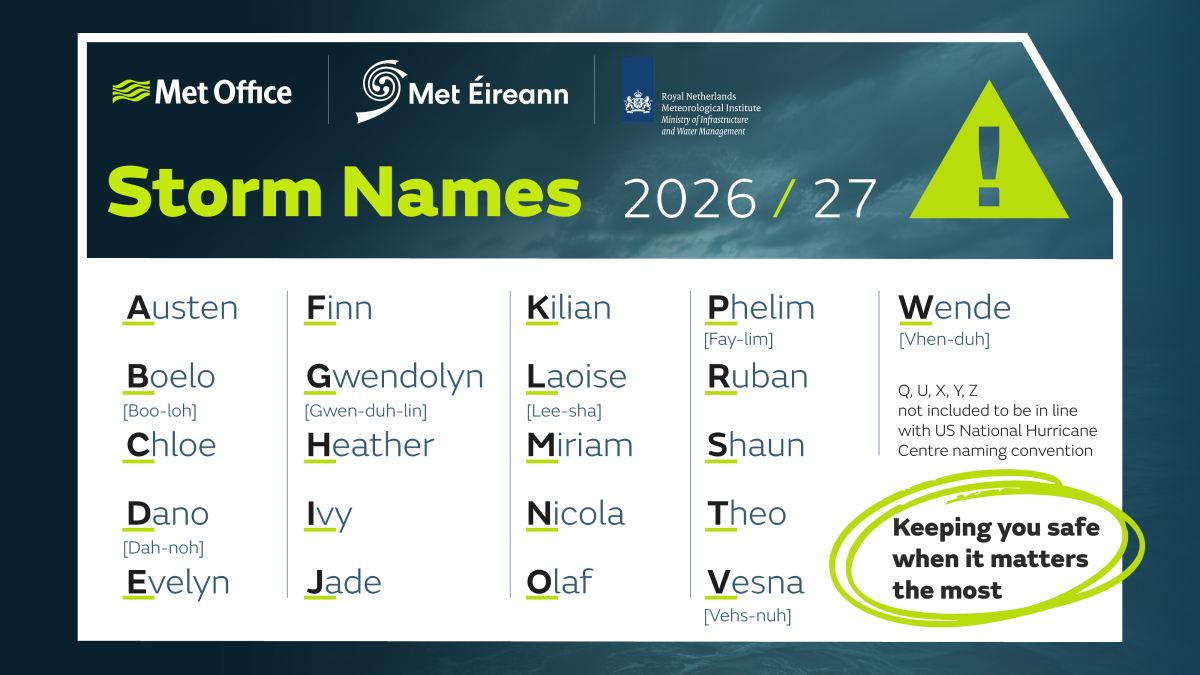
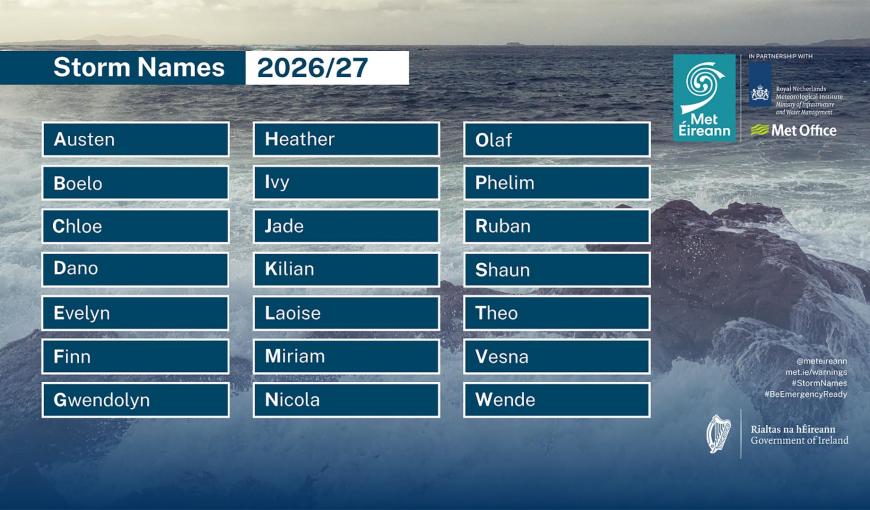
The new list of storm names starting in autumn 2026 have been released. The first three names are Austen, Boelo and Chloe but it also includes Gwendolyn, Heather, Miriam, Nicola and Olaf.
The partnership of the UK Met Office, Met Éireann in Ireland and KNMI in the Netherlands, has revealed the storm naming list for the 2026/2027 season. More than 40,000 names were submitted to the Met Office by members of the public last year, which helped form part of the list. You can add to the list for future seasons here.
Chloe was nominated more than 130 times, Finn was suggested for a two-year-old boy and Ivy for a nine-month-old Labrador puppy. Nicola, a tribute to a mother and Theo, a cat who would hide before thunderstorms, perhaps forecasting the weather.
The UK Met Office also did a very short-lived public vote in mid-August on whether to put Shaun the Sheep, or Timmy-the smaller sheep, on the list in collaboration with Aardman. You will see that Shaun is on the list this year. This will be the twelfth year that the storm-naming scheme has helped communicate the risks of severe weather. It should be a “clear and consistent reference point for forecasts and warnings when significant impacts are expected.” MO
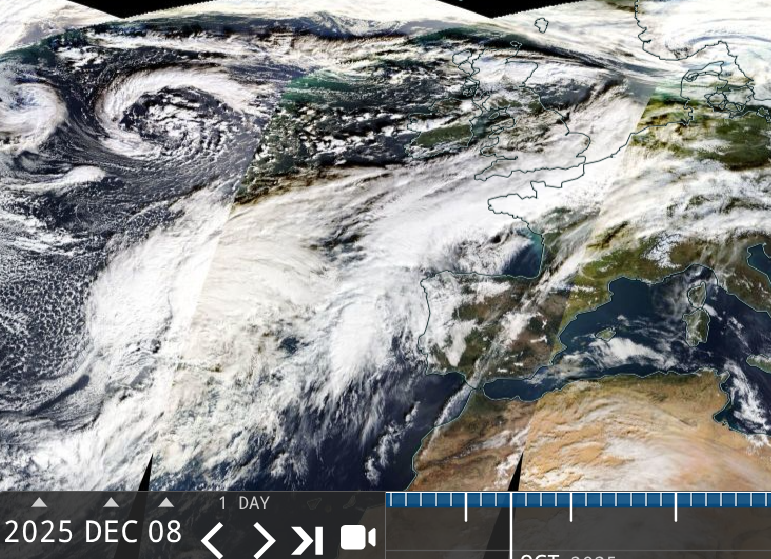
NASA WorldView brewing Storm Bram December 2025, large white shield of cloud over the Atlantic
In the eleven years of storm naming so far, the number of names used has varied greatly, but never passed L. The first season reached Katie in March 2016. August 2020 threw up two late entries with Ellen and Frances in the summer. The 2022/2023 season only started in August, with Antoni and Betty. That was it! Lilian in August 2024 was the furthest that the naming has progressed through the alphabet. M,N,O,P, R,S,T,V,W have never been used in over a decade. The previous list could continue, in a circular fashion, never mind the September announcements of a new set. The Central Pacific hurricane list does this, only returning to A when the current list is used up, as does another European naming group.
To mark its 90th anniversary, Met Éireann, the Irish national meteorological service, selected names that celebrate figures from its history, including Austen, in honour of Austen H. Nagle, the first director of the Irish Meteorological Service and Evelyn Murphy, the first woman to present the weather on RTÉ, Ireland’s national public service broadcaster. Miriam, named the first female to hold an operational role as a meteorological officer, Miriam Lyons. Other names were picked from public nominations in a campaign run in 2025: Heather, Laoise and Phelim.
KNMI, the Dutch national meteorological service, received more than 3,000 suggestions from the public. These included Boelo, a near-extinct name from the East Groningen region, submitted by a local resident whose family has used it for generations. Dano was submitted several times in appreciation of Professor Dano Roelvink, an internationally renowned coastal researcher and the creator of models used to calculate storm surges and dune erosion; he is retiring this year. Gwendolyn is a woman who, as a child, was promised by the KNMI that they would name a storm after her if she didn't tidy her room; that promise is finally being fulfilled. During the time window when people could submit suggestions to KNMI, a Dutch influencer died from a rare cancer. Over 500 people nominated the 19 year old young woman, Jade Kops. Wende links to the vanished village of De Westen on Texel. Texel is a large island in North Holland and De Western was once one of the island's oldest settlements. Legend attributes the village's disappearance to external violence, as well as to the forces of storm and water.
"For more than a decade, storm naming has helped us communicate the risks from severe weather more effectively. A named storm provides a clear focus for forecasts and warnings, helping more people understand the potential impacts and take action to protect themselves, their families and their property." Holly Clements, Met Office Head of Warnings and Guidance,
The storm name list in full, with pronunciations and who submitted the names.
As in previous years, the list uses 21 names and excludes certain letters to align with international storm-naming conventions.
Storm naming collaboration
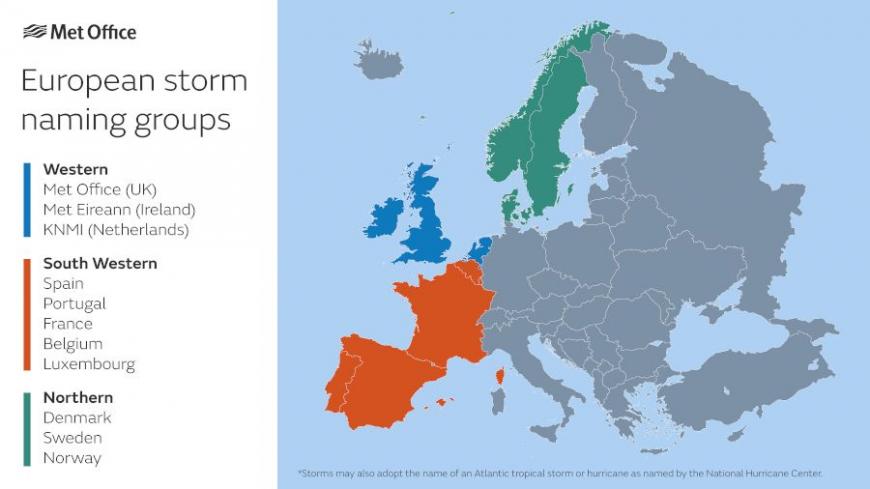
In Europe, there is the Western naming group of Met Office, Met Eireann and KNMI. Also, other groups including the Southwestern Group of Spain, Portugal, France, Belgium, Andorra and Luxembourg. Last season this group reached T by mid-March, although it does cover a wider land mass and the sea area of the Azores in the Atlantic. This group has also included DANAs* as well as windstorms.
There have been low pressures impacting Scotland, which take a Scandinavian name. A brewing low pressure over eastern England which then is named over Germany. More often, a deepening low in the Western Channel can impact northern France and southern Britain. There are discussions between the UK, Ireland and the Netherlands around who is doing the naming, but also with France and other countries. If a low has been named (or is about to be named) by the southwestern group and will impact the UK, this will be the name referred to.
Last season we had Storm Amy off the main list, then Benjamin in October 2025 named by Meteo France, next Claudia named by Spanish AEMET, back to our list with Storm Bram, then Goretti named by Meteo France but this led to red warnings over Cornwall in early January 2026. Storm Chandra was late January along with Ingrid and then Storm Dave in early April. So A, B, B, G, C, D.
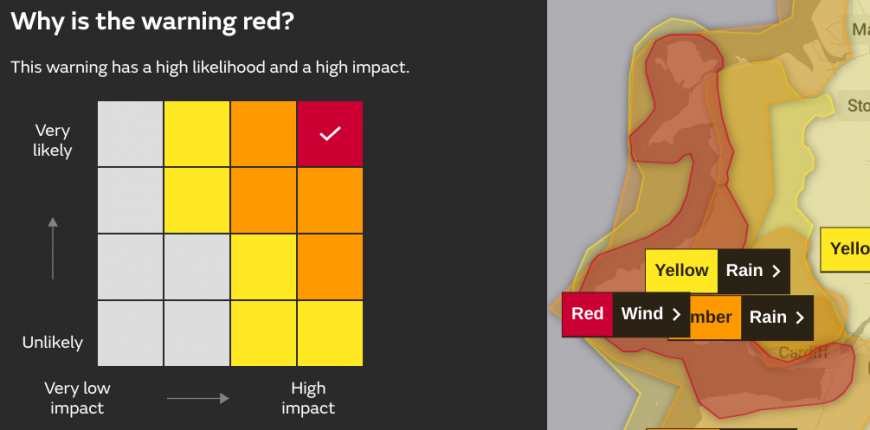
Storm Darragh warnings in December 2024
When are storms named?
Storms are named by the group when they have the potential to cause medium or high impacts in the UK, Ireland and the Netherlands, so disruption and/or damage. This would typically mean an amber or red warning is expected to be issued at some point during the event. While strong winds around a low pressure remain the primary consideration, storms can also be named when significant impacts are expected from heavy rain and flooding, like in Storm Desmond, or snow.
The national meteorological services have discussions themselves, reach out to partners in government and the responder community, then let the public and the media know.
“We know that naming storms makes it easier for people to track important and up-to-date forecast and safety-related information as we can see from the levels of traffic and activity through our website and across social media platforms during storm events.” Eoin Sherlock, Met Éireann Head of Forecasting Division
Does naming storms help?
As a communication tool to raise awareness of upcoming severe weather, there has been success in using named storms. It helps people to prepare but to also stay safe. It raises the profile of upcoming potentially dangerous conditions giving an easily identifable label. Also to reflect on impactful events, it can be hard to remember which year something happened but many people can name the storm responsible.
"Storm Goretti was one of the most intense depressions to affect South West England and occurred as one of the sequence of storms of winter 2025/2026." RMetSoc . There was snow for the Midlands and Wales, with rain for other parts of Britain. It also impacted the Channel Islands and France. Post-storm surveys show the effectiveness of naming storms to raise awareness.
For Storm Goretti in January 2026, post-event surveys suggest that: 93% of people within the amber warning area were aware of the warnings. 88% of them took action, such as staying in, not driving and shopping earlier.
There are issues: certain media outlets jumping the gun and naming random low pressures with the next name on the list. It is often difficult to impart that a named storm might only impact Ireland, Northern Ireland and Scotland leaving just a breezy day for London and the Home Counties.
As well as the new list from the Western naming group we are likely to hear about storms named by the Southwestern naming group. Below is the list for 2026/27 "Storms and DANAS with great impacts"
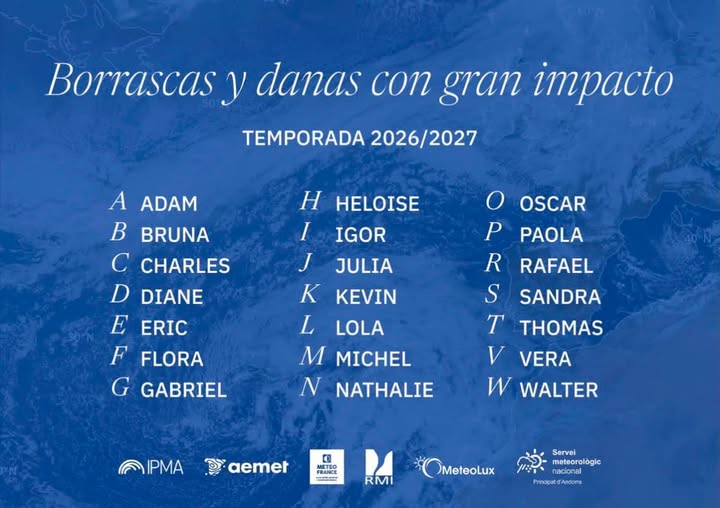
During the 2025-26 season, the Western Europe storm naming group named four storms, reaching the letter 'D’ with Storm Dave in April 2026.
The southwestern group had 18 named storms and one named DANA (Alice) in the past season. These included destructive wind and rainstorms for Portugal and Spain in January and February. The Andorran Met. service named storm Samuel in March 2026, a low pressure in the Gulf of Lion. The region experienced a spell of powerful northerly and northwesterly winds; the cold, dry Tramontana and Cierzo winds, along with severe marine conditions that were particularly intense around Menorca and the Costa Brava.
*A DANA is a low-pressure system in the upper levels of the troposphere that has completely detached from the upper-level zonal flow. In the Northern Hemisphere, these isolated upper-level depressions are typically found south of the established upper-level flow. The term—synonymous with "cold drop" (gota fría)—comes from the Spanish acronym DANA (Depresión Aislada en Niveles Altos, or Isolated Depression at High Altitudes). As with extratropical cyclones, not all DANAs result in a major impact. AEMET
There is also a Northern naming group of Sweden, Norway and Denmark.
Their list of names consists of personal names that have not been used before and are easy to pronounce in Sweden, Norway and Denmark. When the list is exhausted, a new list is drawn in a lottery style, from suggestions. The same name should not be used for a storm more than once.
Sometimes an ex-hurricane comes towards NW Europe from the Atlantic. Ophelia in 2017 impacted Ireland as an extratropical storm. For Britian it will be remembered for the strange orangey-red Sun as the huge cyclone drew up dust, sand and wildfire smoke in the atmosphere.
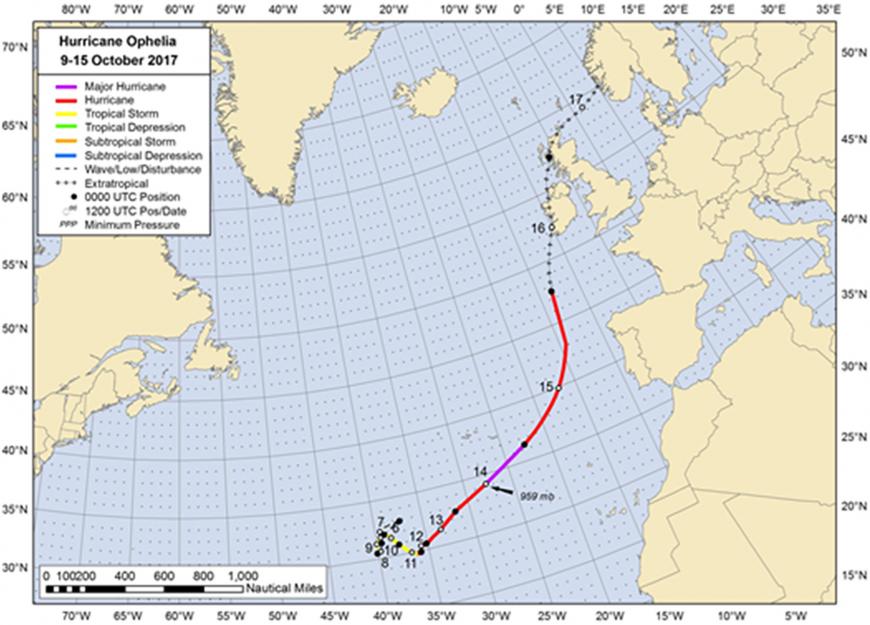
Best track positions for hurricane Ophelia, 9–15 October 2017. The track during the extratropical stage on 16/17 October is partially based on analyses from the NOAA Ocean Prediction Center, Met Éireann and the Met Office (Stewart, 2018) RMetSoc 2021
Ex-tropical storms do keep their names if they manage to reach Portugal, France or the UK. So far in 2026, there have only been four tropical storms in the Atlantic, no hurricanes this season.
More discussion about naming storms in the Netweather community forum and we await the first named storm of the season.
Loading recent activity...