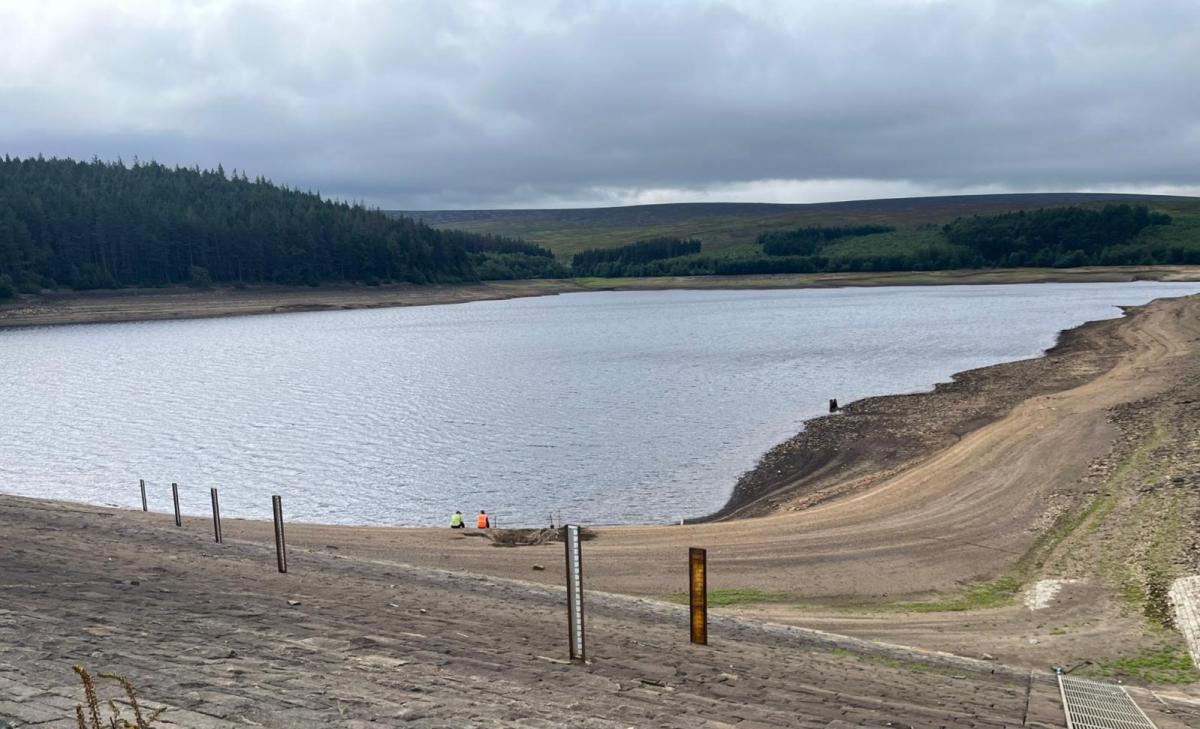
Seven areas of England now officially in drought after record low rainfall and exceptionally high temperatures. Drought is not just about ‘is it raining or not’; it’s about the longer-term impacts and protecting many areas.
Helen Wakeham, Director of Water at the Environment Agency and Chair of the National Drought Group, said: “The hot and dry weather means we are currently using water faster than nature can replenish it.”
It is this balance, and circular process that is important, what is coming in and what is being used. The capacity of our water system. In summer and especially in times of heatwave, water demand increases.
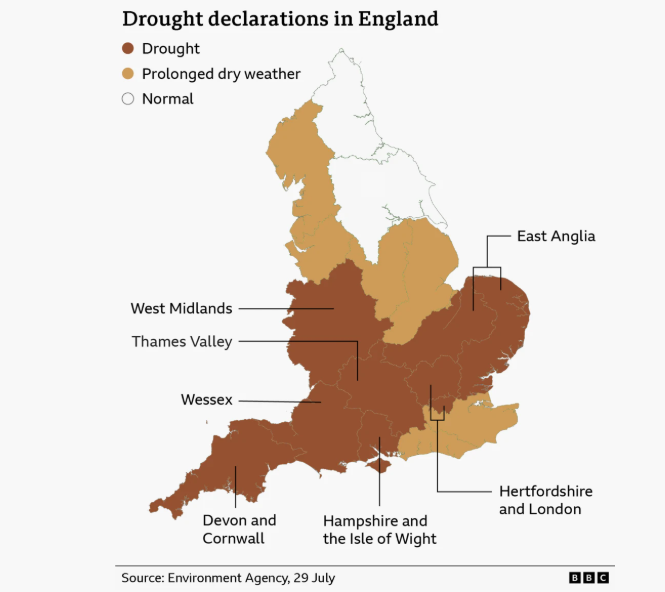
Droughts vary in nature, timing and impacts on people, the environment, agriculture, business and public water supply.
Water companies in England depend on adequate water resources to meet the needs of over 58 million people. Most of this water supply comes from England, but there are some areas that are supplied with water from Wales, so the current drought in north Wales is also a factor. There are implications for food supply and farming, not just hosepipes.
Some parts of Devon have not experienced a rain day for 50 days, and parts of Hampshire have been without for 49 days
The Environment Agency has set up and monitors drought indicators, or drought triggers. A range of different triggers are used to identify if a drought is happening and are based on hydrological thresholds (such as rainfall, river levels and flows, reservoir storage and groundwater levels) along with environmental indicators (such as water quality and ecology). Looking at the current conditions and the weather forecast, the national response teams decided what to do next using drought management stages.
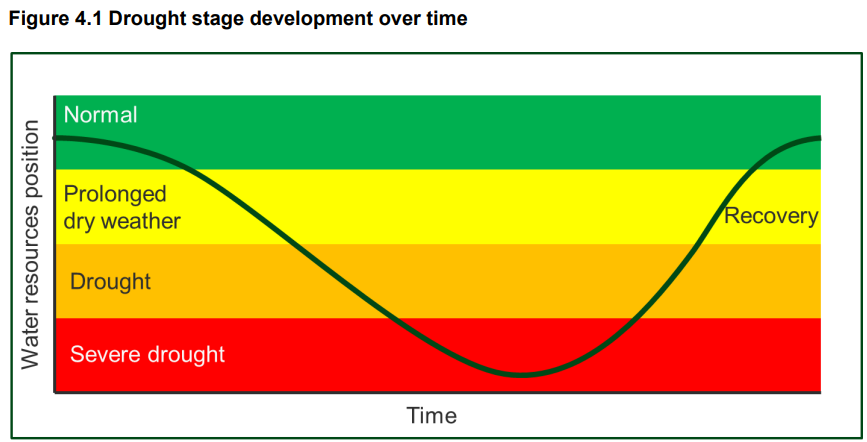
Next, the actions
“Impose prolonged restrictions on canal and river navigation; process and enforce drought permits and orders to protect public water supply; apply for and use drought orders to protect the environment; respond to multiple fish and pollution incidents; impose localised spray irrigation restrictions”, and chairing the National Drought Group. Env. Agency
Some rivers are tracking their lowest river flows on record for this time of year, including River Thames at Reading and the River Cam at Dernford, Cambridgeshire.
Half of England has been declared in drought by the Environment Agency. Most of central, eastern, and southern England is now experiencing a ‘flash drought’. This develops very quickly when there is the combination of very low rainfall and high temperatures. River levels are low, farmers are having to harvest cereal early with reduced yields for some crops. There is a higher wildfire risk and millions of people are now under TUBs Temporary Usage Bans (or hosepipe bans).
The seven areas in drought are:
Climate change “Our climate is changing. We are already seeing wetter winters and higher temperatures, and we know severe weather events such as droughts will increase in frequency and severity. We will also likely see floods and droughts happening at the same time more often.”
Thinking about wildlife, farming, waterways and our environment, a second consecutive summer drought is an exceptionally serious situation. 2022, 2025 and now 2026 have all seen official droughts in England. Fish struggle to miggrate upstream in low river levels, spawning ponds can not hold creatures.
People do need to stay hydrated during hot weather this summer but we do need to value every drop and think about what each of us can do to save water.

Following a dry 2025, there was a very wet winter which helped get through the dry 2026 spring.
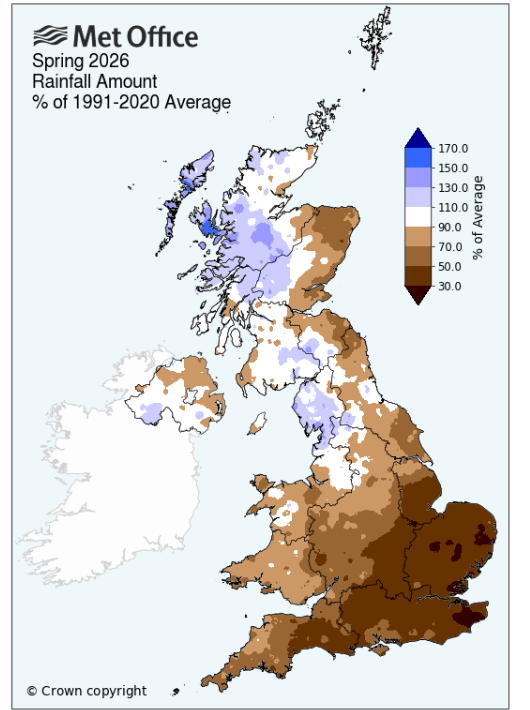
And yet, with the demands of an exceptionally hot and dry summer, the winter replenished reservoirs and groundwater reserves have hardly seen any incoming rainfall for months. “July has seen just 7% of expected rainfall, falling to 1% across southern England - and there is no substantial rain on the way.” It has been exceptionally hot, very dry and sunny, sometimes windy causing further drying of the soil. The start of August does look a bit unsettled but only with showers or patchy rain. Not enough.
Alongside seven areas in drought, these areas are now in prolonged dry weather:
Minister Emma Hardy “We expect water companies to follow their drought plans, to go further and faster to reduce leaks, and to ensure supplies are not disrupted even in the driest of weather.”
Small steps, such as turning off the taps when brushing teeth or shaving, taking a shorter shower or fixing a leaking toilet can really add up. Many TUBs continue.
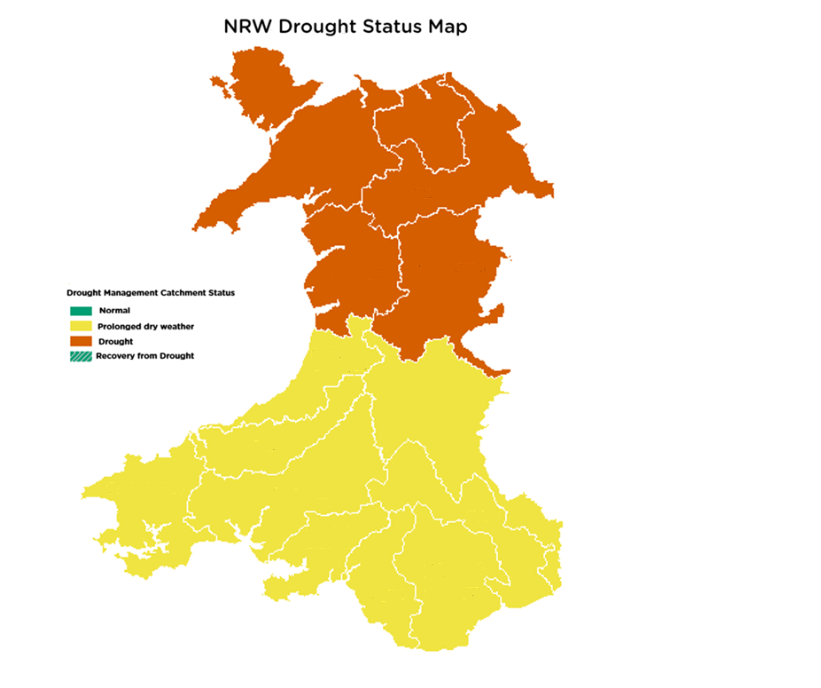
North Wales is already in Drought with southern Wales at Prolonged Dry Weather status. Eastern and NE Scotland has been at Significant or Moderate water scarcity this month.
Loading recent activity...