


Seeing totality in a solar eclipse is incredible. It is a natural wonder and for those who were under the path when the Moon totally obscured the Sun for a minute or two on August 12th (cloud free), it is likely to be a memory of a lifetime. It is very different from partial eclipse viewing.
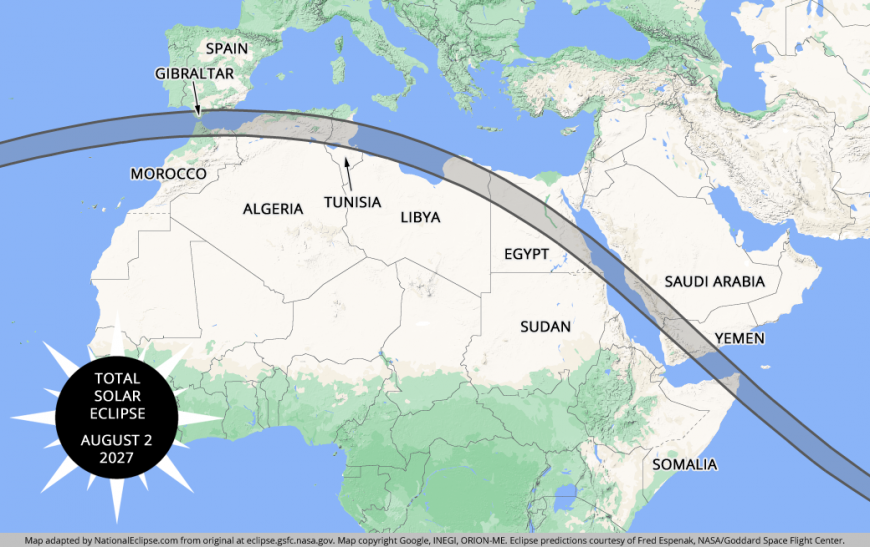
If you viewed the partial solar eclipse from the UK and are now itching to see the 100% version, there is one coming up next summer. On the 2nd August 2027 the path of totality will cross southern Spain, northern Africa and clip the Arabian Gulf. Luxor in Egypt will see six minutes and 21 seconds of totality which will delight photographers. It will be in the middle of the day, with daytime August maximums often at 40 or 41C and searing sunshine, that’s not so delightful. There will be another partial eclipse for much of Europe and the UK, but not as much of the Sun will be covered as the 90%+ that we’ve just seen in 2026.
A look at where, chosing a viewing point, weather considerations and what to take.
I travelled from Scotland to Madrid in the very centre of Spain, and undertook a day trip to Segovia by train to be in the path of totality. Others headed to Tarragona, Leon, Valencia and Mallorca all with hopes of cloud-free viewing.
Choosing a location and then a spot for viewing can involve a lot of planning and some luck. Of course you can play the odds with cloud cover looking at usual climatic patterns but as we know, the weather can be very annoying. The interior of mainland Spain is often clear, sunny and hot in August but two days after the eclipse there was five oktas of Altostratus and the classic warning sign of atmospheric instability, Altocumulus castellanus - the potential for storms. This is the problem with summer heat.
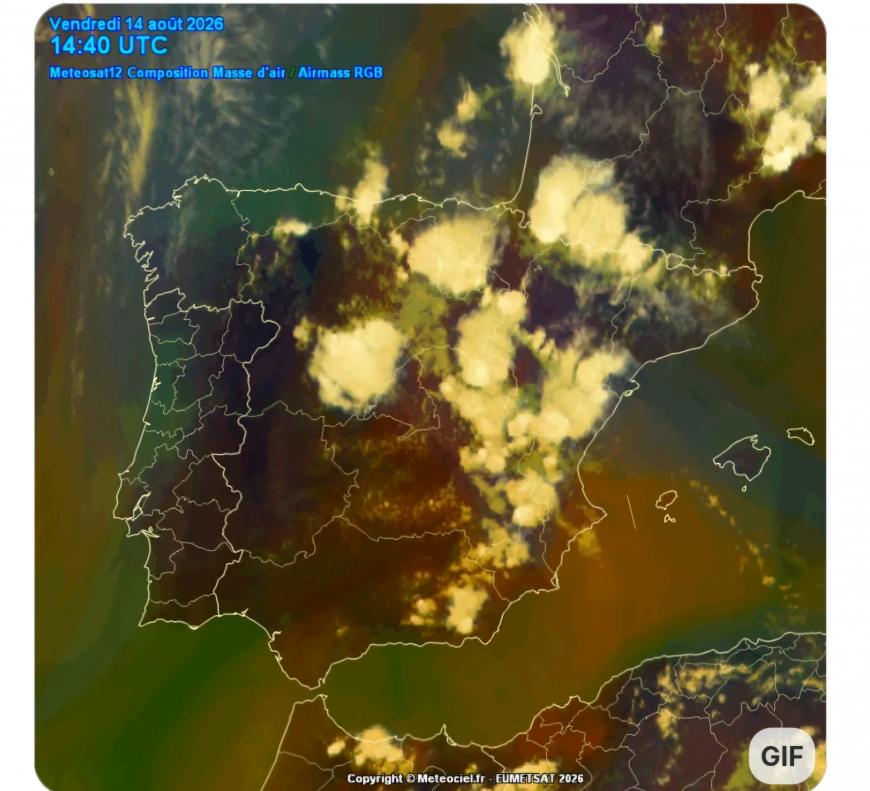
Afternoon large showers and thunderstorms bubbling up two days after eclipse day which had been mostly clear in the Interior.
Coastal areas can see low cloud roll in overnight but it usually burns back to the coast fairly quickly in the morning. Thinking about the 2027 Cadiz, Gibraltar and Malaga have totality around 10:45-10:50 CEST. There can be fog through the Straits of Gibraltar. A bit of wispy thin cloud can add a great atmosphere to photos but it also brings unwanted stress for viewers.
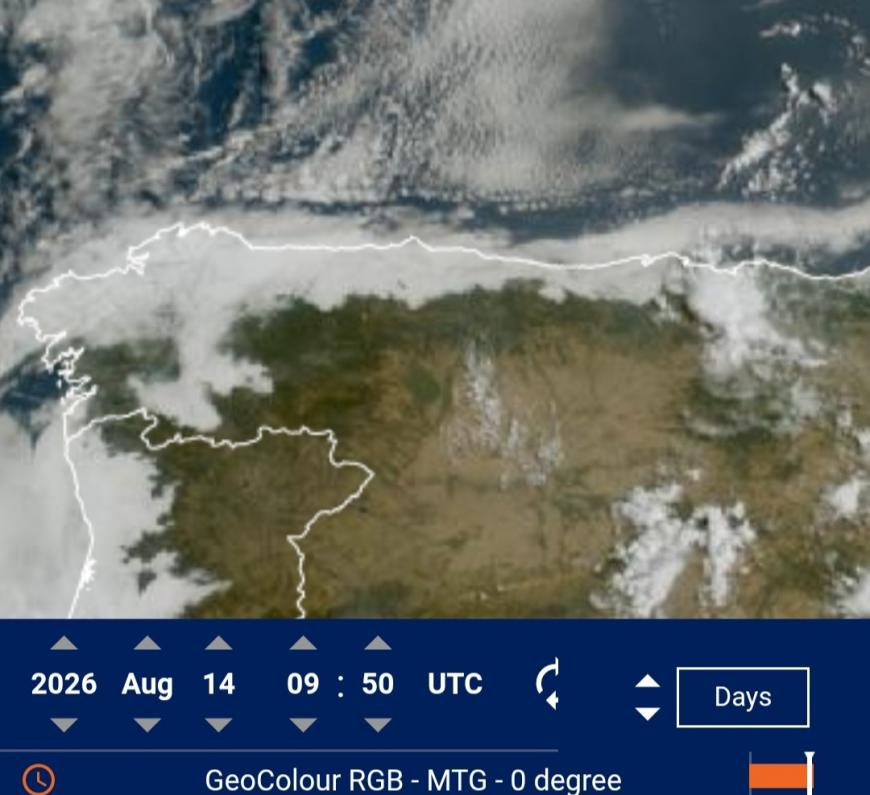
EuMetSat satellite image showing low cloud from the sea which moved inland overnight and still thick for north coast of Spain, northeast Portugal on 14th August, two days after the eclipse.
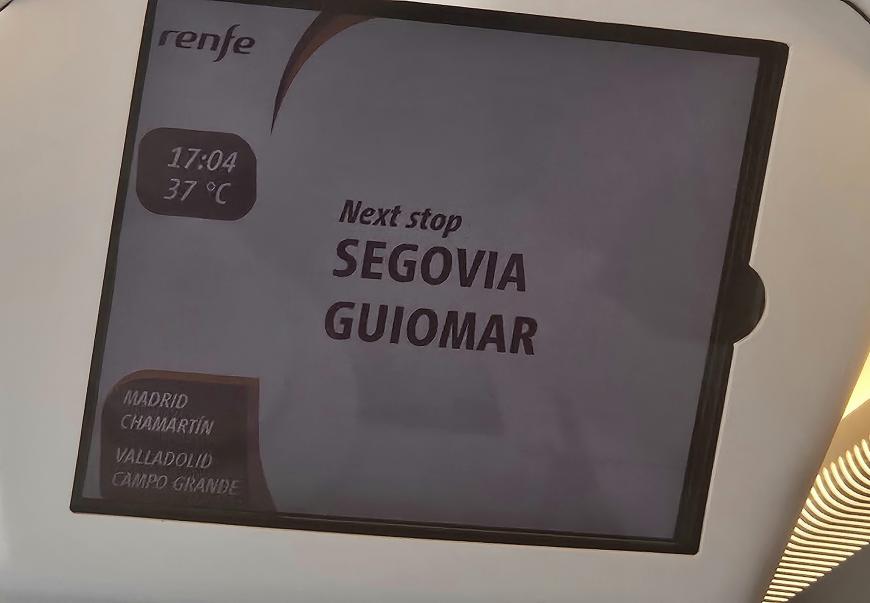
I have family in Madrid so that anchored my plan but the Spanish train service (RENFE) links main arteries out across the Iberian peninsula. I had considered a journey east to Valencia on the Ave train which takes about two hours. For the Ave, Alto or Avant high speed services you have to book a seat. None of this cramming folks onto a train carriage. You have a seat and then it is full, completo! In the end, I headed 30 minutes north to Segovia, a World Heritage City with its roman aqueduct, gothic cathedral and Alcazar fortress.
For the day trip, the travel there was fine; an Alto train and shuttle bus to the town and a helpful local taxi driver who shared where most people were heading to. What would have been perfect, would have been to stay overnight with no thought of having to get back afterwards. And there weren't too many options trying to return to the out of town train station with so many people coming for the event. Taxis quickly became scarce, the shuttle bus full.
Those nearby at the viewing spot had driven from Madrid and said that the roads had been very busy with delays. It was a balance of leaving late enough to miss the heat of the day, which was vicious at 38C and being on time for the 19:35 kickoff. Totality was at 20:31 (CEST) for Segovia.
Others had booked a flight with careful planning which should be in the air and the right location,on the appropriate side of the aircraft, at the time of totality. Air travel in Europe is often delayed so this seems quite a gamble, although above surface clouds.
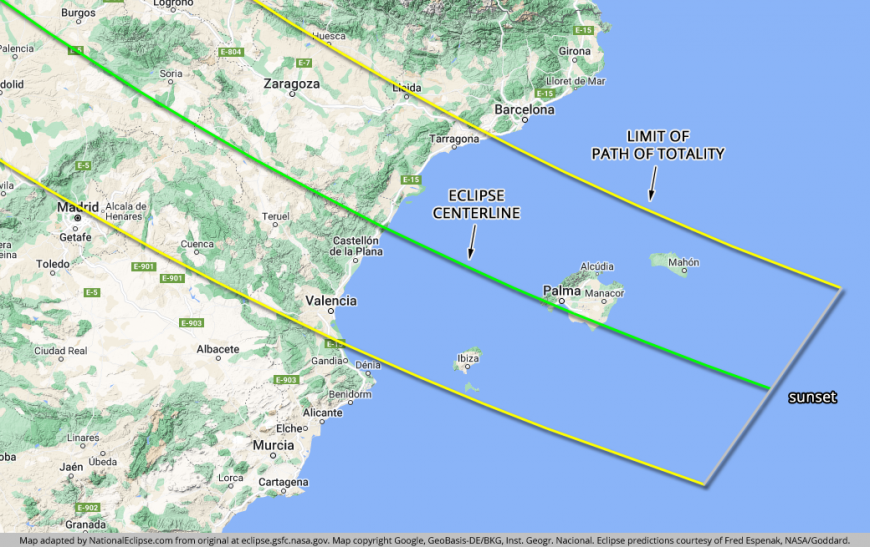
There is a zone of totality but closer to the middle of that path gives a longer total eclipse.
Heading towards the city on the bus, there were designated large fields as parking areas for visitors to just park up and view for the evening, away from the narrow streets of the historic city.
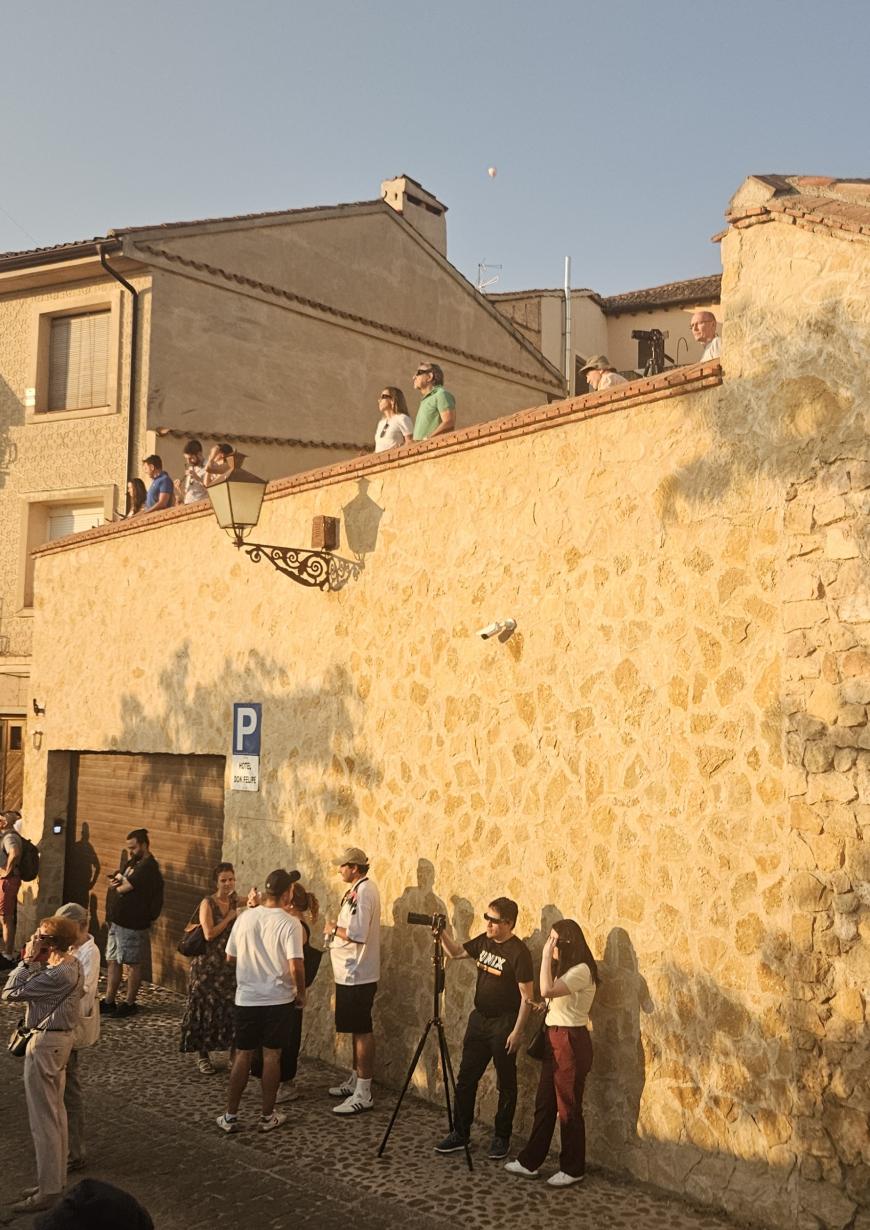
In town, some people had booked apartments with balconies facing the west. There was a classical concert of ‘eclipse music’ in one square, Plaza. Others, including me, sat in the shade of the old city walls waiting. Suddenly two hot air balloons rose into the sky adding to the sense of occasion and they must have had a spectacular view. Another consideration was drinking enough water to not dehydrate, but not needing the loo at the vital minute.
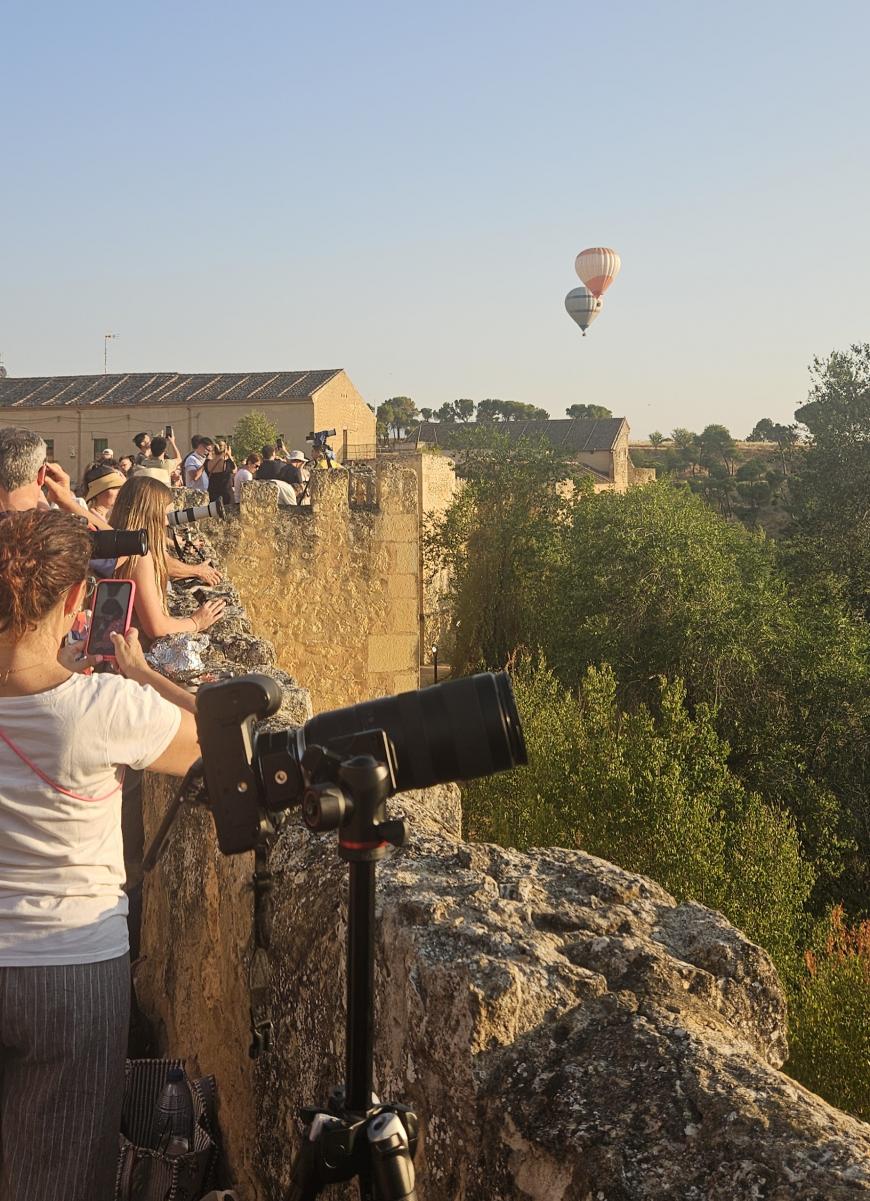
You might arrive to view the eclipse and think well I'll just take a photo of the sky, or happily watch from wherever. There are layers to add to this, the foreground for photos, such as a cathedral, castle or body of water. The images from Mallorca were enhanced by the reflection of the Sun off the sea; a lake or a river could offer the same. With the evening eclipse, lengthening shadows had to be avoided as well as trees and mountains due to the low Sun angle.
The best preparation would be to have a recce the evening before and see where the Sun would be in 24 hours time. Wide open spaces or being higher up and able to see large skies would certainly add to a longer eclipse viewing. Being able to see the light coming back across the horizon or watch the eclipse shadow making it dark sweep could be something to look for if you can draw your eyes from the sun and moon. There is something special about collective viewing but it’s personal choice about standing in crowds, finding space to sit down or just wanting some peace and reflection.
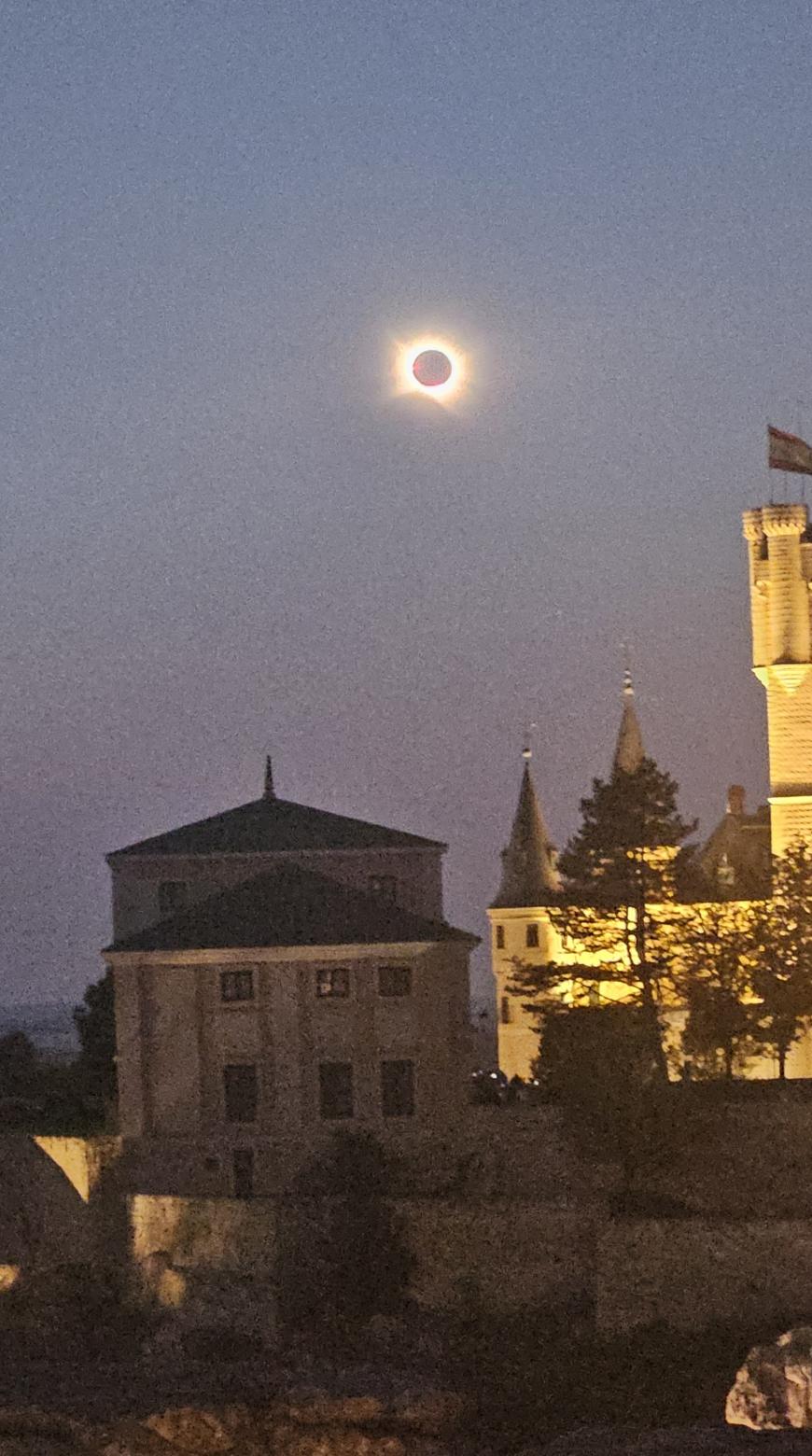
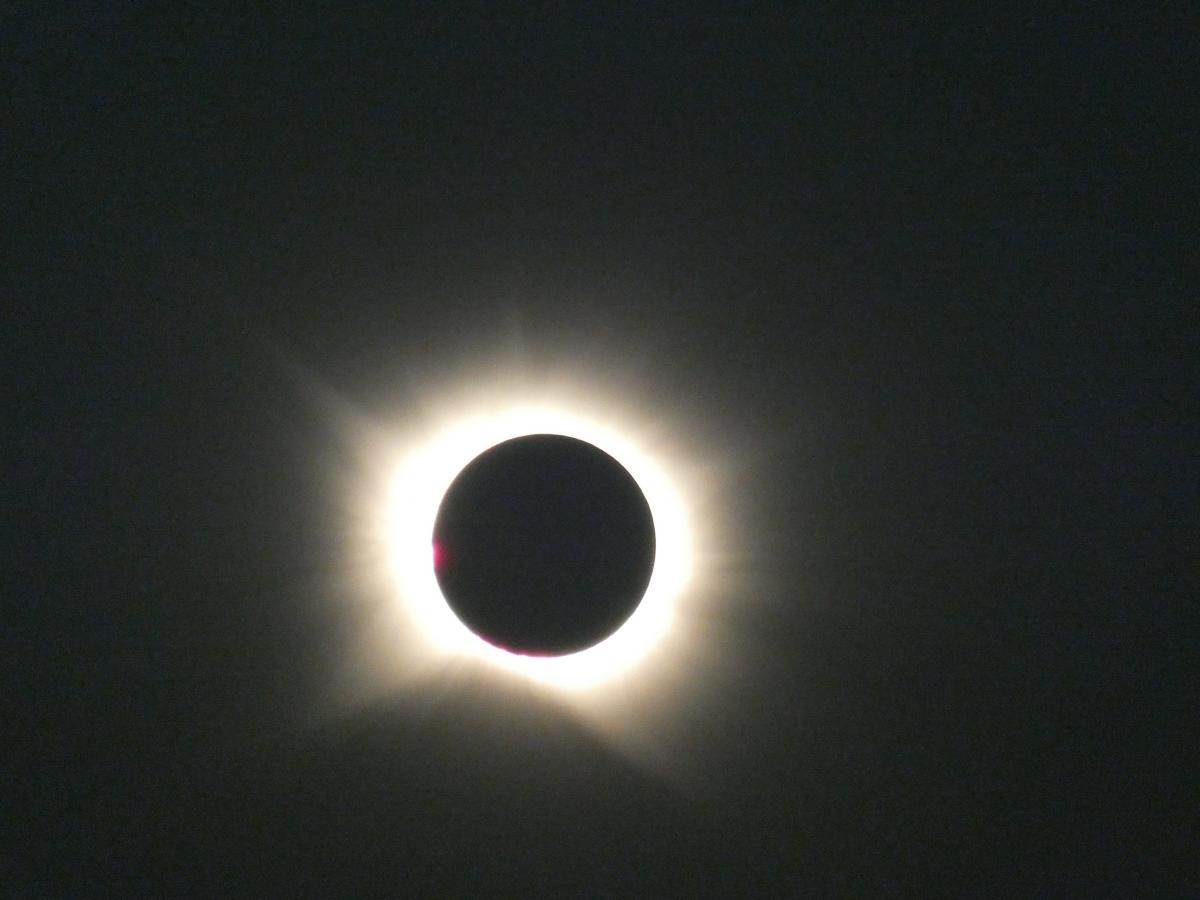
My Segovia total eclipse shot from mobile phone.
The peak of the partial eclipse in the UK was just after 7pm BST, for NW and central Spain it was closer to 8:30 CEST. The Sun getting lower on the horizon in Spain and the Balearic Islands. Where the Sun was visible when you first arrived and ‘set up shop’ would be different to the time of totality. I opted for following those who looked well established with tripods and had slightly worn enthusiast eclipse T-shirts, which luckily worked out well.
August on the Iberian peninsula was always going to be hot. Not a vicious peak of 38.1C like UK’s hottest day of the year on the 13th but an intense, fiery heat that grows every afternoon and ebbs back to a simmer late into the night. It has to be treated with respect and preparation as you head out “to look at the Sun”. Morocco across to Egypt into Saudi Arabia will be phenomenally hot, by day and also at night. Functioning air-con should be top of any accommodation search.
On the day, an umbrella would be my recommendation. I took just a small rain brolly but there are darker UV ones available. You could take a towel or mat to sit on whilst you wait, even folding chairs. A water bottle which can be refilled from the water fountains in many Spanish streets. Snacks were good as I was too excited to eat a proper lunch. Certainly not a traditional suckling piglet which is the speciality of Segovia. A sun hat and sunglasses whilst you wait, and sunscreen whilst you await the main event.
I did take a tripod and I was glad of that. I used my mobile phone (with a spare pair of eclipse glasses sellotaped around and managed to line up my point & shoot digital camera (Panasonic Lumix TZ99) ready for totality. Holding eclipse glasses over the lens to line up for a shot was tricky. I took a few handheld snaps in totality with my mobile phone, using the PRO settings, and they were great. Not award winning, but impressive memory shots.
Someone had a solar filter that was the size of a playing card and that looked easier to hold up in front of a phone. Like a larger panel of eclipse glasses lens.
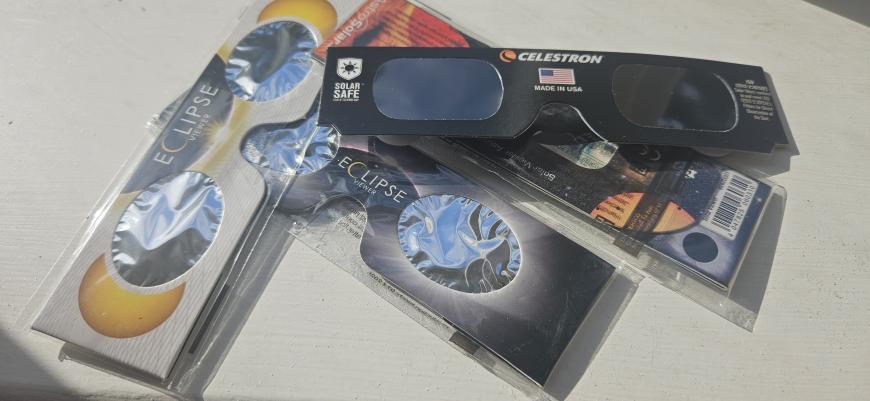
I did see children, and an adult, with a paper plate in front of their face, eclipse glasses embedded within that. Trying to get eclipse glasses to stay in place and protect a child’s eyes on their smaller face would be tricky, but are the adults just avoiding sunburn? Wearing cotton, and not sweaty polyester, is highly recommended. People had T-shirts and even costumes for the event. In Segovia a lady wearing a sun and moon pattern cloak wandered by, a friend had made an eclipse dress for her Tarragona trip. Spain was in the party mood, full of anticipation and celebration. Others had group eclipse T-shirts for the occasion, or were rewearing one from a previous eclipse. I saw Scouts at the airport wearing eclipse neckers (neckerchiefs/scarf) from a special event in Soria.
Eclipse glasses are vital, just get them ordered. Or store your current ones safely so they won’t be scratched and write a note in your phone calendar about where you have hidden them for August next year.
John Lewis has said that sales of colanders have spiked this month as people prepared for some indirect viewing, or there wasn't time for Eclipse glasses to arrive by post.
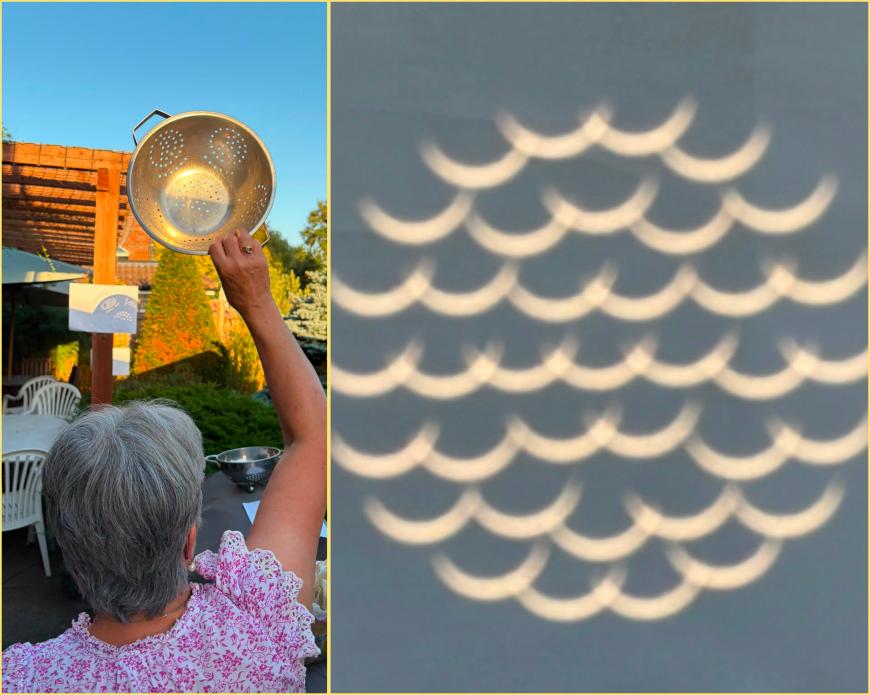
Indirect eclipse viewing via colander in England, thanks to Anita Hanwell
As the Sun continued to shrink to a narrower crescent, WhatsApp messages appeared from family and friends viewing in the UK with varying success. Scotland had some pesky cloud.
In Spain, the light began to change, more noticeably. A strange dimming and eeriness as birds began to fly about. They flew lower and began to roost in the trees below the city walls as the light reduced further. You could feel the excitement in the crowd. And then totality. Wow!
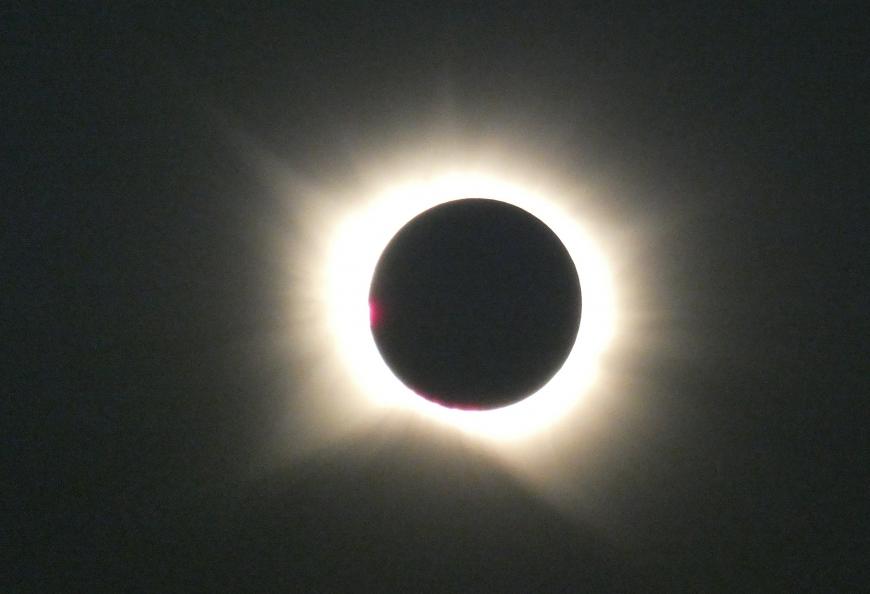
The precision of that moment and it was just a minute. That the Moon that we see so often in the night sky, had perfectly lined up blocking out our Sun. Turning it black with darkened skies around and an odd twilight making everything around subdued: the light, the noise, the birds, the air. And what a sight, as eclipse glasses came off and we could gaze at the Sun, the Moon and see the circle of the Sun’s Corona, its atmosphere for a short time.
It was just so bizarre, so beautiful and enchanting.
As the Moon continues on its way, a burst of sunlight reappears creating the diamond ring effect. You must now look away and put your glasses back on. But I didn't want to, I wanted to look more at the incredible vision. The clapping and cheering jolted me from this hypnosis as the crowds celebrated and rejoiced in what we had all seen and experienced.
You could search for words to fit the occasion such as bonhomie - a pleasant feeling in a group. Impresionante in Spanish. “Collective Effervescence" has been touted on social media - a feeling of being swept away, becoming one with the crowd and a sensation of awe. This phrase was proposed by a French sociologist Emile Durkheim over 100 years ago, but can easily apply to our need to share photos and videos online but experiencing the eclipse in that moment (IRL) with a collection of others was truly full of effervescence.
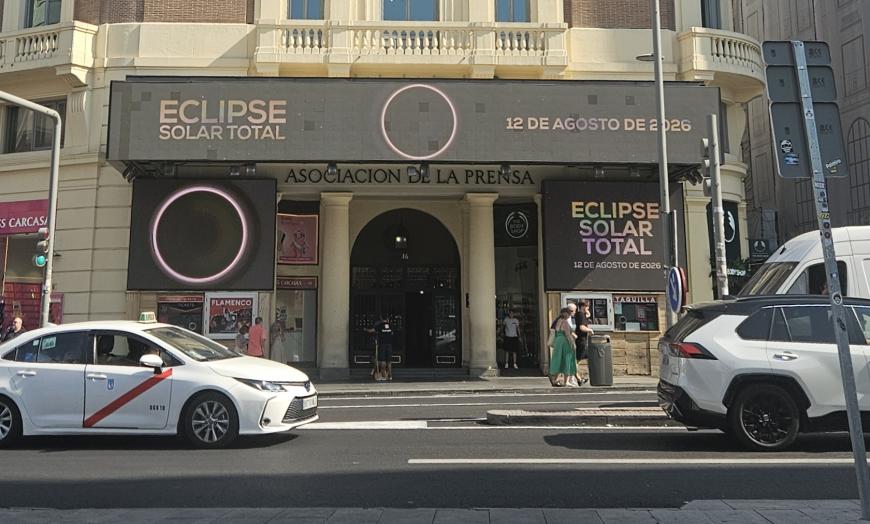
What was lovely after totality was eclipse neighbours offering a look at their photos, from long telescopic lens cameras. These were superb shots showing intricate detail of the Sun’s corona and solar storms burning red on the surface. That splash of red had been visible to the naked eye. The smiles at what we had witnessed, and for some, accomplished in getting there for the 2026 moment in time.
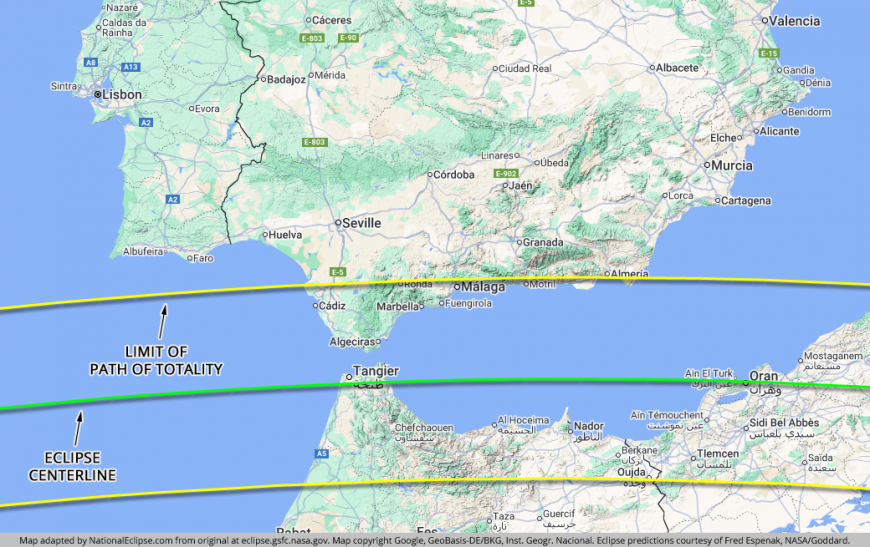
So the next one for Europe is 2nd August 2027 for southern Spain, northern Africa including Egypt where there will be over six minutes of totality!
Again heat on the day is a major consideration and with Super El Nino adding a turbo boost to global temperatures in 2027, we should expect more heatwaves, wildfires, likelihood of drought and there is always the chance of war to wreck travel plans. Spain has seen wildfires this summer as have many European regions.
This 2026 eclipse path of totality cut across a large swathe of mainland Spain offering lots of travel options. Next year it will be a much smaller, often coastal area. Around 1044-1055 CEST there will be darkness for Cadiz for three minutes, for the city and most of the province. Totality also for southern Granada and Almeria. Northern Africa offers more space but some countries have border issues, even travel restrictions. Totality will last for around five minutes in Algeria, also cross the Straits of Gibraltar, be seen in Ceuta and Melilla, Morocco, Tunisia, Saudi Arabia and Egypt. The sun rises in the east and sets in the west, so a view to the southeast would be ideal.
It is amazing, but August is unbelievably hot.
Eclipse maps from National Eclipse
More 2026 eclipse chat on the Netweather community forum
Loading recent activity...