


In 2026, the Lyrid meteor shower saw its peak on Wednesday, 22nd April 2026 but is active, continuing until the 25th of this month. It is an annual event in mid to late April at a time of year when the nights can still be chilly. However there is a good deal of darkness before the summer months. This shower is known for bright, fast meteors with some with trains. So if you do spot one, they are rather quick and fleeting.
“The Lyrid meteor shower is associated with long-period Comet C/1861 G1 Thatcher. It is the oldest recorded meteor shower still visible today, and was first recorded in 687 BCE.” Royal Museums Greenwich
Viewing does depend on the cloud cover over the UK. Last night, a blanket of low cloud stole in from the North Sea.
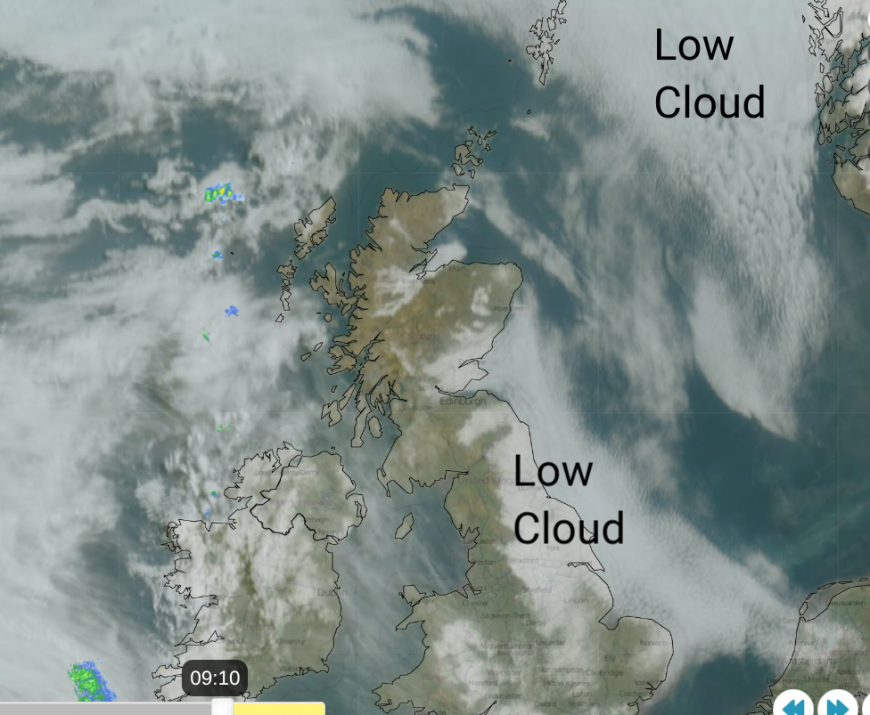
Netweather Radar and Satellite imagery Thursday 23rd 09:10
This will lurk over Shetland and close to eastern England during Thursday with patchy cloud appearing again for eastern Britain in the small hours of Friday. Northern Ireland will have high cloud for Thursday evening but this will disappear. This leaves clear skies for western Britain and Ireland and many inland parts of Britain before midnight.
Meteors are small bits of space debris from objects such as asteroids or comets. Earth has an atmosphere, and so the debris burns up as it enters, and we see this when it is dark. They are moving so fast that the air ahead of the object is compressed and heats up. So it glows. If you see a “shooting star” it is that glow. For those who watched the Artemis II coverage, when debris reaches the moon, it hits and creates a crater because there isn’t an atmosphere to intervene.
Most of these meteors are small and never reach the ground as they burn up in the atmosphere. If anything reaches the ground, it is called a meteorite. These meteors appear to originate from the constellation of Lyra, (the lyre) which contains the star Vega which is NNE in the night sky.
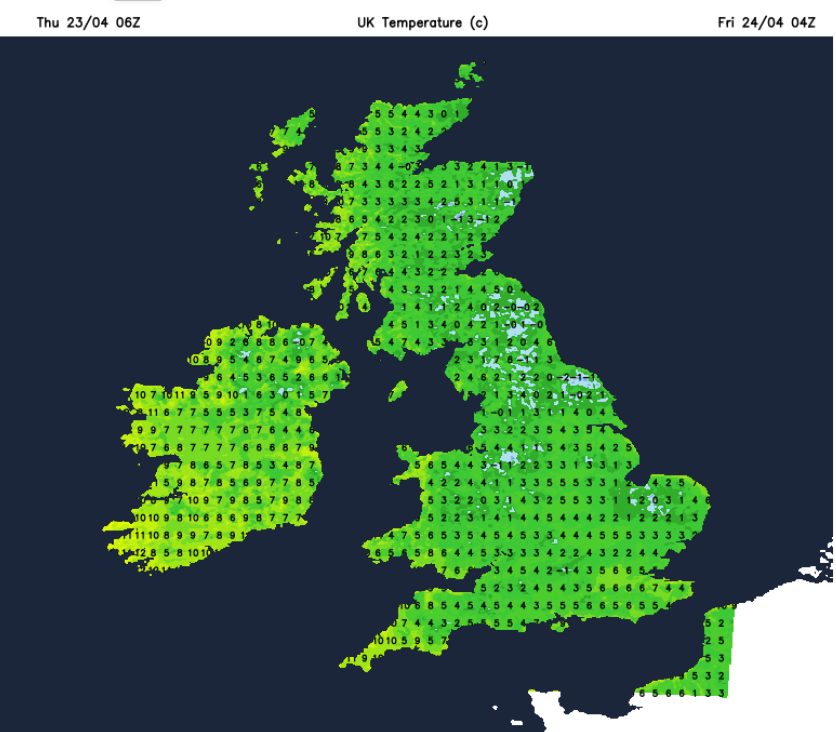
For Friday night again, there will be a lot of clear skies but these cloudy infringements from the northeast, into Cornwall and high cloud for the western counties of Northern Ireland. By the small hours of Saturday, there will be low cloud for East Anglia and eastern Scotland but some gaps for eastern England. There will be more cloud about by the weekend but it is a mixed picture and it will be worth checking the satellite (and radar) imagery in the evening to see where the cloud cover is. The feed of low cloud off the North Sea will continue but the overall picture is so patchy that it will be worth having a look up, if you aren’t too cold.
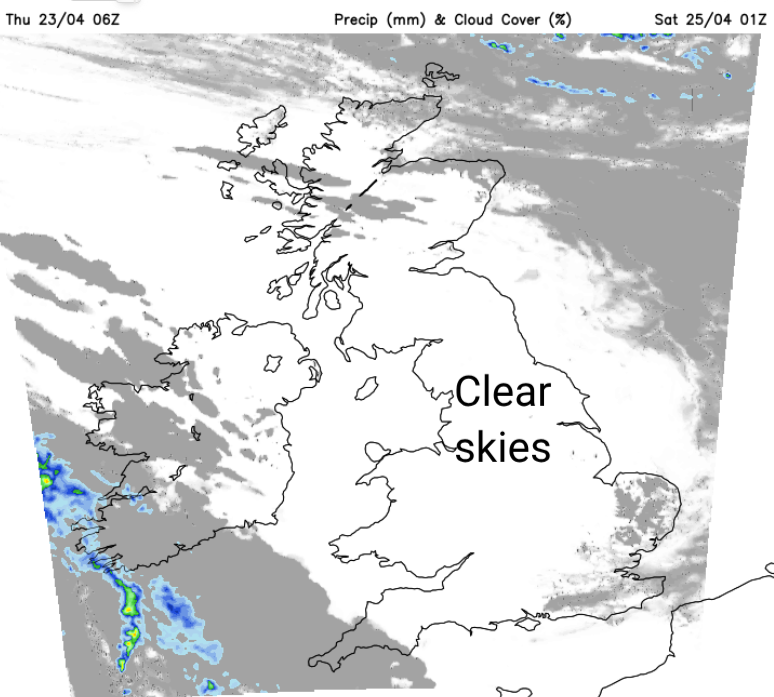
If you are heading out to look, the main advice is to wrap up warm. It has been cold by night all week and this will continue. By day it will be warming up nicely with temperatures in the mid teens to low twenties but after dark it will be well down into single figures and even a bit of patchy frost in rural areas.
Some parts of the UK are designated Dark Sky areas, allowing incredible viewing. Try to get away from city lights and put your phone in night mode so you don’t ruin any adjustments that your eyes have made. By Friday, it will be the First Quarter Moon, so not a full moon, which will help. It will also set after half three in the morning, with a little time before the dawn light stops any viewing.
You might be lucky and just see one, but really, it might need patience and watching for half an hour. The summer Perseids can be a better bet, as sitting out on an August night can be more pleasant than a chilly April one.
Loading recent activity...