


Depending on where in the UK you live, your awareness and acceptance of power cuts may vary greatly. Island and rural communities would probably expect a couple of shortlived outages per winter and mostly be prepared to endure these, whereas in towns and cities, certain folks would be raging on Facebook if the electricity went off for five minutes. Think back to April 2025 when Spain and Portugal suffered a major blackout, not caused by bad weather but did result in widespread disruption across Iberia. The more populated southeast of England has been subjected to numerous water supply interruptions, some of which were linked to lengthy dry months. Although any of these utility 'interruptions' will be frustrating even downright annoying, for some people it can be worrying, isolating or medically impactful. Knowing who these people are and where they live is important, especially before severe weather events.
Resilience and preparation are defensive parts of government, local authority, and community council planning when considering flooding, water shortages, storms and heatwaves. With petrol prices and oil supplies currently in the headlines and elections looming, hopefully this will be a time for bigger steps towards securing home-grown energy (the more offensive and transformative strategies).
The UK Government is promoting an autumn rollout of plug-in solar panels, with similar technologies already widely available in Europe. Although these plug-and-play panels won’t work in blackouts, your locally generated solar energy will be able to feed back into the grid via a wall socket, potentially reducing your electricity bill.
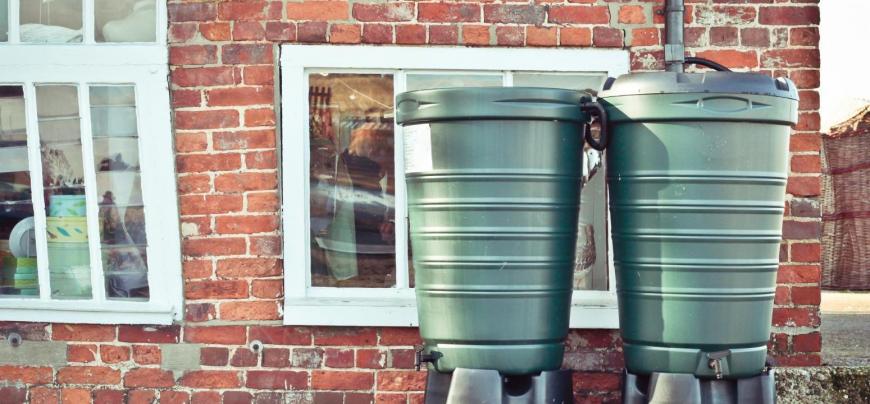
Again for individuals, other choices or investments can be made, such as setting up a rainwater butt or two. To reduce water bills, to prepare for water restrictions, and to store water when it does fall from the skies. We do seem to lurch from water scarcity and drought to weeks of rain with flooding. Another simple preparatory step could be to join the Priority Services Register.
The Priority Services Register (PSR) is a free UK-wide service which provides extra advice and support, including when there’s an interruption to your electricity, gas or water supply.
Benefits of being on the PSR include priority updates in a power cut or gas supply interruption. If your electricity or gas needs to be temporarily switched off to carry out essential maintenance, you will get prior advance notice to allow you to plan ahead. There can be extra support from local authorities or emergency services. Bottled water can be delivered when necessary in times of disrupted water supply.
Communications can be tailored to your needs, e.g. Large Print, Braille, textphone, audio or a language other than English. If it helps, there can be a nominated contact if there is an interruption to a supply. This might give peace of mind to a nominated carer, family member or friend on your behalf.
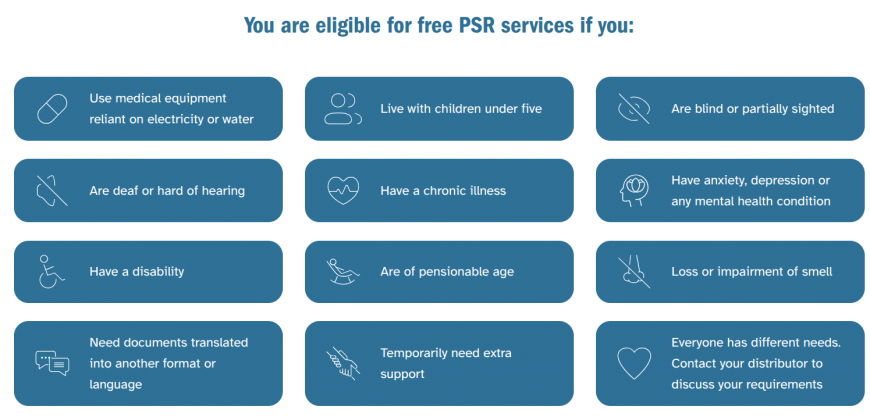
Who can join?
If you have reached state pension age, are pregnant, or have young children, struggle with speaking or reading English, are living with a disability or have a long-term medical condition, including:
-mental health conditions, conditions affecting your sight, hearing or sense of smell, conditions that mean you need to use medical equipment that requires a power supply.
Help is also available if your circumstances have recently changed. You can temporarily join the PSR, for example if you:
-are recovering from an injury, or need support after a stay in hospital, have been bereaved, have lost your job.
The PSR helps utility companies, including energy suppliers, electricity, gas and water networks, “to look after their customers who have extra communication, access or safety needs”.
In the event of a power cut, gas or water supply interruption, they will already have the details of customers locally who might need extra support. Sudden utility supply interruptions can occur when other works are underway in the neighbourhood, but worries about an incoming storm might be reduced by taking the step to join the register. After Storm Eowyn (2025) there were communities that didn’t have power for days with food hubs set up, and in Storm Arwen (2021) some people were still without electricity after a week. Locally a lot of information is spread by word of mouth but the PSR is just another layer of offical help.
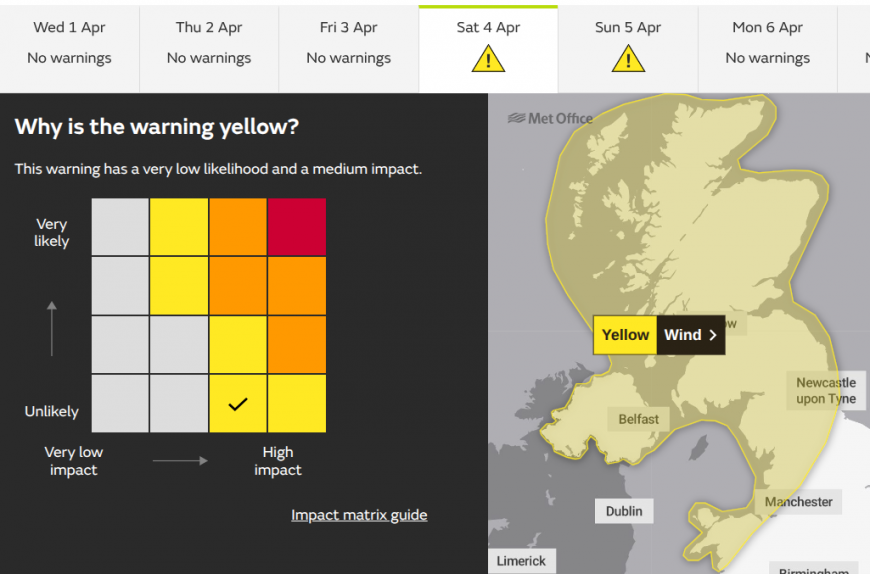
Weather Warnings
As weather forecasters, we highlight upcoming severe weather events such as high winds from a deep low pressure, perhaps even a named storm. There can be heavy and persistent rain, or snow and ice in one half of the year and then torrential thundery downpours with lightning or heatwaves in the other half. Instead of just looking at how much rain or the strength of the winds (qualitative measurements) weather warnings now concentrate on the potential impacts.
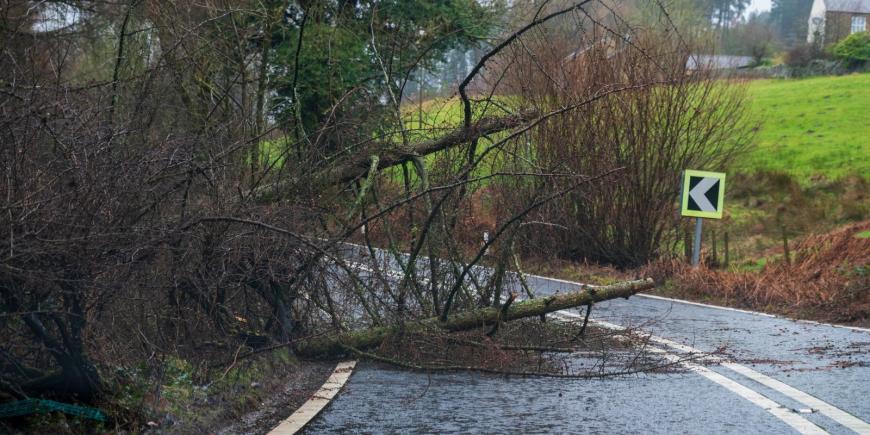
This might be surface water and river flooding from a conveyor of heavy rain that stalls over one region with disruption to transport networks. Fallen trees, closed bridges, large waves and power outages can occur in a storm. Flash flooding in city streets during summer thunderstorms or increased hospital admissions as temperatures climb. These are all impacts from severe weather. The warnings are to raise awareness and to allow the public, local authorities, emergency responders and businesses to make informed decisions and preparations. Thinking about Storm Goretti in January 2026 the warnings and emergency texts for southwest England and the Isles of Scilly allow people to get home and hunker down in good time.
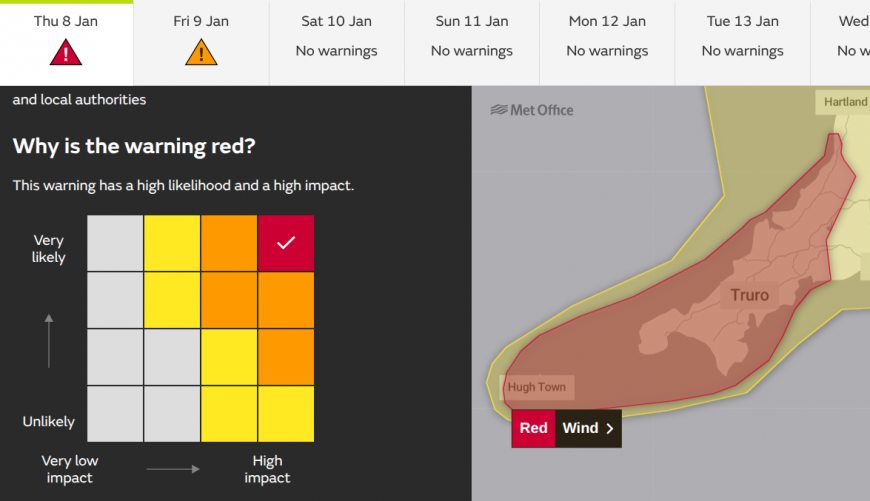
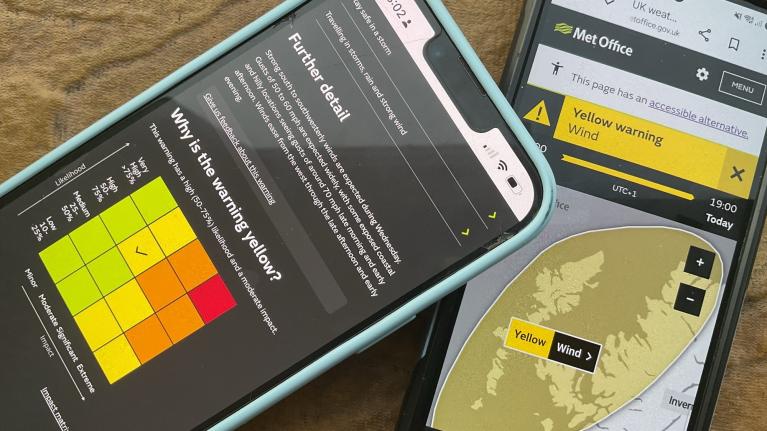
The warnings have two visual parts and a section of text. There are the familiar, and well-publicised, yellow/amber/red maps but also a lesser-spotted matrix which explains how the colour stage was decided upon. This matrix balances how likely the severe weather is to happen (from the current forecast) and how bad the forecast impacts could be. The Met Office warning system is designed to include all three parts so becoming familiar with them can also help prepare.
Utility networks
The energy networks also prepare before storms and then respond. They send engineers and kit around the UK to regions which are forecast to see the worst impacts from strong winds or heavy snow. They are already in place and ready to start work.
Scottish Power Energy Network (SPEN) has an innovative trial project called Predict4Resilience (P4R), a new tool to help decision-making, “adding a new level of precision to storm planning.” Previously, there was a lot of accrued knowledge from engineers and local recollections about how the network had been impacted in similar weather setups.
“That human judgement remains essential but is now backed by decades of historic weather and fault data, combined with advanced modelling and real-time forecasts, giving the control room a clearer picture of what’s coming and where resources will be needed most.” SPEN
In Storm Amy (2025) the additional assistance from P4R gave engineers crucial extra preparation time and helped to avoid under- or over-preparation, both of which would have implications for the energy networks and customers. SPEN said that “95% of affected customers reconnected within 24 hours.” Similarly, in night-time event, Storm Dave, SPEN said that across Scotland, 95% of customers impacted were restored overnight, and the remaining 5% were expected to be restored on Easter Sunday in daylight hours. The Priority Service Register information was shared with emergency planning officers locally.
Weather forecasters might mention tidying away garden furniture and wheelie bins before a storm. It is worth making sure your mobile phone is charged well before a storm arrives.

If there is a power cut, you can phone 105 or 0800 3163 105. This is the national emergency helpline number. It is the energy network that needs to know and who will action a response, rather than trying to contact your supplier, say Octopus or E.ON Next.
“Please don’t assume we know if your power is out, so call us right away.” 105
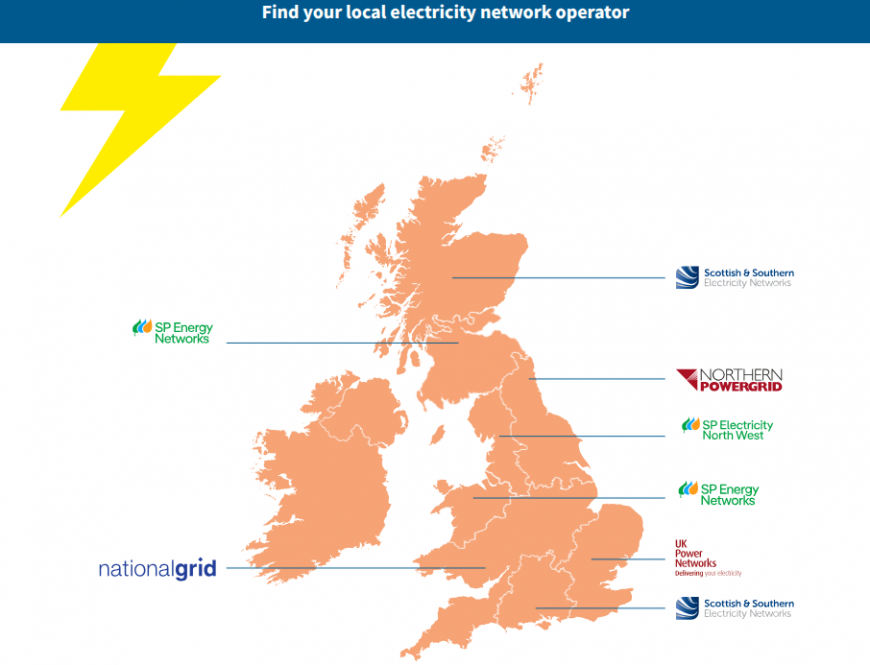
As the energy network teams work to restore electricity as quickly as possible after a storm, being on the Priority Services Register could prove valuable for those who might need extra support.
By telling a network, they might update your PSR request with your energy supplier (the company you pay your bills to) and other regional network companies, including electricity, gas and water. However, this does vary around the UK's networks, so do check, and it needs your permission. If you move house remember to update your PSR details.
The easiest way to register is online but you can phone too.
Loading recent activity...