


I wrote last week about the potential for a cold easterly flow to reach the British Isles. While I expressed some caution that it wasn't guaranteed to reach our shores, I have to admit that I didn't expect the forecast models to tone it down to quite the extent that they have done.
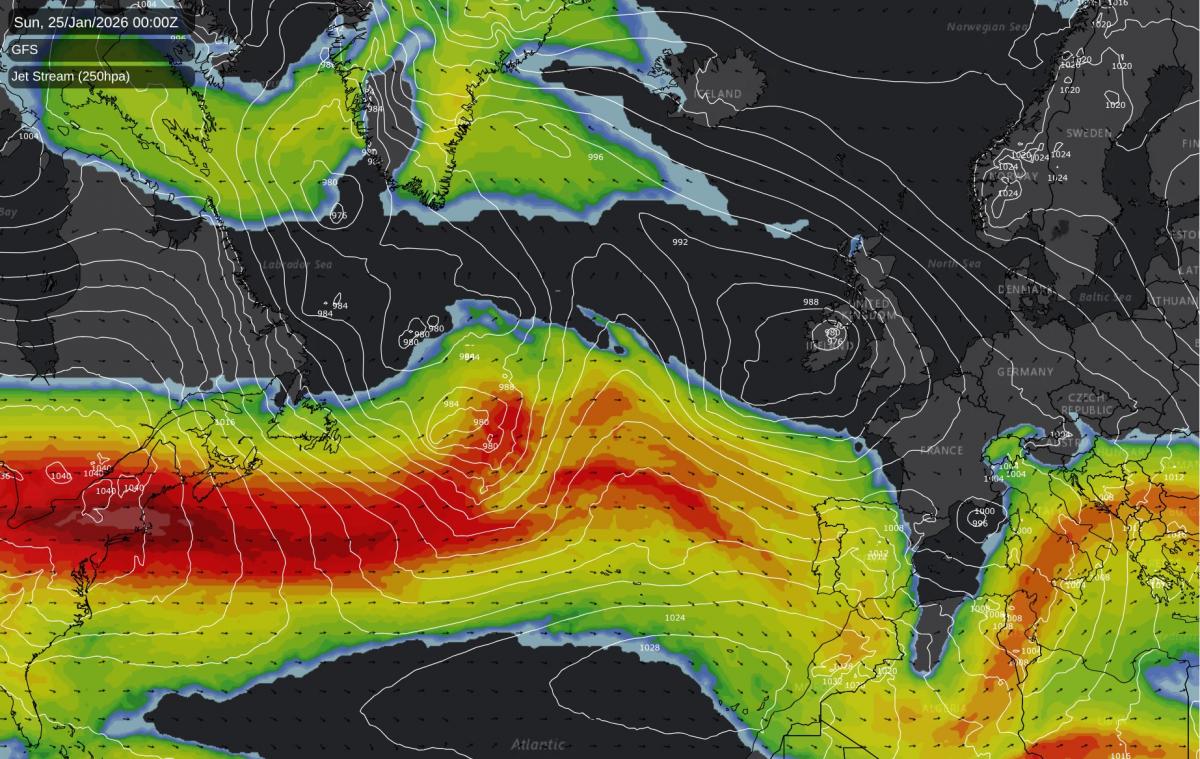
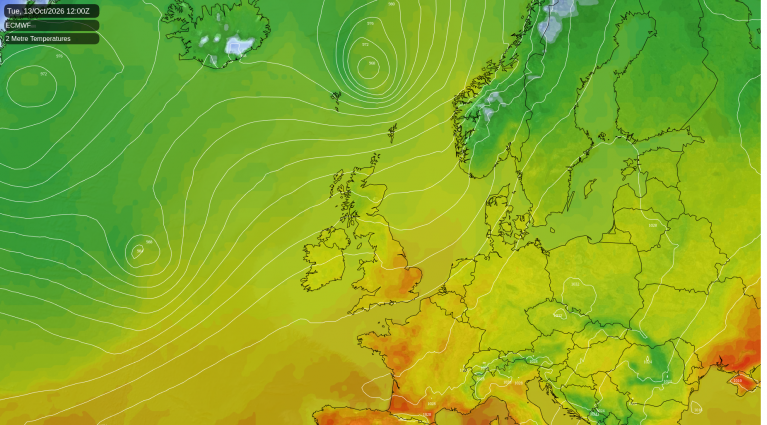
In the event, the easterly has mainly been foiled not by the Scandinavian blocking high ridging south, but by the strength of low pressure systems coming in off the North Atlantic and their failure to make substantial progress eastwards through the southern half of Europe, tending to fill as they head east of the Greenwich Meridian. With strong low pressure to the south-west, Britain has been kept in a mainly south-easterly flow, which has been bringing in relatively mild air from south-eastern Europe.
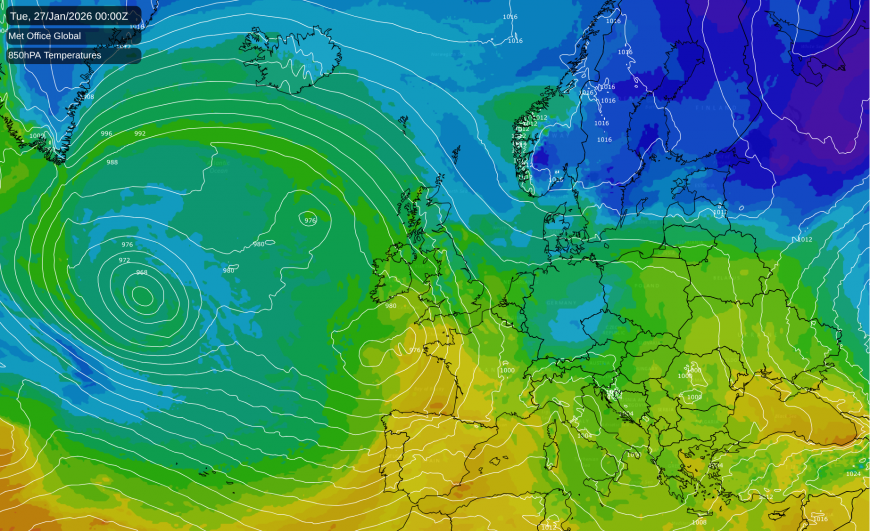
The current weather patterns are quite reminiscent of those of late January 2014, when again we saw a pronounced Scandinavian blocking high during the last third of the month, but instead of sliding under the high and giving us cold easterlies, lows streaming in off the North Atlantic largely got stuck to the west and south-west of Britain, keeping Britain in a fairly mild and very wet regime. The winter quarter of 2013/14 was exceptionally wet for much of Britain, and exceptionally snow free at low levels, although it was snowy in the Scottish Highlands, leading to substantial snow patch survivals in 2014.
Correspondingly, if the current weather pattern keeps up through the rest of January and into February, there will be a growing risk of flooding, especially in the west and south of Britain, where it is expected to be particularly wet during the coming week. Some forecast model runs are suggesting that parts of south-west England in particular could have over 100mm of rain in the next 10 days.
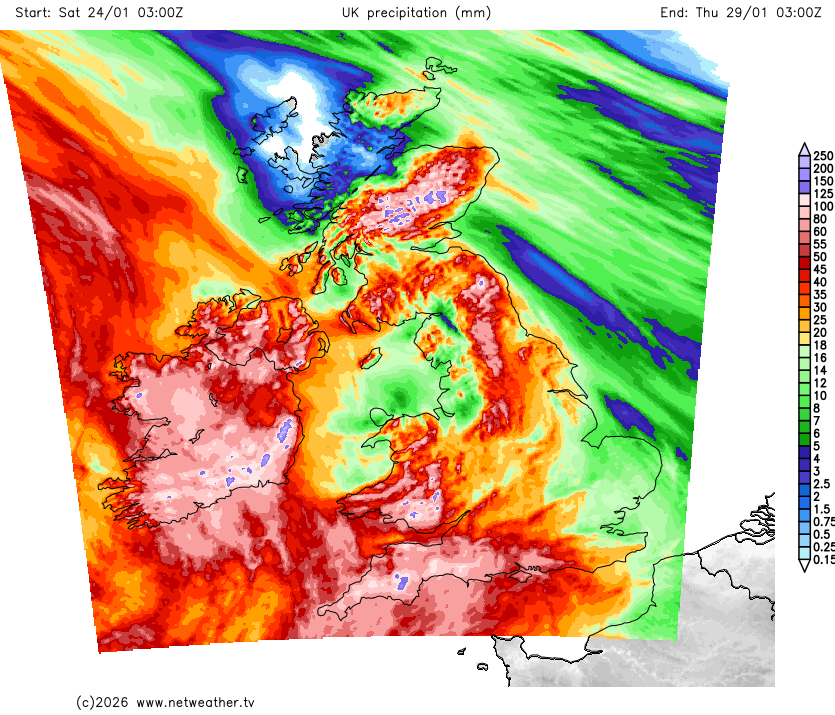
In 2014, large areas of the south-west were cut off for a time especially in early February. The ECMWF 42-day outlook, while not always reliable at more than 10 days out, is indeed suggesting that the pattern could continue for some time.
As is often the case in these situations, major cold air outbreaks over Canada and North America are helping to power up the jet stream and send deep lows our way. Much of Canada has been under a very cold air mass for some time, and a lot of this cold air has recently headed into the north and east of North America, where it is forecast to stick around for about a week, though the cold is expected to subside considerably in a week's time, especially over Canada, where most areas are forecast to switch to being considerably warmer than average.
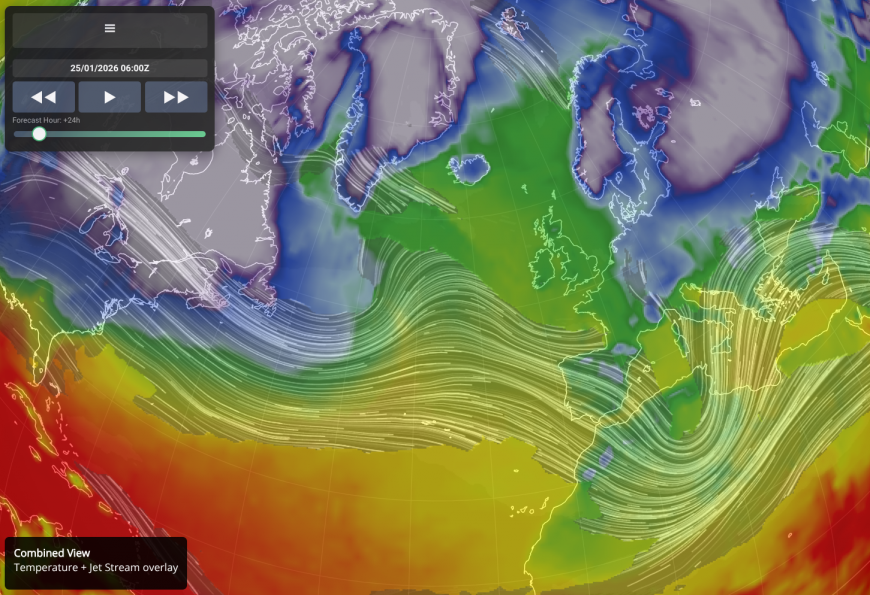
The cold air coming out of Canada and North America powers up the jet stream due to the contrast between these very cold air masses flowing over much warmer seas. Historically, it hasn't always resulted in mild and wet weather for Britain - much depends on the alignment of the jet stream. For example, in the winter of 2014/15, major cold air outbreaks over Canada and North America sometimes sent cold air masses our way via a west to north-westerly flow, bringing some short-lived snowfalls to much of Northern Ireland, Scotland and northern England, which sometimes penetrated into the Midlands. More notable examples of this setup occurred in January 1984 and in early March 1995. This setup, which is often referred to as "cold zonality", tends not to bring much snow on low ground south of the Midlands, but snowfalls did penetrate into the south of England for a time around 2 March 1995 in particular.
The snowfalls of early February 1996 were associated with cold air coming out of Canada and North America and powering up the jet stream, but a pool of cold air had already established over Britain when the lows pushed in, and the polar maritime air masses that were pushing in from the west were also quite cold, and so the result was heavy snow for some areas of the country, particularly Cumbria and north Lancashire. A fairly similar pattern arose on 21-23 January 1984. On that occasion, a cold pool had established over Britain via a northerly prior to the lows arriving, with some exceptionally low minimum temperatures in Scotland. The lows made progress further east than in early February 1996, and so there was widespread heavy snow from the Midlands northwards, but milder air and rain affected low lying areas further south.
In the current setup, unlike the examples in late January 1984 and early February 1996, cold air hasn't had the opportunity to establish substantially over Britain prior to the lows coming in, hence the result generally being rain except on high ground in the north. It was a very similar story in late January 2014.
Loading recent activity...