


The start of meteorological winter, which is set as the months of December, January and February. This month contains the shortest day, dark evenings and mornings, more fog, frosts and icy starts and of course Christmas. Away from the madness of Black Friday and cyber Monday, it’s the usual count-down, dreaming of a White Christmas, la la la. With all the Christmas card scenes, picturesque black and white festive films, there is often more belief that a white Christmas is the norm, when actually it isn’t.
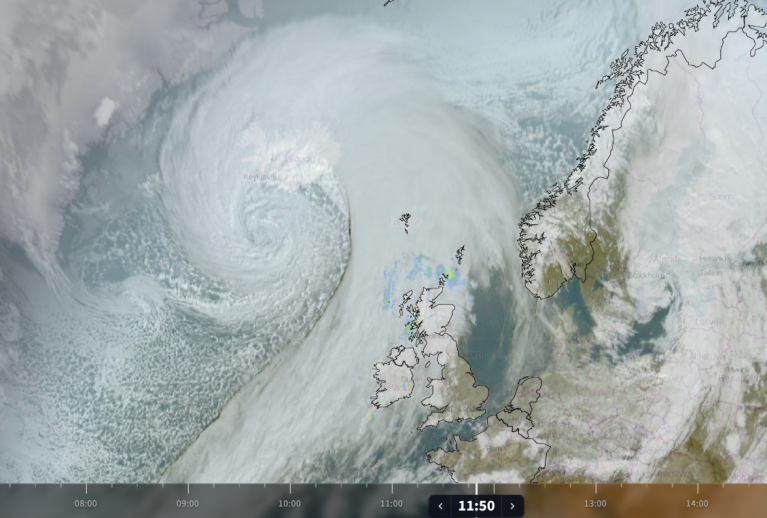
The true cold in the UK comes in January and February with December often producing stormy wet and windy weather mixed with some lovely crisp sunny days. The strongest wind gust ever recorded in England was in mid December in 1979 as a gust of 118mph hit Cornwall. Just one of the many Atlantic storms which roll in at this time of year. Retailers and anyone organising a Christmas market or carol singing, will be hoping for dry weather, which people can easily wrap up warm for but still get out and about. Rain and gales at this time of year can put a dampener on anyone Christmas cheer. Of course, there is the chance of snow and by the end of December, the days will be getting a bit longer and a new year will be on the horizon.
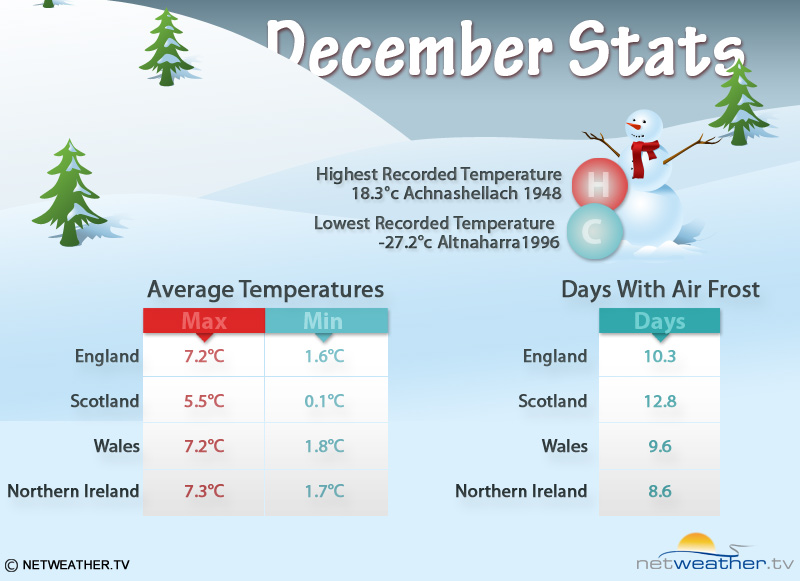
The lowest ever recorded temperature in the UK occurred in December. On 30th Dec Altnaharra, a low level site in the NW Highlands dipped to -27.2C, matching the existing record low in Braemar from 10th Jan 1982. Stations above 500m are not included in the data. Northern Ireland’s lowest ever record was on Christmas Eve 2010, with -18.7 in Co. Tyrone, Santa would have needed a whiskey that night. The warmest December day was also in Scotland, at Achnashellach in Wester Ross 18.3C (65F) on the 2nd in 1948. The temperature today (the 2nd) will only reach 5C at in the Highlands
This month sees the Geminid meteor shower. One of the finest meteors showers with the best viewing mid evening on 12/13 and 13/14th December.
The official definition of a White Christmas (if you are a betting person) “is for a single snowflake (perhaps among a mixed shower of rain and snow) to be observed falling in the 24 hours of 25 December at a specified location”. So if you happen to see a swirl of snow in your garden, that doesn’t count. UK and Irish airports seem popular this year, with the observers in the air traffic towers keeping their eyes peeled for a white flake, or even sleet. In the past 50 years, about half of the Christmas days have qualified as white with a snowflake falling somewhere, but that doesn’t really make for happy children with a new sledge under the tree. Someone even crowed last year that their loud forecast of a white Christmas was correct, because the tops of the NW Highlands had a snow shower. Real crowd pleaser that one. Will it be another 2010 or even 2004, when there was lying snow for many? We’ll have to wait and see, have a look at the Santa shaker for your region’s chances.
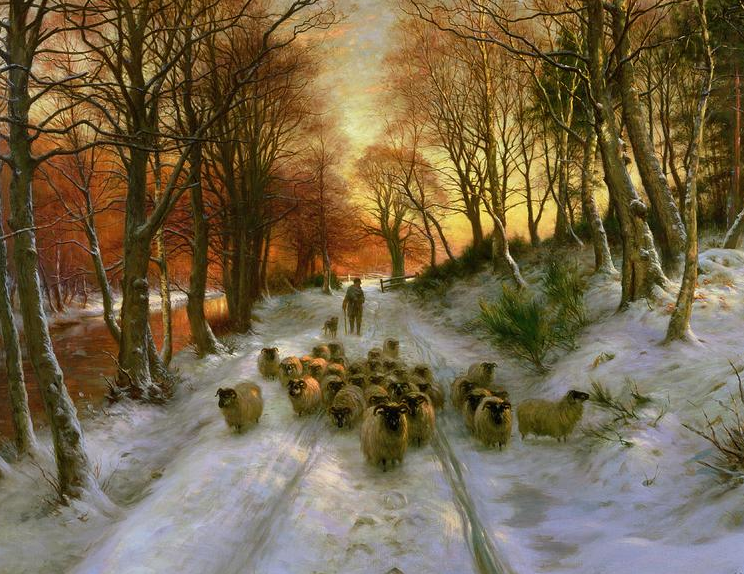
Christmas card scene Joseph Farquharson
Loading recent activity...