


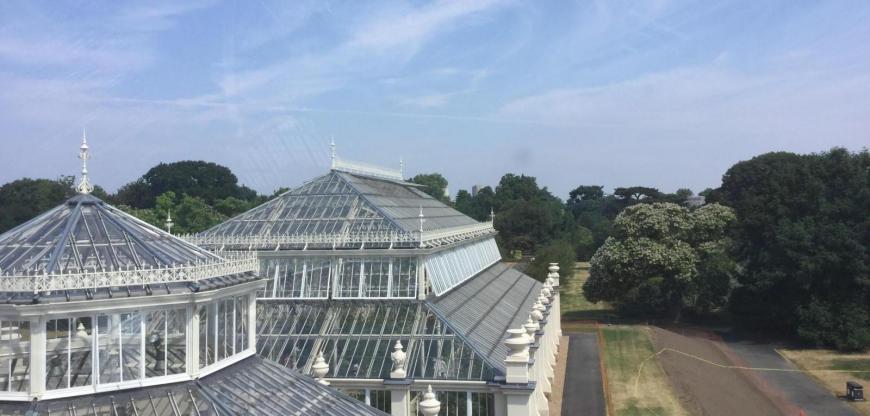
Temperatures reached 38.1C at Kew Gardens, London, on 13 August 2026, the day after the eclipse. There were also a few readings above 35C on the 12th. This officially made 13 August the second hottest August day for the UK, behind only 10 August 2003, which had a reading of 38.5C at Faversham, Kent. The 38.5C figure from 2003 has been accepted by the Met Office but disputed by some, notably in a 2007 paper in Weather magazine by Philip Eden and Stephen Burt, while Kew Gardens also reached 38.1C on that day. There have so far been no doubts about the validity of the 38.1C at Kew Gardens on 13 August 2026. Pershore and Pershore College also made it to 38.0C.
This has produced the unprecedented statistic of somewhere in the UK having reached or exceeded 35C in every month from May to August inclusive. It is worth noting that, prior to 2015, the majority of years did not record a maximum of 35C or above anywhere in the UK, and occasionally nowhere even reached 30C, as happened in 1993, 1981, and a few times in the 1960s. Ultimately, there are regional and seasonal variations in the rate at which temperatures have warmed in recent decades, and there appears to have been a shift, which accelerated around 2015-2019, towards western Europe being more prone to very high temperatures during the summer months. This year it has especially been accentuated by very high sea surface temperatures around Britain, France, Spain and Portugal, which have made it easier for us to pull in scoops of very hot air from the south.
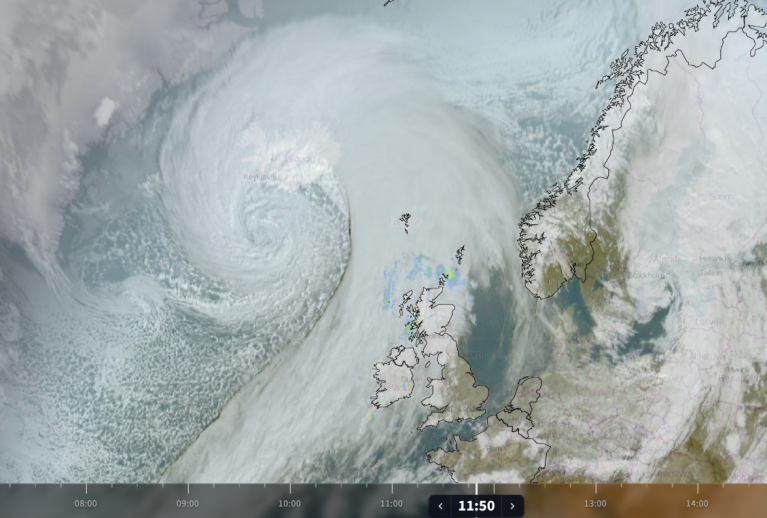
In many areas of England in particular, it has been remarkably dry since around 15-20 June. It is now looking probable that the drought over large areas of England will be alleviated during the next 10 days, with some potentially substantial rain coming along. A depression is forecast to take quite a southerly track next Wednesday/Thursday. There will be some steady frontal rain moving south-eastwards through the country on Tuesday/Wednesday, followed by brighter conditions with showers.
A caveat is that in sunshine-and-showers conditions, rainfall is inevitably of the "hit and miss" variety, with some places staying mostly dry while others see one shower after another. Also, such showery conditions often see short, heavy bursts of rain which are not as efficient for replenishing the water table as steady persistent rain. High pressure also looks set to build to the west and north-west towards next weekend. Thus, some areas may not see enough rain to substantially alleviate the drought, but for many the event looks set to provide the most substantial rainfall since around mid-June.
Temperatures will also be cooler during this upcoming spell, but with the high sea surface temperatures around Britain modifying any cold air masses, they will probably not drop substantially below the long-term normal. As a result, even with this upcoming cooler spell, summer 2026 is still on track to be one of the two hottest summers on record for the UK, and likely the hottest over a large area, especially in the south. The wetter weather of next week also looks unlikely to prevent it from ending up as one of the driest summers over a large part of the UK, and one of the sunniest in the south, where sunshine totals in July widely exceeded 300 hours.
For many, though not all, skies were predominantly clear for the partial eclipse of 12 August 2026. For those who are old enough, memories of the total eclipse of 11 August 1999 came back, almost exactly 27 years ago.
August 1999 was a predominantly wet and unsettled month for many, on the back of a warm, dry and sunny July, although it was a dry sunny month in the north and west of Scotland. On the 11th, the total eclipse was only visible from parts of southern England, chiefly around Plymouth in the south-west, where the weather ended up predominantly cloudy, but locally there were some breaks in the cloud. The BBC televised viewings of the total eclipse but were not lucky enough to select one of the few locations in Devon and Cornwall where skies partially cleared during the total eclipse. I recall that much of northern England lay in between a couple of frontal systems and had predominantly clear skies, but saw just a partial eclipse that day.
On 12 August 2026, the eclipse was only partial across Britain but reached 96% in some places. Cloud cover was extensive in some regions, particularly western Scotland and parts of Northern Ireland, but most of England and parts of Wales were predominantly clear, allowing for extensive viewing of the eclipse. For many in the sunnier areas, it went noticeably darker for a time and temperatures dropped more than one would normally expect under clear conditions at that point in the evening, before stagnating for a while after the eclipse passed over.
Loading recent activity...