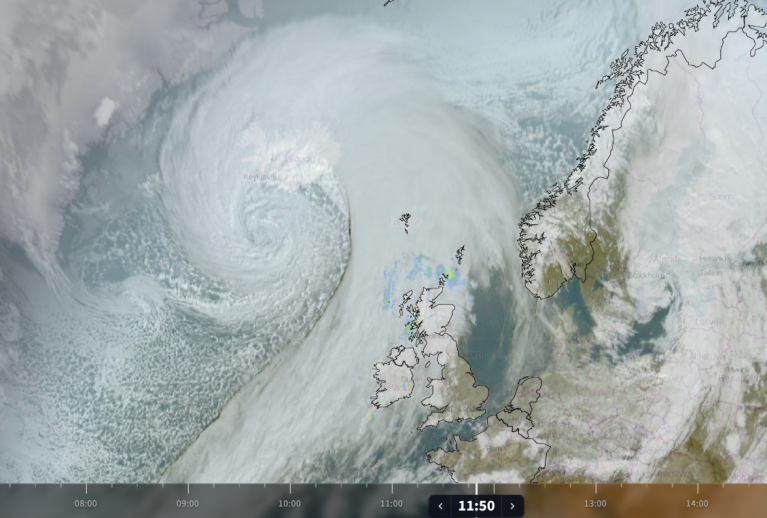



It has been an intense few weeks of heat. July has been described as “historic” by the UK Met Office. The impacts are wide, particularly in England and Wales, with drought declared in many areas. As this heatwave finally breaks, a look at yet another intense part of summer 2026.
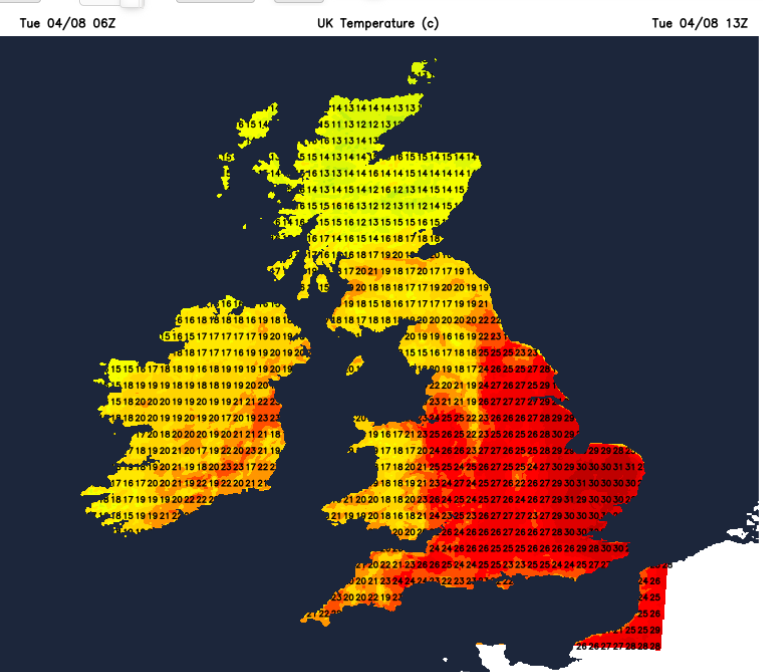
Eastern and Southeastern England will hold onto the heat for one more day. It will feel hot and humid for East Anglia and Lincolnshire, London and Kent on Tuesday. By Wednesday, the cooler and fresher conditions over northern areas will have reached more of the UK.
If this latest heatwave has all been too much for you, a break will finally be reaching southeastern Britain. Little sign of rain though for drought hit areas.
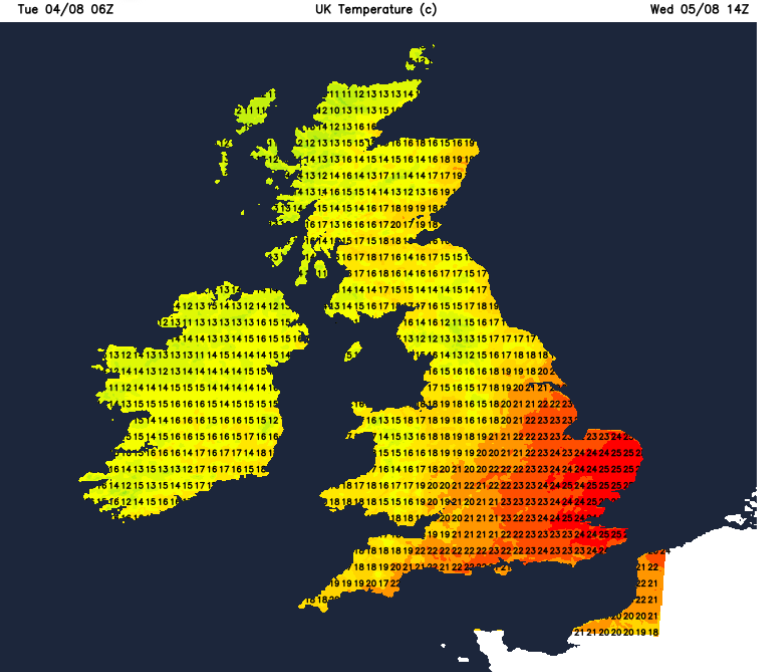
Southwest England has spent 41 days in heatwave conditions, eastern England 39. London and Southeast England 38 days matching or exceeding the heatwave criteria, and Yorkshire 33 days, Wales 32 days. It has been an incredible hot spell. Monday 3rd August was the 20th day above 32C. The previous record was 19 days in 1995. So far this year, there have been 55 days of heatwave. 2025 saw 47 days and 2022, 48 days.
The impacts on our water supplies, farming and the NHS have been huge, particularly for England where the heatwave conditions have been most intense. The Times reports today how the lack of air conditioning in hospitals means that operations are being cancelled, often in old buildings with scans and tests being delayed as well as surgery. The stress that heat, especially when there is hot and humid weather, places on the body can exacerbate underlying health conditions and older people find it more difficult to regulate their temperature and might not drink enough water. The change in airmass this week will ease these conditions.
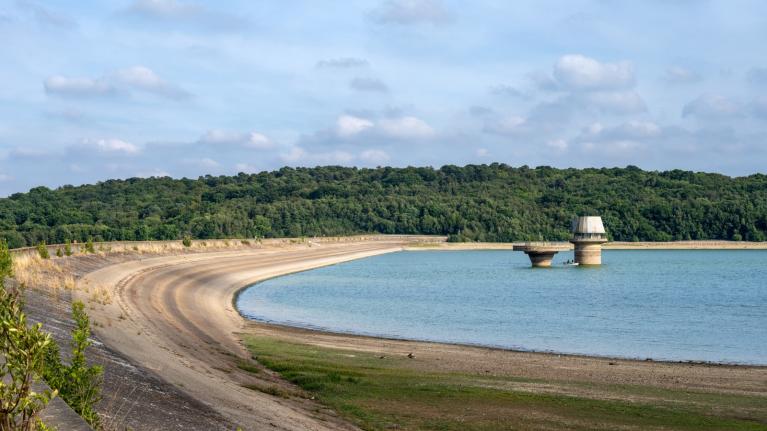
Southern Water says further restrictions on water use could be brought in. An official drought has been declared in Hampshire and the Isle of Wight and although the TUB, hosepipe ban has helped, river levels are still falling. The water company is applying for a Drought Order, and Non-Essential Use Ban (NEUB), which would affect businesses. An update is due today.
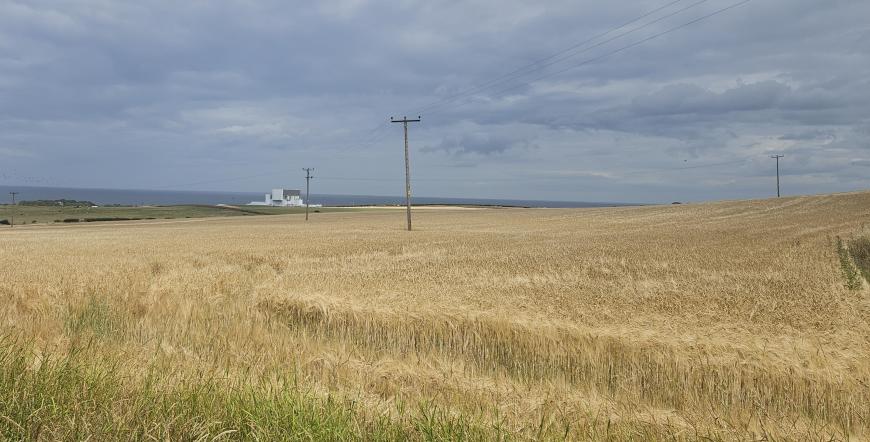
Farmers, gardeners and growers have faced an extreme summer (and spring in places). Harvest yields have been smaller with harvesting earlier for some cereal crops (wheat and oats). The National Farmers Union is warning of food shortages if the drought conditions continue. Vegetables haven’t had enough water, here or in Spain, particularly salad crops from Europe. Grazing for dairy herds has been affected, with dry yellow grass outside and winter forage having to be used.
Other areas have been affected by wildfires, or access disruption as the fire services continue to tackle the smouldering heat. This has been an exceptionally dry and hot summer for parts of the UK. It has to be a time to look again at our water supplies, land management, climate action and food security rather than the transient or divisive headlines that we seem to be subjected to every day. Climate change is making these events more extreme.
July 2026 has been an exceptional month. Wales recorded its joint warmest July on record for mean temperature, with the UK and England their second warmest July. Southern England recorded its warmest July.
UK, England and Wales recorded their sunniest Julys on record, and England and Wales had their sunniest calendar month ever observed.
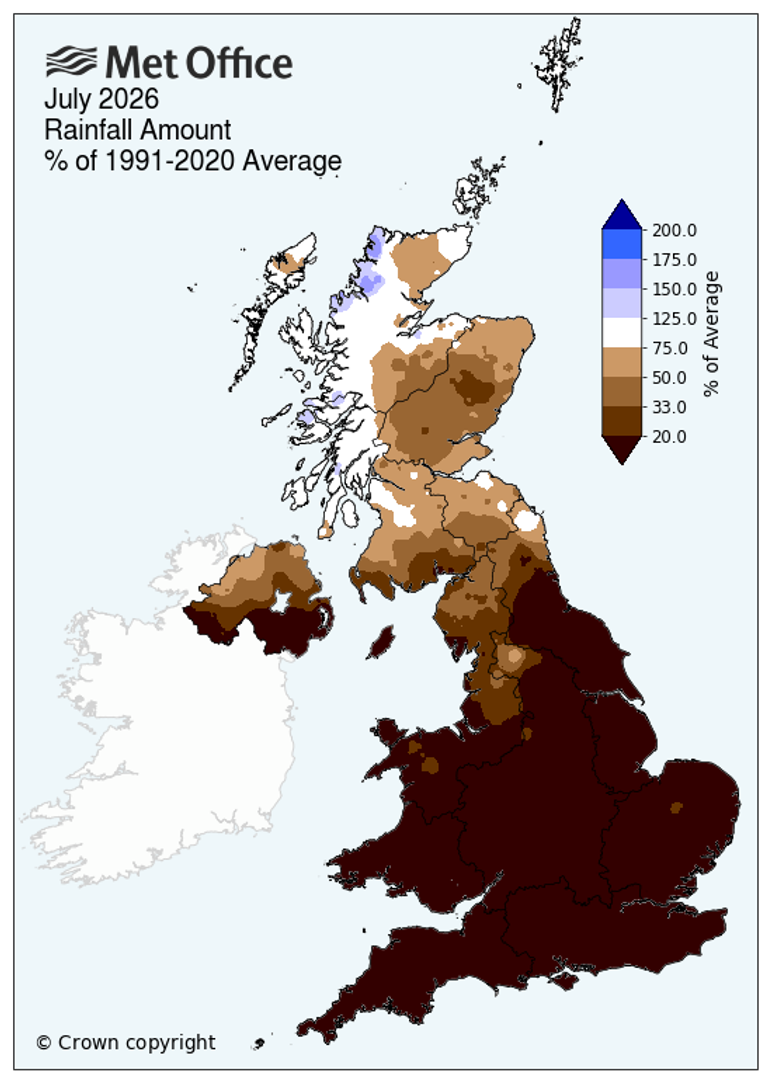
“Nationally, the UK received just 19% of its average rainfall for the time of year, while England and Wales received only 4% of their normal July rainfall. Scotland was the least dry nation, but even there, rainfall reached only 41% of average.” Met Office
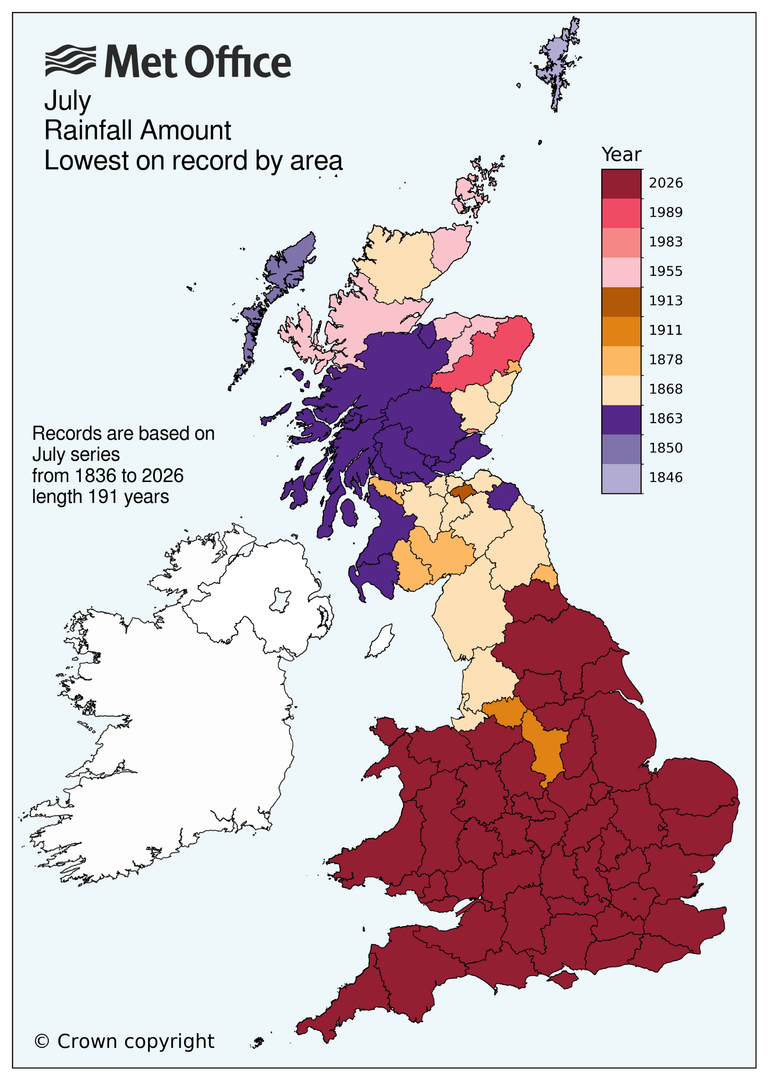
Southeast and central south England recorded just 0.7 mm of rainfall during the month, representing an extraordinary 1% of average. East Anglia received 2.0 mm, or 4% of normal rainfall, while the Midlands recorded 4.1 mm, equivalent to 6% of average. Southern England saw its driest month ever recorded, just 3% of the long-term average.
England and Wales have provisionally recorded their driest July on record, with Southern England seeing its driest month ever recorded, dating back to 1836. It was the third driest July on record for the UK, since 1868. July has also been the third driest month ever on record for England.
By the 30th July, Natural Resources Wales (NRW) had extended ‘drought status’ across the whole of Wales following sustained reports of further deterioration in conditions across the country.
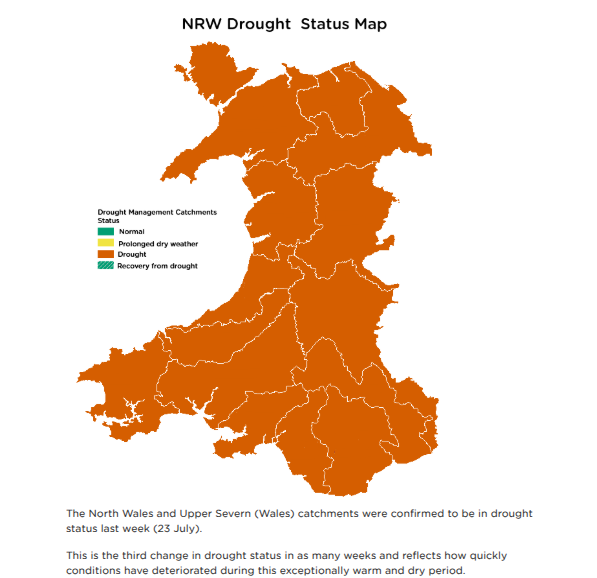
NRW “River levels remain low across much of Wales, with some rivers at exceptionally low levels for the time of year. Groundwater levels continue to fall and are lower than expected at a number of monitoring sites.”
In England, “Half of England has been declared in drought by the Environment Agency…millions of people are living under restrictions on water use” at the end of July.
Although there has been rain in Scotland and Northern Ireland in recent days, the eastern half of Scotland remains in Moderate, even Significant, water scarcity. Northern Ireland saw its eighth driest July on record, with 30% of average rainfall.
It really had been an astonishing month.
“Nineteen counties recorded less than (or equal to) 1mm of rainfall across the entire month: Berkshire, Dorset, East Riding of Yorkshire, East Sussex, Essex, Gloucestershire, Greater London, Herefordshire, Isle of Wight, Kent, Leicestershire, Lincolnshire, Northamptonshire, Nottinghamshire, Oxfordshire, Rutland, Surrey, Warwickshire and West Sussex.” Met Office
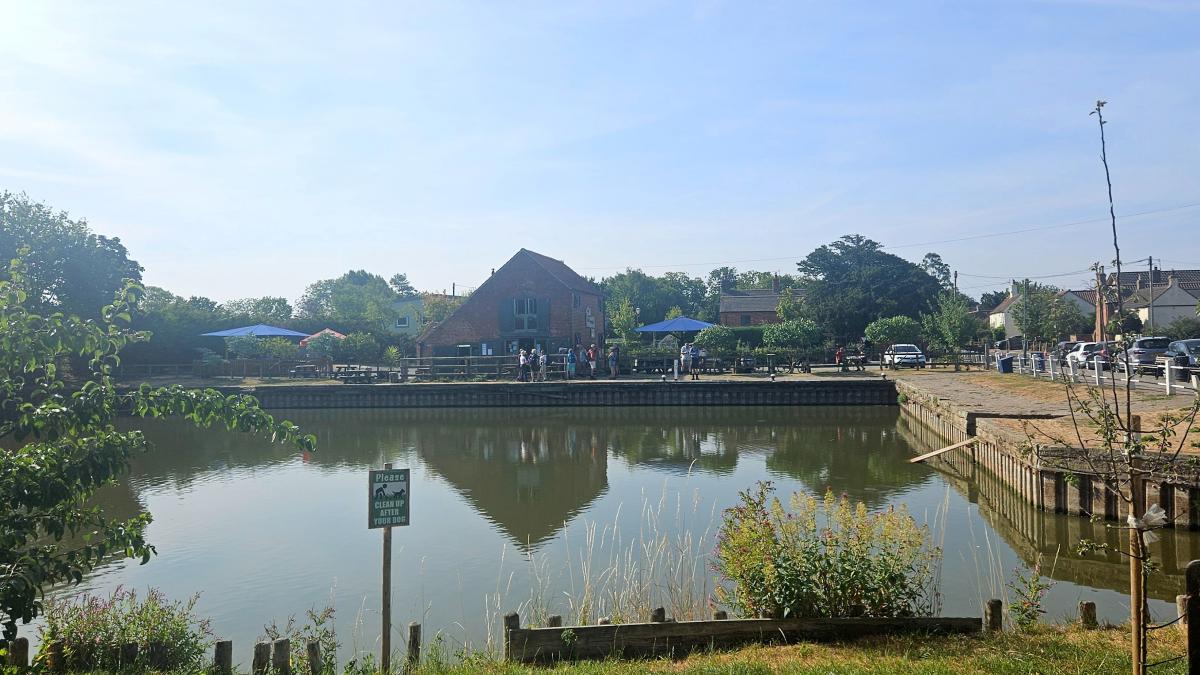
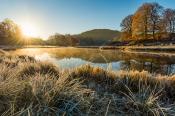
Top photo - Hickling on the Grantham Canal, Notts
Loading recent activity...