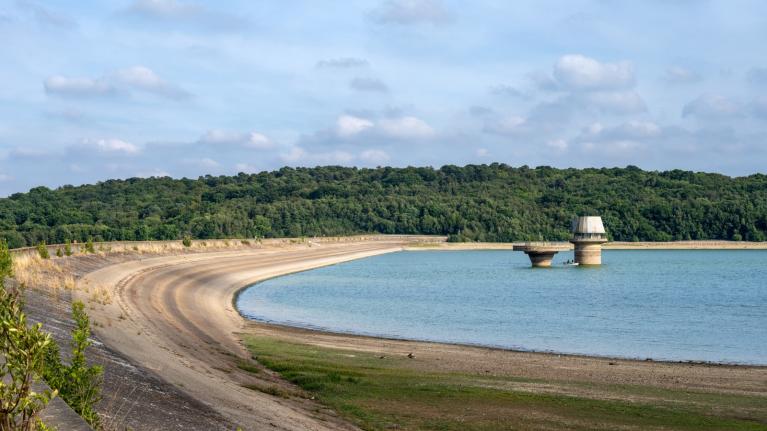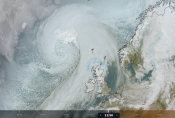



Official Drought conditions have been extended this week, with Natural Resources Wales declaring a nationwide drought for Wales in what is likely to be the driest July on record for this usually green country. The Environment Agency has similarly placed central, eastern, and southern England under official drought conditions, in what is likely to be driest July on record for England too. Southern England has been particularly dry, seeing 1.5mm, just 2% of the long-term average, with some places seeing no rainfall at all.
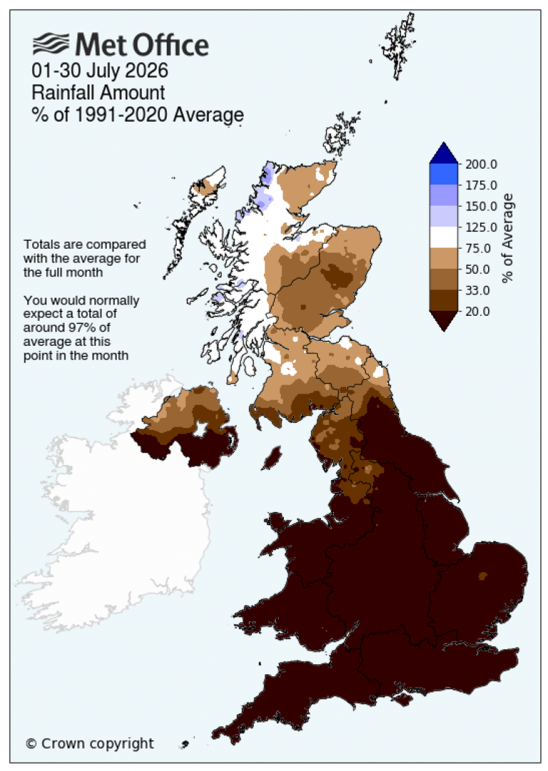
The lack of rainfall this month has been accompanied by exceptional warmth across England and Wales, with the dry ground likely helping higher temperatures to be achieved during the prolonged spells of sunshine under clear skies that have been a feature for much of the month. Wales is on track to record its warmest July mean temperature on record, while England is on track to record its joint warmest July mean temperature.
It’s been an exceptionally sunny month too, with the Met Office provisional sunshine statistics showing that England and Wales are on track to see the second sunniest July on record.
High pressure will be in charge across England and Wales this weekend, so other than the odd isolated shower in the northwest, most will stay dry, fine, warm and sunny - with a likely top temperature 25C in the southeast Saturday and 28C here on Sunday. Scotland cloudier on Saturday, with scattered showers, drier and sunnier on Sunday.
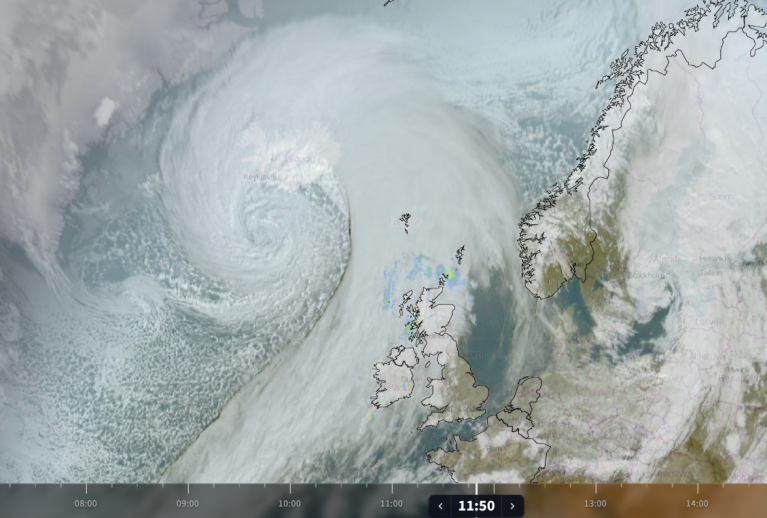
Despite low pressure moving northeast across the UK next week, some weather models forecast very little or no rain for parts of central, southern and eastern England and east Wales next week, with what does fall in the form of showers which will be, by their very nature, hit-and-miss, so some places staying dry.
Low pressure forecast to move NE over the UK next week, but despite this, some models bring little rainfall to central, southern and eastern England which are officially in drought
It should be stressed that there are differences between weather models and differences between their own 6 hourly runs on distribution of rainfall across the UK. Though the general consensus is that, for now, most of the rain falling next week, produced by the fairly complex low pressure system moving slowly northeast, is forecast to fall across Scotland, N. Ireland, far north of England and west Wales. For central, southern and eastern England - rainfall amounts look more uncertain and what falls looks to be mostly from showers here, which as mentioned, can be hit-and-miss. There is potential showing from some models for more prolonged rainfall late in the week, but confidence is too low at that range.
The 06z GFS run today shows some parts of central and eastern England seeing no rainfall at all through to the end of next Friday. And even across southern England - rainfall amounts from showers are forecast to be meagre. Obviously rainfall amounts in one area can be difficult to predict accurately this far out, but there is certainly no confident signal for heavy rainfall that could make a difference next week across central, southern and eastern England.
.jpg?w=800)
Across the wetter Scotland, rainfall amounts still vary widely between models and the runs of each model, 00z ECMWF, for example, forecast over 100mm across southern Scotland by the end of next Friday, while 06z GFS has 10-15mm.
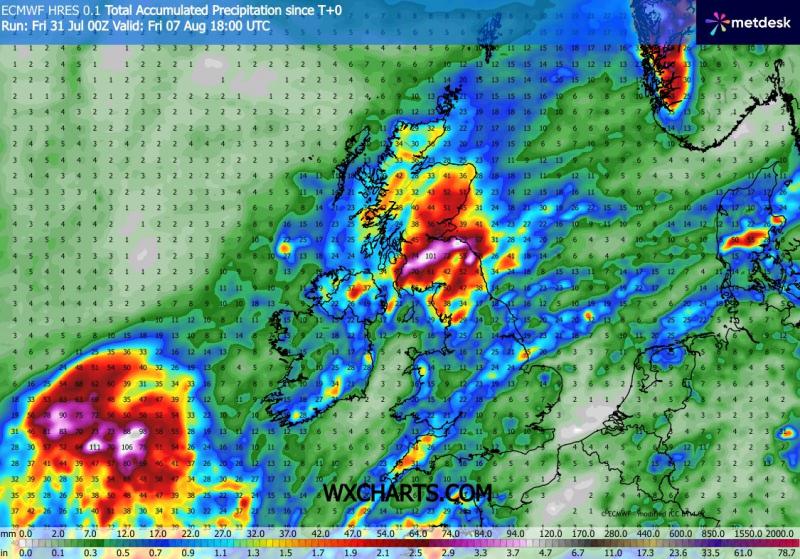
So there will be rain chances for all parts next week, but the emphasis for highest rainfall totals across the north again, while central, southern and eastern England in particular are not forecast much more than 5-10mm at best by GFS, locally 10-20mm by ECMWF, but some spots seeing less than 5mm. Not a drought buster.
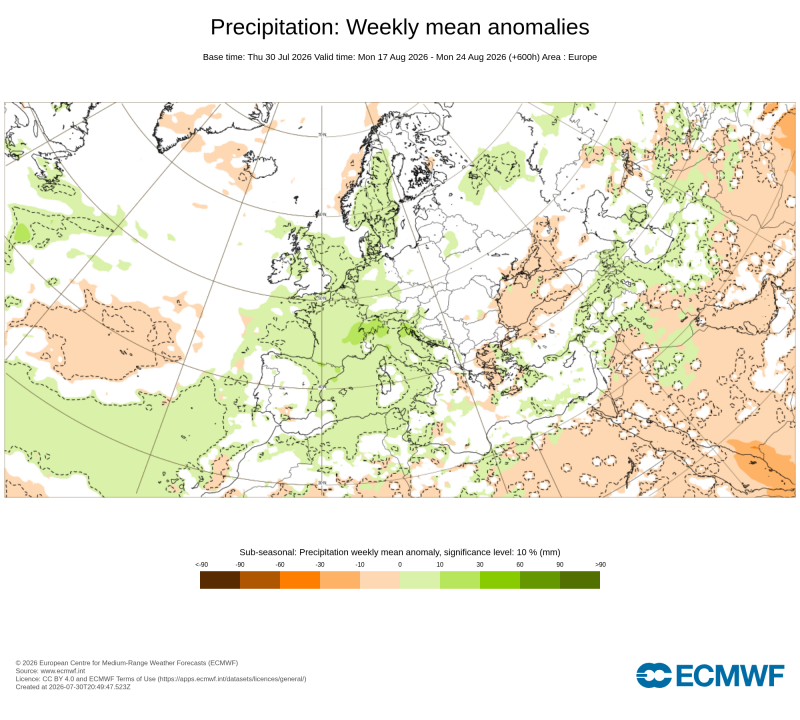
We may have to wait until deeper into August to see more meaningful rainfall for areas in drought at the moment. There is a signal from the latest ECMWF sub-seasonal run of average or even slightly wetter than average rainfall amounts from mid-month. But this could change - given the range.
For now, no end in sight for the drought, with conditions perhaps worsening as we head through early August before they get better, with concern of little rainfall potentially on offer next week.
Loading recent activity...