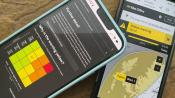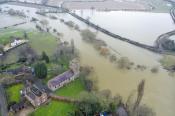



And so the FIFA World Cup 2026 begins, the 23rd edition with tri-hosts Canada, Mexico and the USA. After qualifying, an increased number of 48 nations will compete this year to become the men’s world champions. There has been plenty of news and upset even before the players reach the pitch and the weather is likely to add to the chaos with extreme heat being the main concern but lightning delays also possible.
The championship will run from 11th June, until 19th July. During the first two days, the host nations play their opening games with coverage into the small hours on ITV and BBC here in the UK.
Group A Mexico v South Africa Mexico City Stadium, Mexico Thursday evening 11th 8pm ITV
Group A South Korea v Czech Republic Guadalajara Stadium, Mexico Thursday night/ Friday 12th 3am ITV
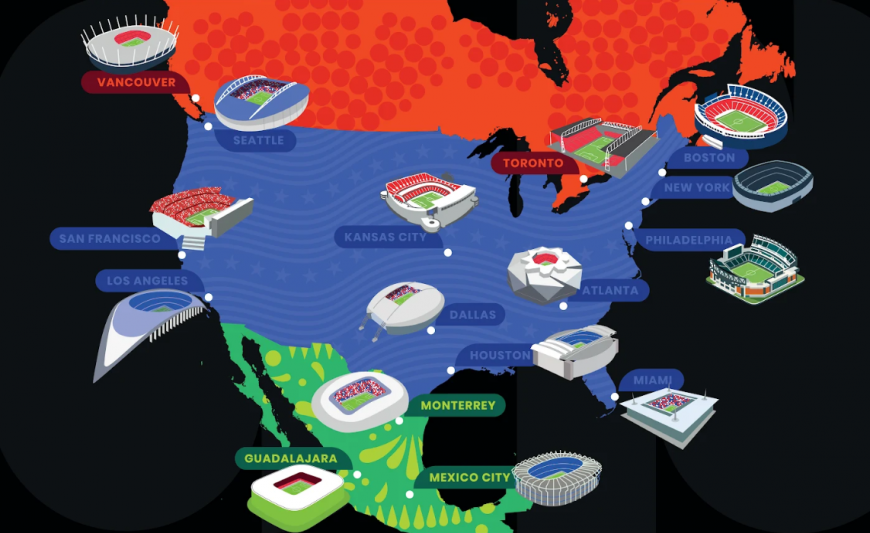
The venues vary by country, capacity and climate. Some have roofs and air conditioning, others are just open to the elements. Some are way above sea level and the higher altitude will bring extra demands to the foreign players. There are two venues in Canada, three in Mexico and the rest are in the USA. The average temperatures at this time of year vary from the low 20s Celsius up to the low 30s Celsius, much like what southern Britain experienced in the heatwave conditions of late May this year. Except you probably weren’t playing 90+ minutes of top level sport with millions of people watching.
Back in 2022, Argentina beat France in the final. This was in the desert heat of Qatar but the event had been moved away from the summer months.
Last year, the Club World Cup was held in the USA as a practice run, and that was hot. There are concerns not only about the heat for players, officials and spectators but also about lightning storms, Florida and the Gulf of Mexico (America)’s hurricane risk and the high humidity.
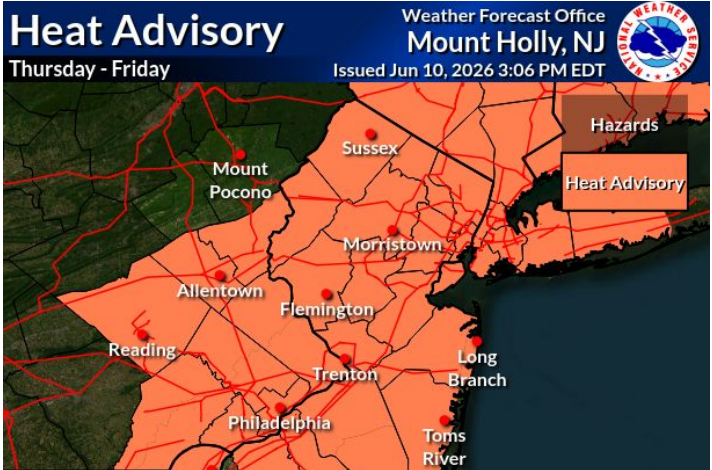
Heat advisory from NWS for New Jersey
Group B Canada v Bosnia & Herzegovina Toronto Stadium, Canada Friday evening 8pm BBC
Group D USA vs Paraguay Los Angeles Stadium, USA Friday night/ Saturday 13th 2am BBC
Friendly matches continued this week, and the weather made its presence felt. At Jordan-Hare Stadium (an American football stadium in Auburn, Alabama, not being used for the World Cup) there was torrential rain on Tuesday 9th before Argentina were due to play Iceland later that day. Reports of around 3.5” of rain falling with torrents pouring down the bleachers and a waterlogged pitch in the morning, but it was all sorted by groundstaff before kick-off.
For England’s final World Cup warm-up friendly against Costa Rica, the game was delayed due to lightning. With heavy rain and thunderstorms in the area, early fans were told to leave the stands. Rules in the US say that if any lightning strike is detected within eight miles of a stadium, the game has to be stopped. All players must leave the pitch, and fans must seek shelter away from their seats. A mandatory 30-minute countdown begins. Each time there is a lightning strike inside the distance, the countdown clock resets to 30 minutes. If a full 30 minutes has elapsed, the supporters can go back to their seats and players will have a short warm-up.
This could play havoc with the global television coverage and scheduling. They are already agitated by the planned extravaganza at half-time in the July final as delays to erect and dismantle a stage will add to the break time, which impacts on advertising allocation.
“World Cup TV rights holders are growing increasingly frustrated at Fifa’s failure to confirm the length of the half-time show at next month’s final.” Guardian
To combat the risk of extreme heat stress, there will be three-minute hydration breaks in each half of a game although that won’t be enough to reduce the players core temperature. For spectators, some stadiums do have cooling systems and the reusable water bottle debacle has been clarified as Fifa says fans will be able to bring sealed disposable water bottles into World Cup stadiums, only hard-sided reusable bottles are banned due to safety concerns.
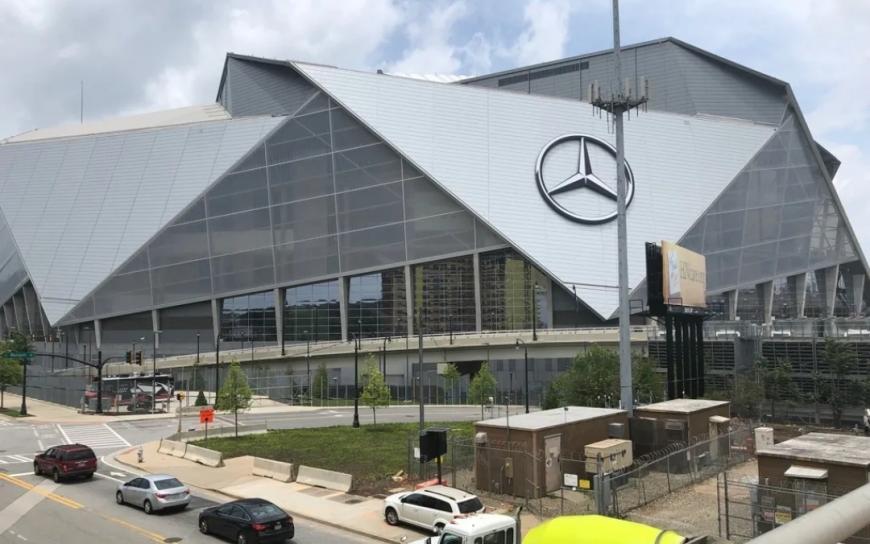
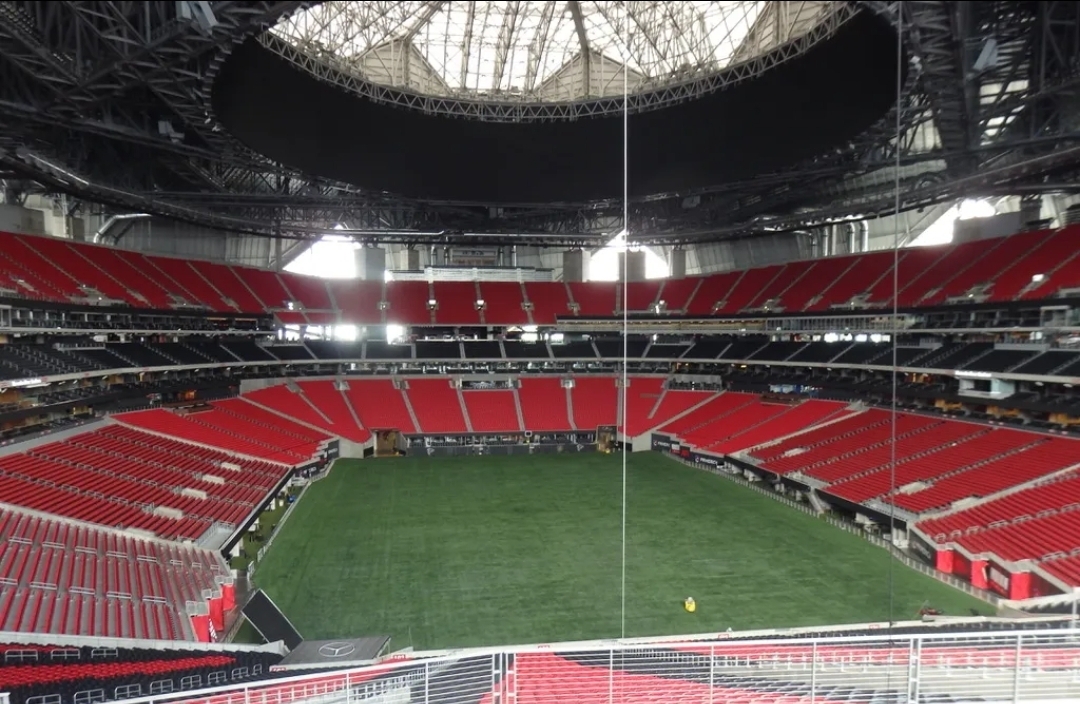
Atlanta Stadium (and top image -credit David Reid)
Many stadium sponsors at World Cup venues are not FIFA sponsors. Names now relate to geographical location to guarantee the exclusive sponsorship rights during the tournament. There has also been a lot of real grass installed over artificial turf.
The 16 stadiums with other name, location, style and average temperature.
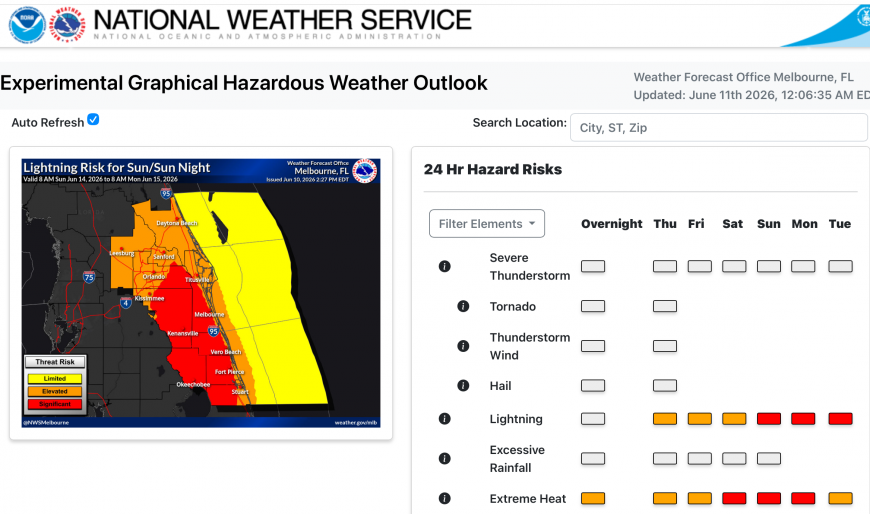
Example warning for Florida showing lightning risk at the weekend from NWS
Stadium forecasts on the GOB Mexico Met service website
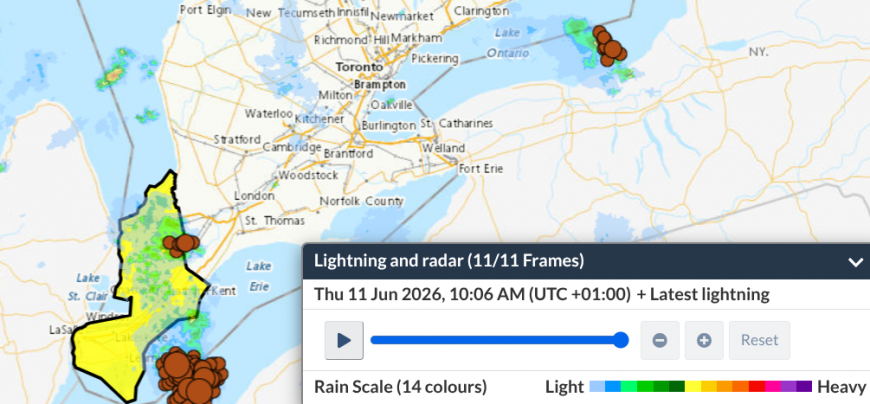
Radar from Canadian government with lightning alerts
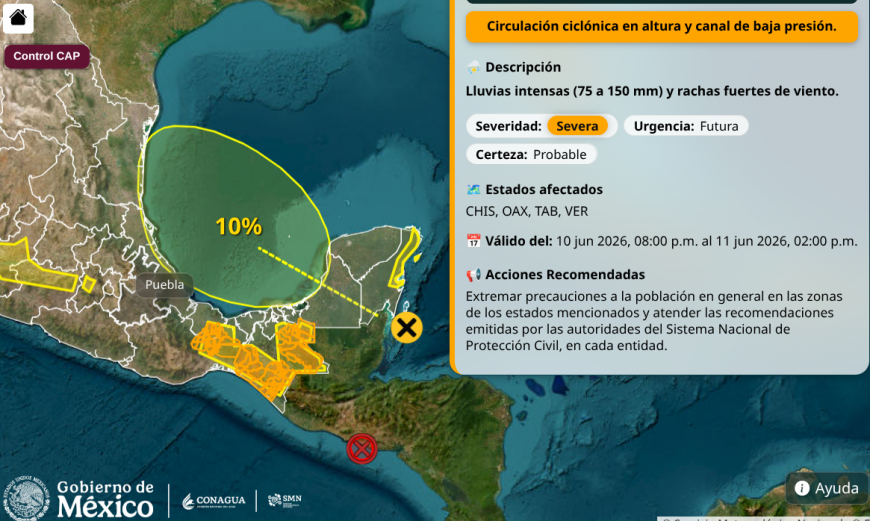
Tropical storm Cristina has lost its tropical status but is bringing torrential rain to El Salvador on Thursday 11th. The Mexican Met service is watching the progress of this low pressure with the potential for heavy rain coming into eastern Mexico at the weekend. The World Cup venues are further inland or north, but still something to watch.
Mexico City (1pm local time) Risk of rain even thundery showers 23C
Guadalajara Stadium (8pm local time) Starting dry but cloudy with a increased risk of thundery showers later 22C
Toronto (3pm local time) Earlier showery rain should clear to leave a fine evening 22C
and Los Angeles (6pm local time)
Previously Football heat stress for Women's Euro 2025 and Men's Club World Cup
Loading recent activity...