


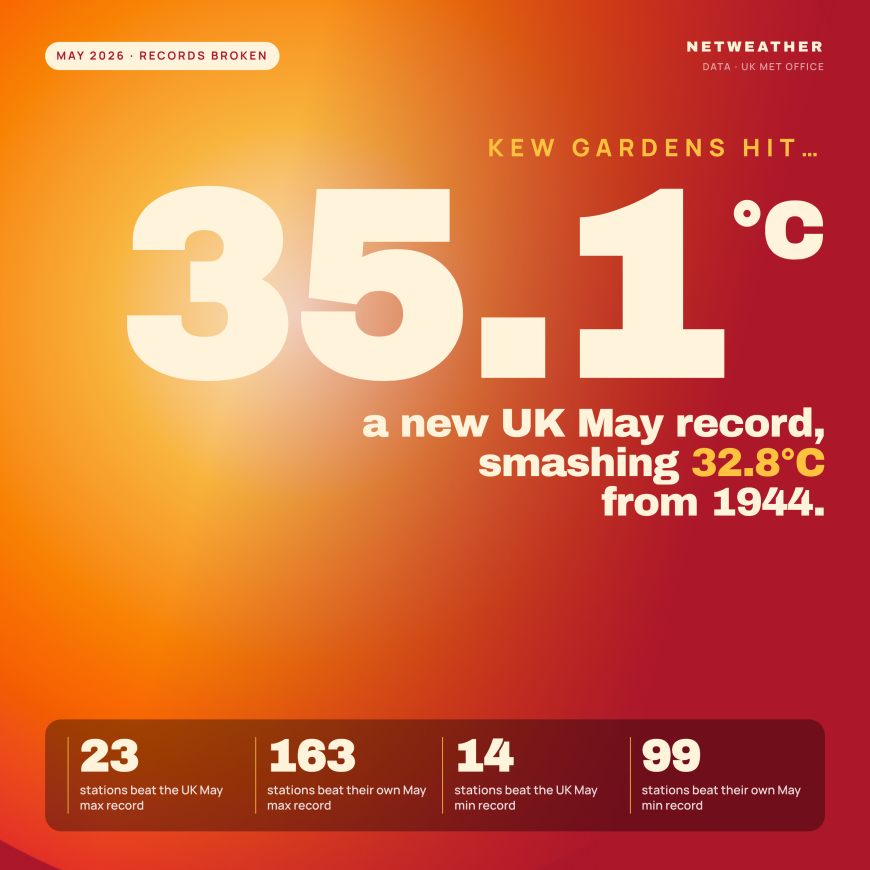
May 2026 started off very warm and ended with a heatwave, a record-breaking spell of weather when the new month of May record was broken as Kew Gardens reached 35.1C on the 26th. The spring months of March, April and May were the third warmest for the UK, for mean temperature with England and Wales both experiencing their warmest spring on record.
In late May, some areas saw 5 to 7 days above their heatwave threshold temperatures, which vary by region from 25C to 28C. A smaller selection saw six consecutive days above 30C which is astonishing for this time of year. Locations passed their May maximum temperature records by more than 2C with several stations beating the previous month of May record of 32.8C from back in 1944.
Spring 2026
Provisional Met Office statistics show the season saw:
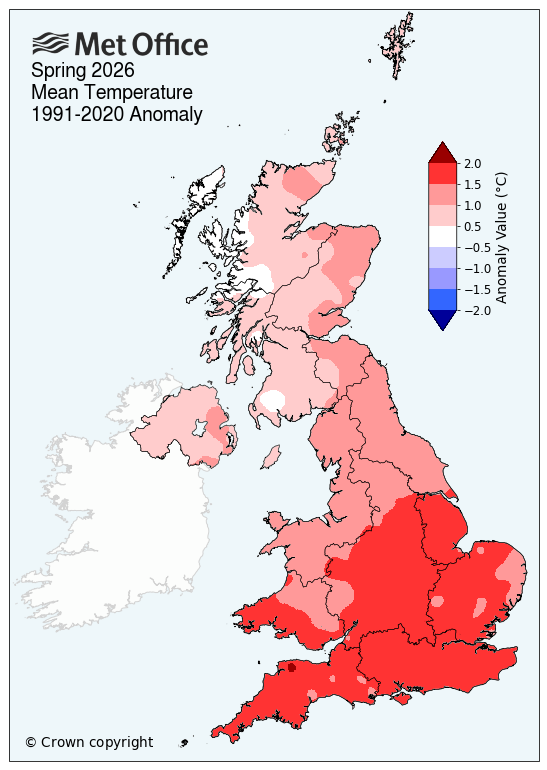
All three months of meteorological spring ranked within the UK’s top ten warmest on record. It was the joint tenth warmest March, the seventh warmest April and the joint third warmest May, looking at records for the UK. Forty counties experienced their warmest spring for mean temperature since 1884. Overnight temperatures were also very high, making it uncomfortable and difficult for some people to get to sleep. And this is early in the season, we still have the whole summer to go.
.png?w=547)
Met Office Scientist Dr Emily Carlisle said: “This spring highlights both the natural variability of the UK’s weather and the longer-term warming we are observing. While conditions varied through the season, all three months of meteorological spring recorded mean temperatures within the UK’s top ten warmest on record.
“While we expect fluctuations from year to year, this spring shows some of the changes we're seeing in our weather patterns, with more extreme conditions becoming more frequent. The fact that nine of the ten warmest springs in England have occurred since 2007 illustrates this ongoing shift in the UK’s climate.”
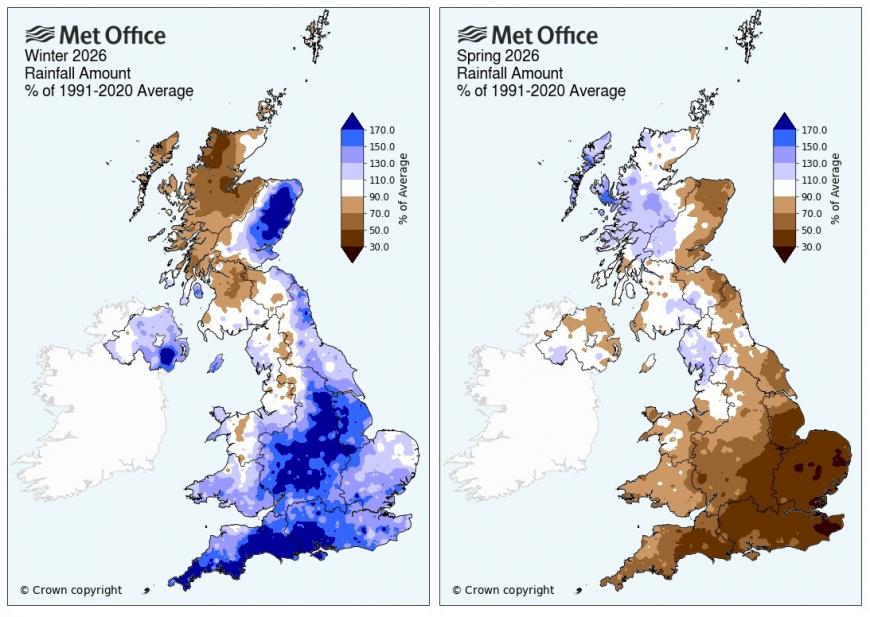
Overall, there was below average rainfall looking at the UK, but there were regional differences. Northern England saw 90% of the average rainfall, compared to just 50% in Southern England. Suffolk, Kent, Essex and Cambridgeshire only saw around a third of their average seasonal rainfall in spring. The City of London was also dry with 36%.
Helen Wakeham, Environment Agency Director of Water and Chair of the National Drought Group, said: “No parts of England are currently in drought, but the risk increases the longer it remains hot and dry. The recent heatwave has seen significant peaks in demand for water, while river flows have fallen due to the very dry spring, and reservoir levels are reducing.
“We continue to closely track the situation and have convened a National Drought Group meeting in the coming weeks, so we are prepared if the dry conditions remain. We must continue to adapt to our changing climate and all be wise with our water use.”
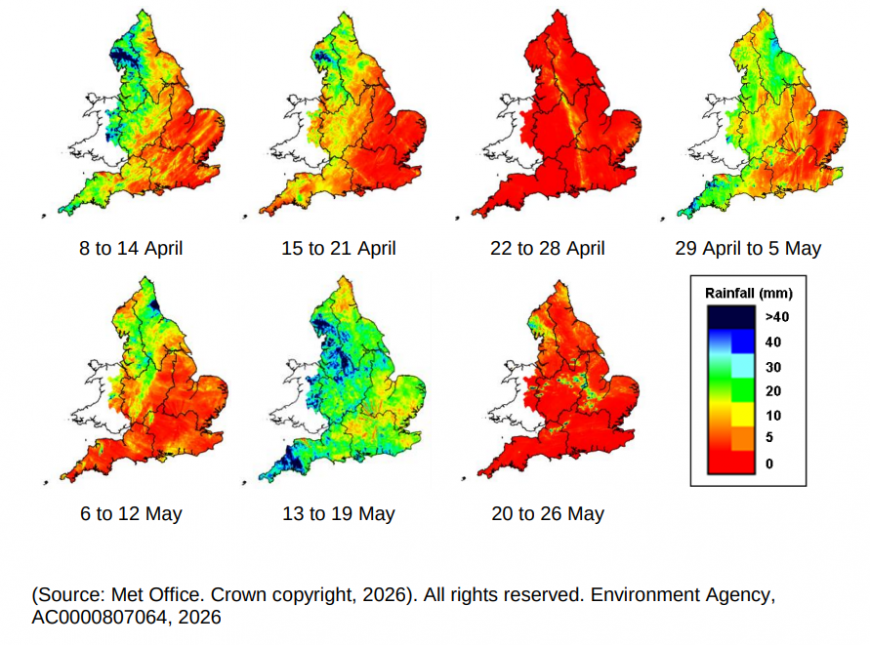
Weekly precipitation across England and Wales April/May showing a good deal of dry weather especially for SE Britain. Thunderstorms did affect some areas during the late May heatwave.
Scotland also had large contrasts, but from west to east. The Western Isles recorded their seventh wettest spring on record but eastern counties were dry, with some counties back under Water Scarcity Alerts after a very dry 2025 summer. Northern Ireland saw just under its average rainfall.
The Met Office observed that “The seasonal pattern marks a notable contrast with winter, with rainfall anomalies showing a near reversal of the pattern seen during Winter 2025/26. “
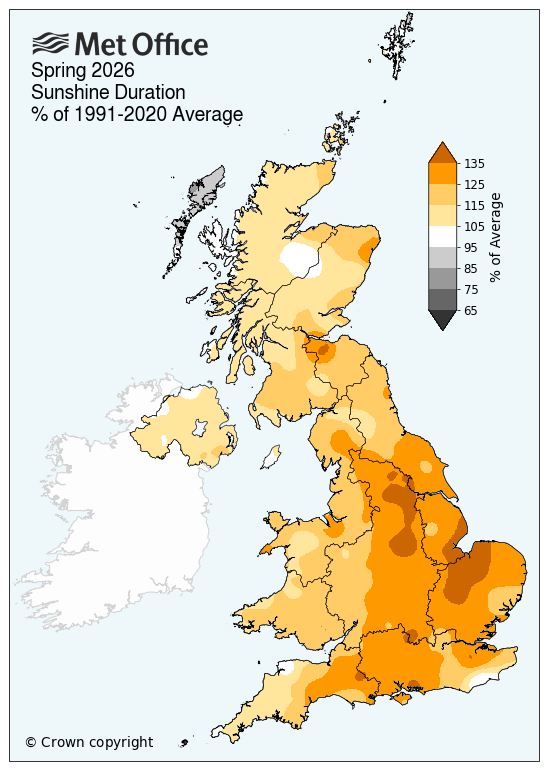
Spring was very sunny overall, with the UK recording its fourth sunniest spring since records began in 1910. England saw its third sunniest spring.
May 2026
May brought all sorts. After a few warm days, there was rain, hail and frost. Do you remember the warnings to gardeners? Later, high pressure settled in with a flow of very warm air from SW Europe and clear skies with sunshine and the temperatures rose.
The old May record was broken on the 25th and then again on the 26th as the heatwave continued. It was the Hottest Bank Holiday on record, at 34.8C on the 25th, even beating August temperatures.
.png?w=870) The graph above shows the fluctuation in mean temperature during the month.
The graph above shows the fluctuation in mean temperature during the month.
Provisionally it as the joint third warmest May in the UK for mean temperature, second warmest May for England, joint third for Wales and joint tenth warmest for Northern Ireland
“Southern England recorded its warmest May on record for mean temperature, and 27 counties saw their warmest May season since 1884.”MO
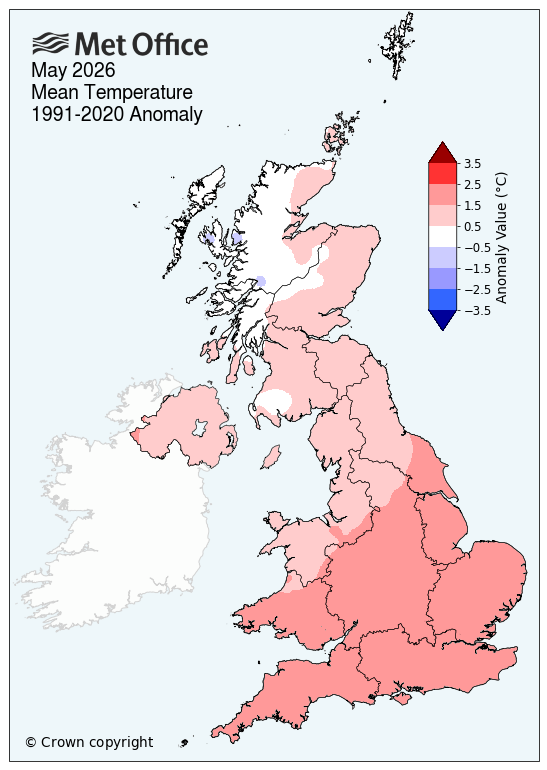
England recorded its highest May mean maximum temperature on record. Overnight temperatures were also well-above average. The spring record for the highest minimum temperature fell when Camborne in Cornwall stayed at 21.4C overnight.
Met Office Scientist Dr Emily Carlisle said: “While individual weather events are influenced by natural variability, our climate attribution studies show that the likelihood of exceeding UK May temperature records has increased significantly as the climate warms, meaning such extremes are now becoming more likely.”
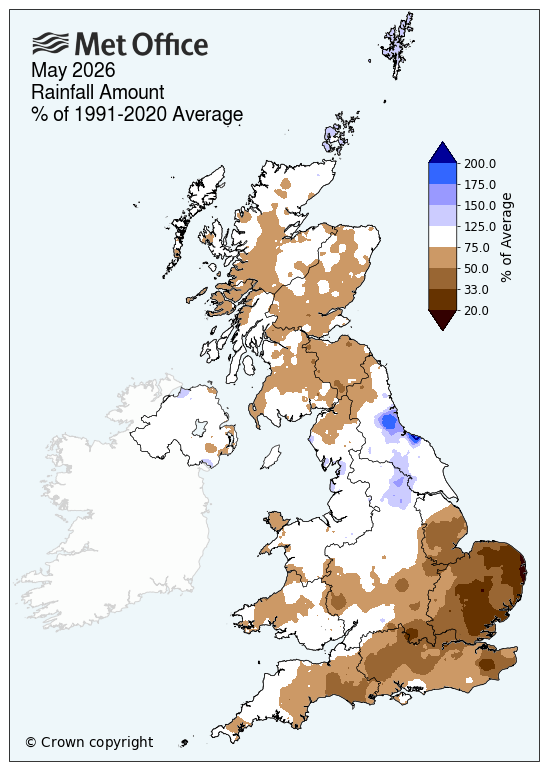
May rainfall was below average across the UK. East Anglia was very dry, whereas NE England saw higher than average rainfall.
May 2026 will be remembered for the heatwave days and the record-breaking high temperatures. What comes next for meteorological summer, we will have to wait and see.
Top image Calke Abbey (NT) wisteria
Loading recent activity...