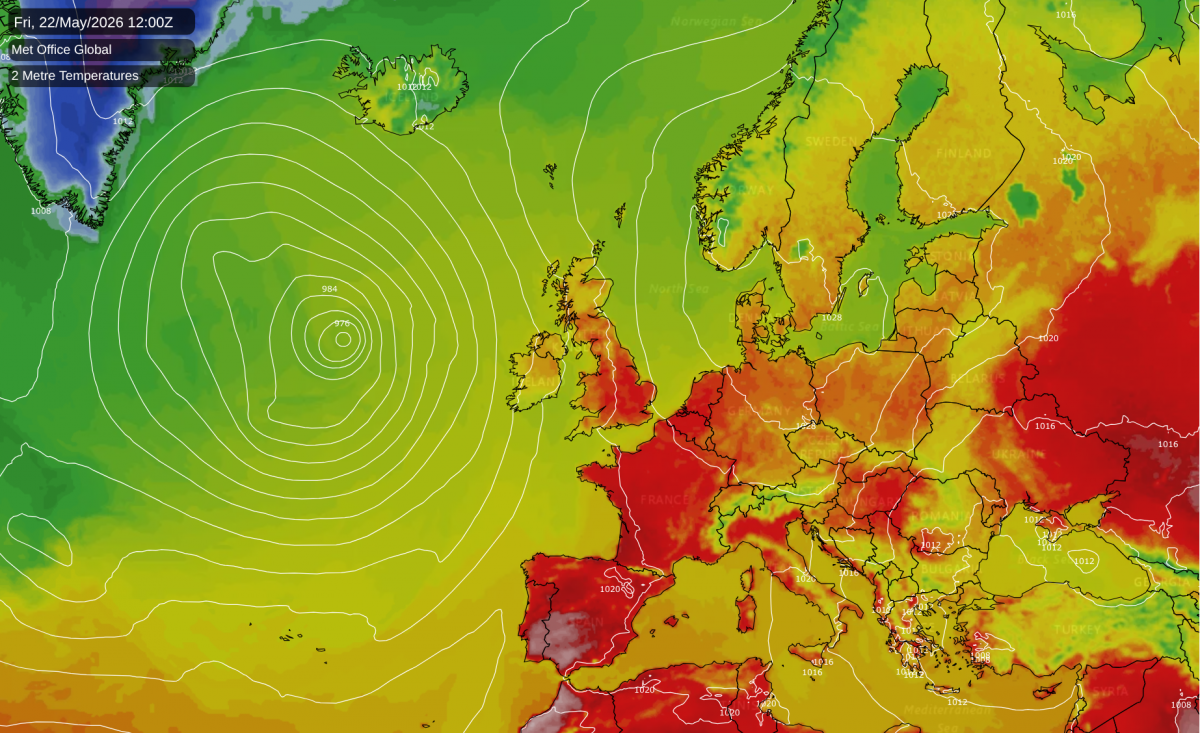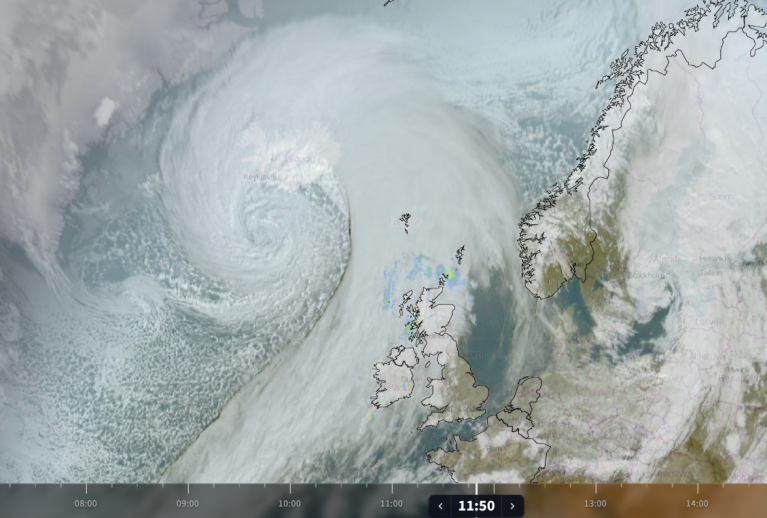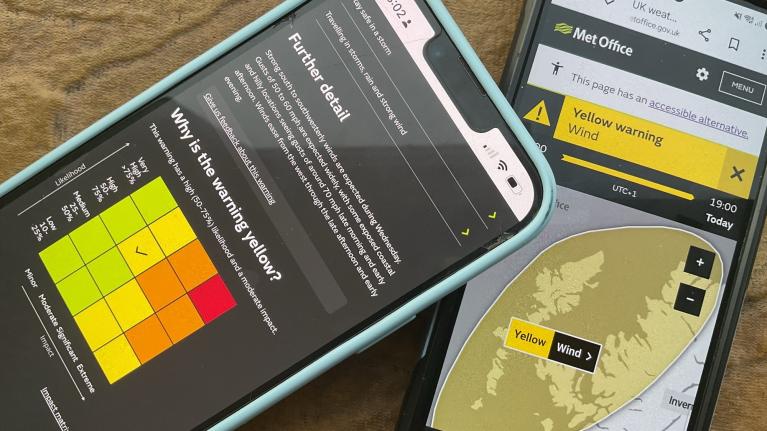



Another spring switch-around is on the horizon. Since the 11th, the weather has been on the cool side even by long-term historical standards, dropping below the average for 1961-1990 and for the 20th century. But after the recent cold weather with predominantly northerly winds, it will become warmer over the weekend and into early next week, with south-westerly winds, while remaining mostly bright and showery. It will then turn very warm, perhaps hot in places, during the second half of next week. It looks unlikely to be record breaking for the time of year, but we may see temperatures into the high 20s Celsius in places, especially towards the south-east, which will be a marked contrast with recent days.
A northwest-southeast split looks most likely for the Bank Holiday weekend, with further hot, dry and sunny weather at times especially towards the south-east of Britain, but cooler and cloudier weather towards the north-west, with south-westerly winds and possibly some rain at times. However, as it is still a fair way off, there is some uncertainty over how far north and west the hot and sunny weather will penetrate.
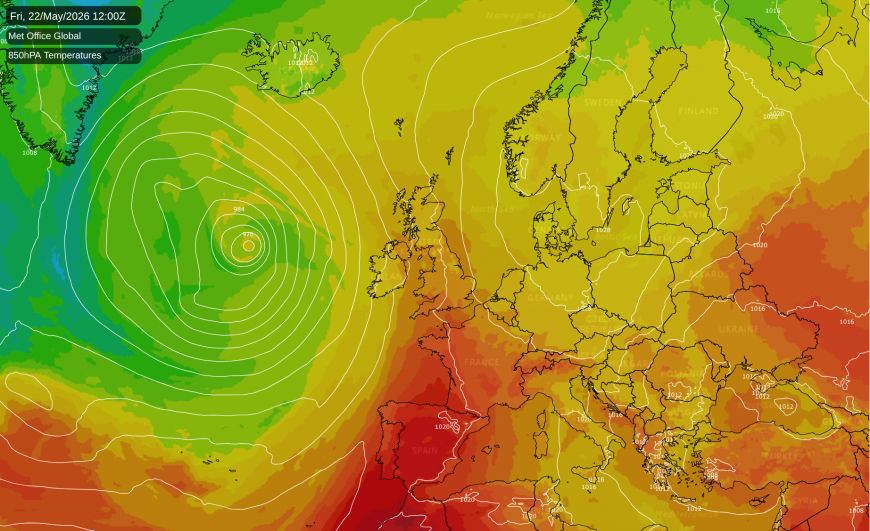
This makes it probable that May will end up as another warm month overall in spite of some cold spells in the first half. A common characteristic of our warming climate is that we still get warm and cold spells either side of the average, but the warm spells are getting warmer and the cold spells are getting less cold.
These sort of switch-arounds from cold to warm are fairly common at this time of the year. They often feature spells of northerly winds and low pressure over Scandinavia, followed by the low drifting westwards towards Iceland and turning Britain/s winds around to a south-westerly rather than a northerly. Then high pressure builds to the east and brings southerly winds and a spell of hot and sunny weather.
One of the most notorious examples of this pattern was in early June 1975. Northerly winds on the first three days brought unusually widespread snow on the 2nd, but the northerlies were soon replaced by southerlies, and by the 7th temperatures were widely into the mid-20s Celsius. Following a cold spring and an unusually cold start to June, we then had a hot summer - not quite as hot as 1976, but hot by most standards.
Sometimes switch-arounds happen the other way round - we get a spell of warm/hot and sunny weather from high pressure and/or southerly winds, and then high pressure drifts north-westwards towards Greenland, pressure falls over Scandinavia and we get northerlies. This pattern recurred during the spring of 1995, prior to a famously hot dry sunny summer, when on several occasions warm sunny weather one week was followed by northerly winds and wintry showers the next.
May 2005 was quite a varied month with fluctuating temperatures, and there was a remarkable north-south contrast on the 27th, when London reached 31C, but Edinburgh could only make 10C - a 21C difference between the two capital cities.
In more recent years, there was quite a marked example around the turn of March/April 2022. Most regions had a lot of warm and sunny weather in the second half of March 2022, and some regions, notably Ireland, had their sunniest March on record. But high pressure moved away north-westwards at the end of the month, bringing in a cold north to north-easterly airflow which brought snow showers quite widely. Then after a cold start to April, warm weather returned by around the 10th.
But temperature fluctuations in a typical British spring still pale by comparison with those in continental regions of the Northern Hemisphere. For example, until around Wednesday of next week, much of North America is forecast to have hot weather with temperatures widely exceeding 30C by day, and exceeding 40C in parts of the south-west. But towards the end of next week, a cold Arctic outbreak is forecast for the north-east of North America, which is expected to bring daytime maximum temperatures down to around 12-15C over a wide area, just a couple of days after reaching around 30C.
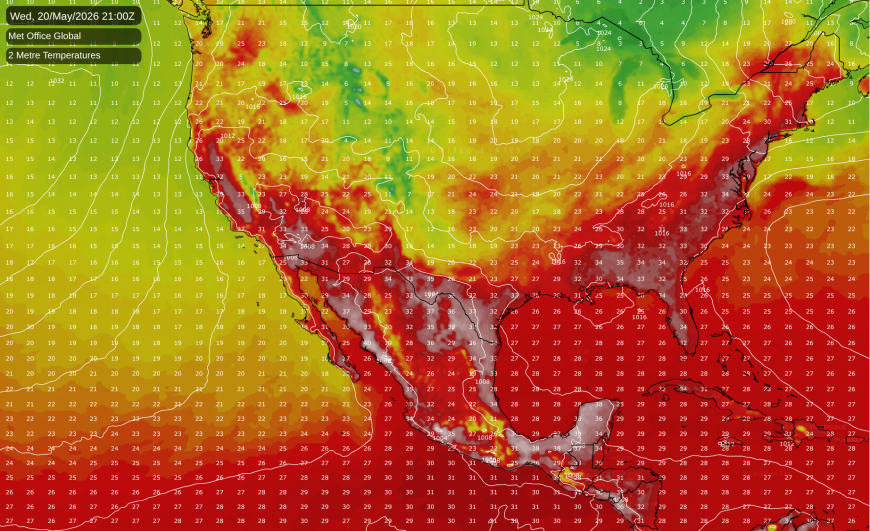
A stark west-east split is also forecast to develop over Canada, where the west will see temperatures into the low 20s Celsius, while the east can expect northerly winds to develop, with some snow in places.
Similarly, much of France and Germany can expect a stronger version of our temperature switch-around. Temperatures in the northern half of both France and Germany are currently similar to ours, but have potential to approach 30C as we head into the Bank Holiday weekend.
Loading recent activity...