


The National Hurricane Centre (NHC) is preparing for the 2026 season, which officially runs from the 1st June until the end of November in the Atlantic. There have been some improvements and updates to the suite of products that they issue. The NHC also covers the eastern Pacific region (the Mexico Offshore waters and the California coast) and the Central Pacific (for Hawaii) with one tab each for graphics and advisories. See below
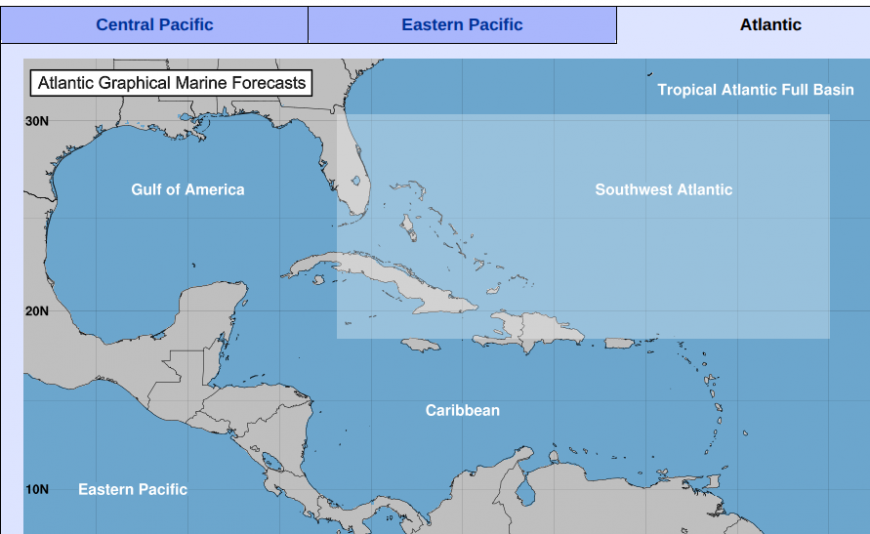
Hurricane area map. Various changes in 2025/26 for NOAA, the National Oceanic & Atmospheric Administration in the US.
One name from the 2025 Atlantic season has been retired; it will not be used in the future. There are new products for Hawaii relating to Storm Surges, and once hurricane watches and warnings begin to appear, the most obvious visual change will be the depiction of coloured inland areas rather than just coastal lines. These are operational changes. There are also additional, experimental changes running alongside existing products. The Cone Graphics (showing the track forecast), will trial changes to two aspects of the cone formation.
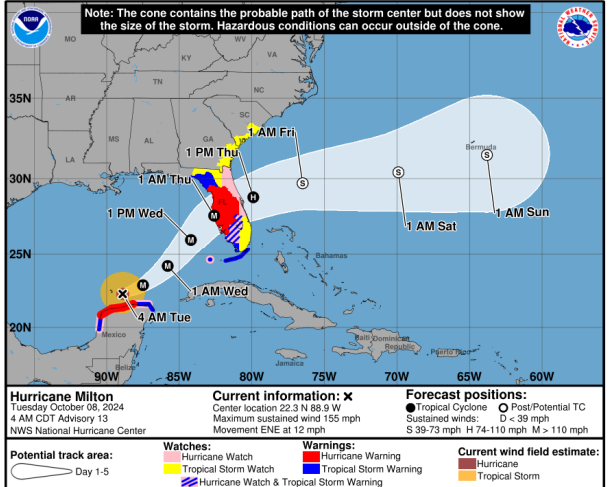
Example of 2026 version of the cone graphic for Hurricane Milton (2024) with inland watches & warnings.(Image credit: NOAA NHC)
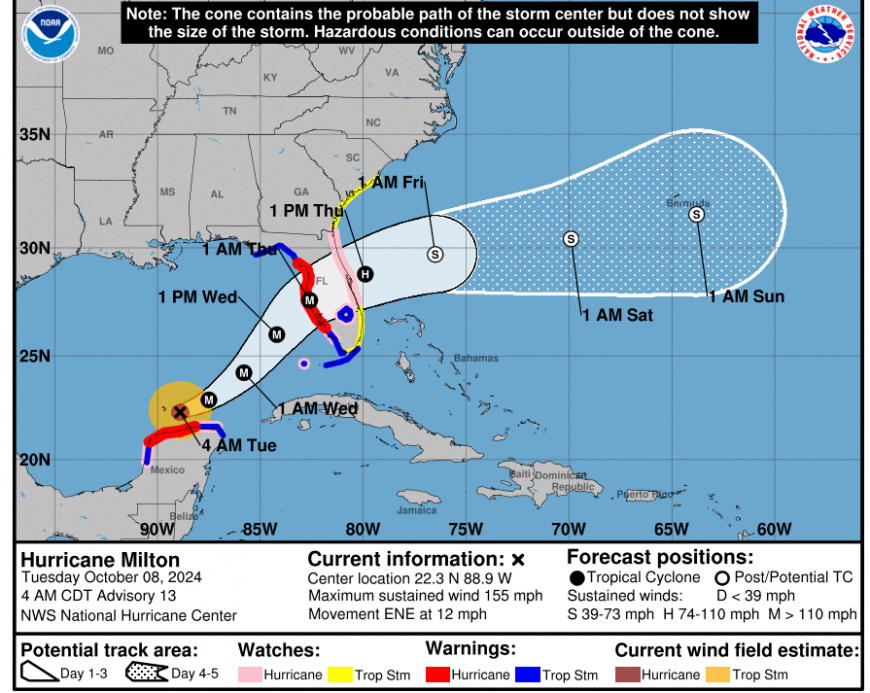
Now that NOAA have made the change to filling the land areas with the colour of a tropical storm warning, or hurricane watch, it makes a lot of sense. Below the previous version with just coastal lines.
Local television broadcasters already coloured in land areas within their bulletins. Like here in the UK, the National Meteorological and Hydrological Services (NMHSs) send out their warning areas or track cones as a data package and the different broadcasters present that on their graphics.
This year the national graphics from NHC will show the coloured land areas for Hurricane watch and warnings, Tropical Storm watch and warnings. “User feedback showed strong support for the addition of inland watches and warnings.” NHC
The aim is to improve cyclone/hurricane forecasting, to help the public and businesses make informed decisions, to make them earlier and with more confidence, so that they can continue their own resilient preparations. Also, for public agencies and emergency responders, any small improvement in accuracy or communication of hurricane impacts will be welcome. There is the cost, billions of dollars and the loss of life each year, set against our changing climate and the National Oceanic and Atmospheric Administration (NOAA) cuts.
NOAA’s stated mission is “to understand and predict changes in climate, weather, oceans, and coasts; to share that information; and to conserve and manage coastal and marine ecosystems and resources.”
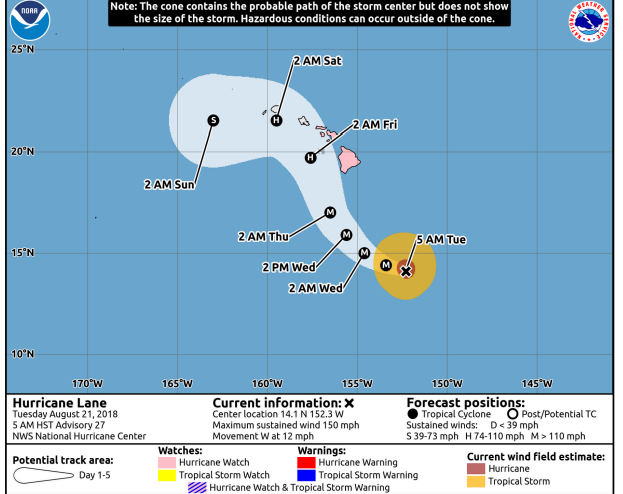
What to know about the new cone graphic:
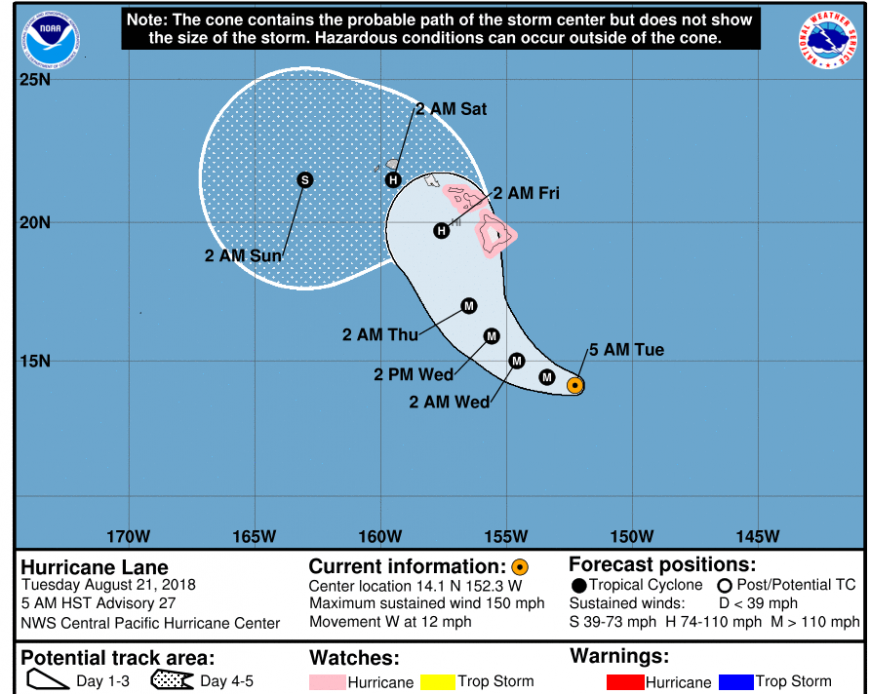
New experimental cone
A new experimental version of the NHC’s Tropical Cyclone Track Forecast Cone is being introduced. The cone started in 2002 and has shown where the tropical cyclone’s forecast centre is likely to go, based on past forecast calculations. It was created using a set of circles but this will change to elliptical shapes.
“Beginning in 2026, the experimental cone will use ellipses anchored at each NHC forecast point, allowing for the experimental cone to capture a range of possibilities for both the speed and direction of the tropical cyclone’s forecast path.
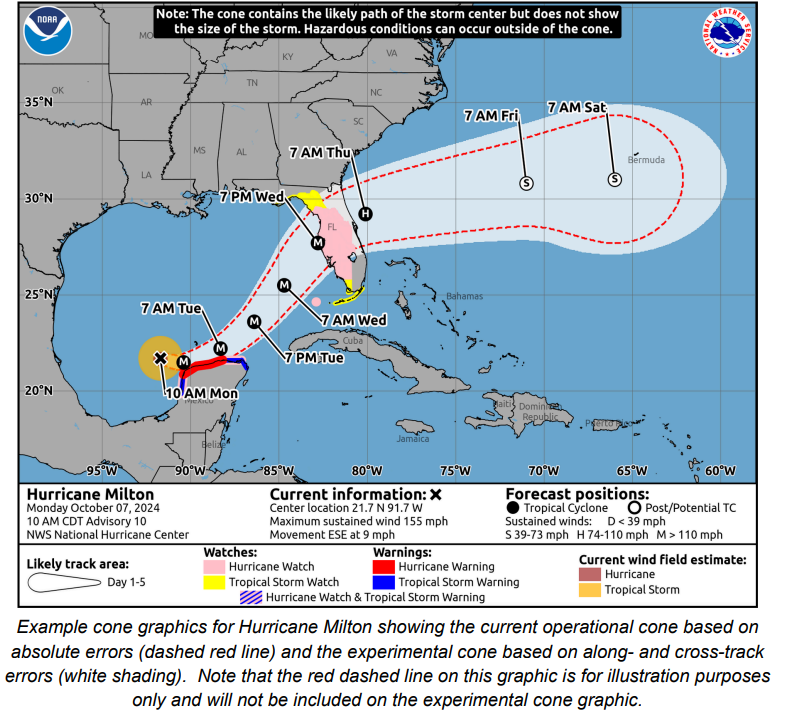
NHC will experiment changing two aspects of the cone using ellipses (instead of circles) to account for errors in speed and direction, and the cone will include 90% of forecast track possibilities, instead of the traditional 67% forecast error. Along track errors looks at how far the centre of the hurricane ends up, faster or slower/ ahead or behind the NHC forecast. Cross track errors look at how far to the sides (left or right) the hurricane shifts, from the NHC forecast.
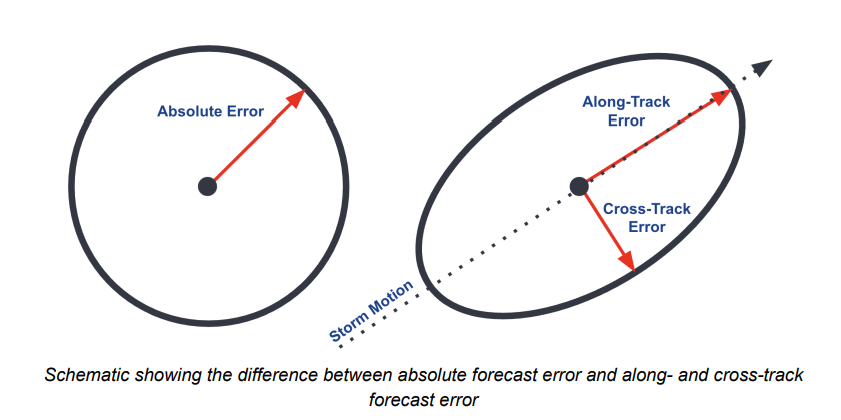
“In practice, this means that the center of a tropical cyclone would be expected to fall within each ellipse 90% of the time.”
Another update is for the Graphical Tropical Weather outlook symbols. Systems are marked with a coloured cross and a hatched area to show potential development.
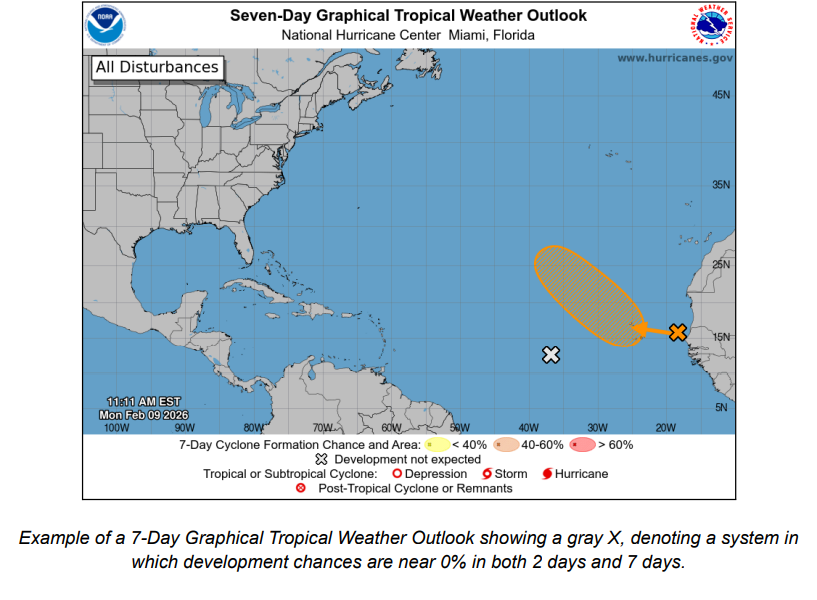
Beginning in 2026, systems in which development is not expected (near 0% in both 2- and 7-day forecast periods) will be depicted as a grey X. This includes systems where development chances have decreased to near 0%, and/or are mainly being highlighted to communicate a significant rainfall/flooding threat. Note that systems that have a near 0% chance of development in 2 days but a non-zero chance in the next 7 days will still be depicted with a yellow X.
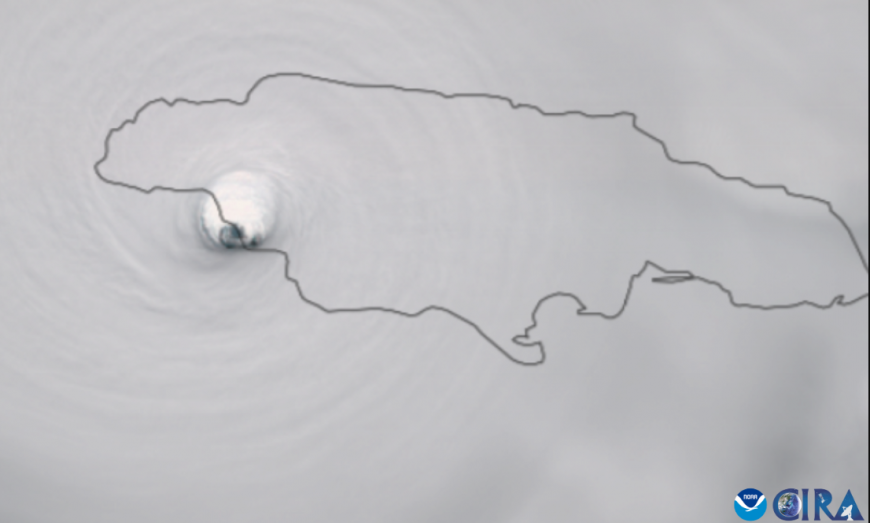
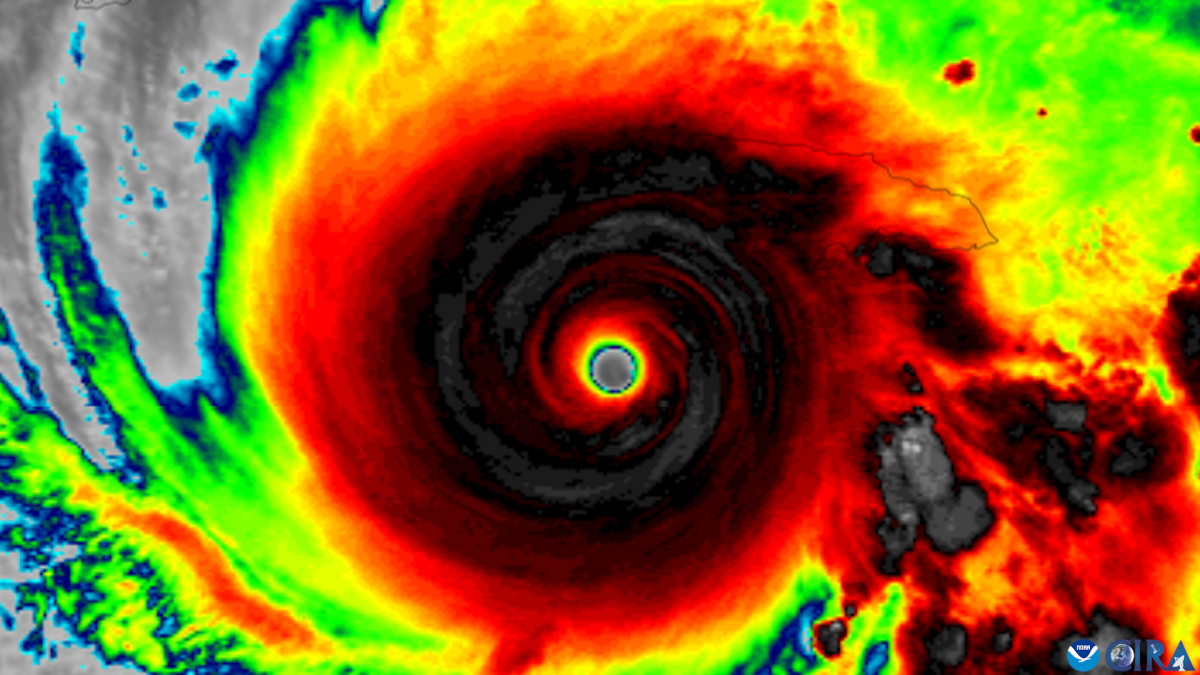
Melissa 2025 GOES-19 satellite image (CSU/CIRA & NOAA).
Retirement of Melissa
It it the WMO, the World Meteorological Organisation, who officially decide which cyclone names will be retired taking advice from its regional centres. North America, Central America and the Caribbean met to discuss hurricanes as the WMO Regional Association IV. Category 5 Melissa was strongest landfalling hurricane in Jamaica and tied as strongest in Atlantic basin
The historic storm produced devastating storm surge and damaging winds across Jamaica and Cuba with extreme rainfall extending over the Dominican Republic and Haiti. It killed more than 90 people and Cuba is still addressing the direct impacts of Hurricane Melissa.
“Despite the force of Melissa, loss of life was in the dozens rather than the thousands. This is testimony to the accuracy of advance forecasts and the use of these early warnings to support early action.” WMO Secretary-General Celeste Saulo
The WMO Hurricane Committee has retired the name Melissa, replacing it on the six year list with Molly, ready for 2031. The names alternate between male and female, and are intended to be easy to pronounce in every language in the region. Truly destructive or deadly storms see their name retired.
“Melissa has now been engraved in the collective memory of the nation,” said Evan Thompson, Principal Director at Meteorological Service, Jamaica, and President of WMO’s Regional Association IV.
“I am very thankful that there was unanimous approval of my request for the retirement of Melissa. Jamaica would not have liked to constantly recount the trauma that was visited on us in 2025,”
NOAA and NWS
NOAA's work is divided among six line offices: National Environmental Satellite, Data, and Information Service (NESDIS); National Marine Fisheries Service (NMFS); National Ocean Service (NOS); National Weather Service (NWS); Office of Oceanic and Atmospheric Research (OAR); and Office of Marine and Aviation Operations (OMAO). NOAA's Mission Support provides planning, leadership, finances, information technology, educational programming, and other support across the line offices.
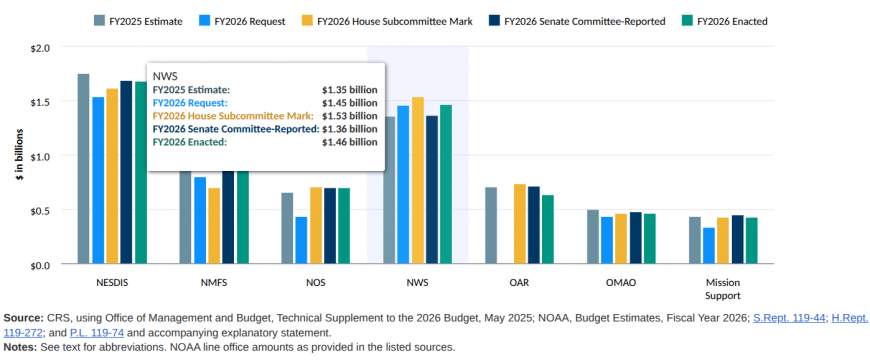
“Without continued funding, long-term datasets would be disrupted, and the NWS’s ability to inform disaster preparation and provide accurate and timely weather tracking would be at risk.” Graph
Top image Hurricane Melissa approaches Jamaica 2025. (CSU/CIRA & NOAA)
Further details National Hurricane Center Products and Services Update for 2026 Hurricane Season
Loading recent activity...