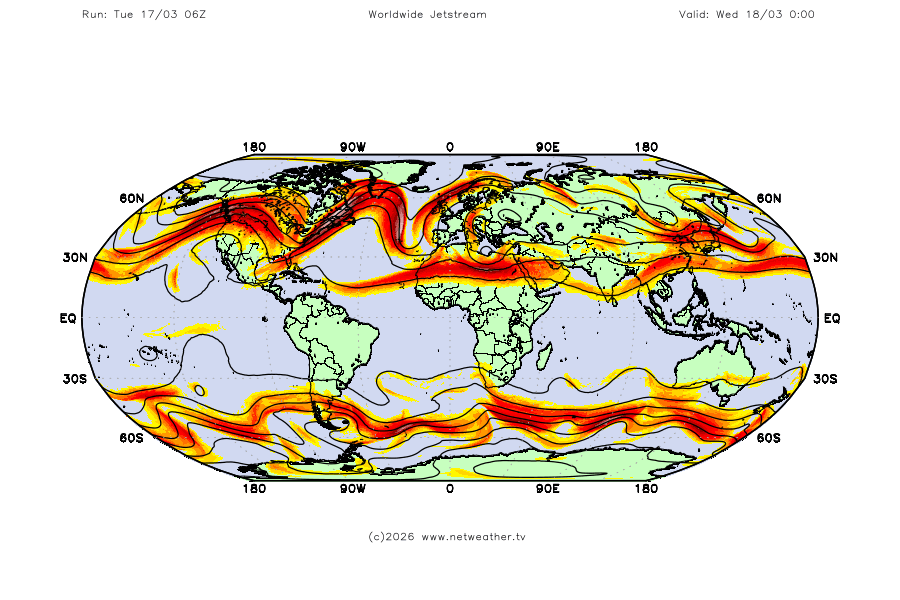



There is currently a shift toward a meridional jet stream pattern characterised by a meandering flow that curves north and south rather than moving directly west to east this week across North Pacific, North America and North Atlantic. This will lead to a potentially historic heatwave in parts of western USA, warmth here and wet and windy weather for the Azores, Canaries and parts of Iberia.
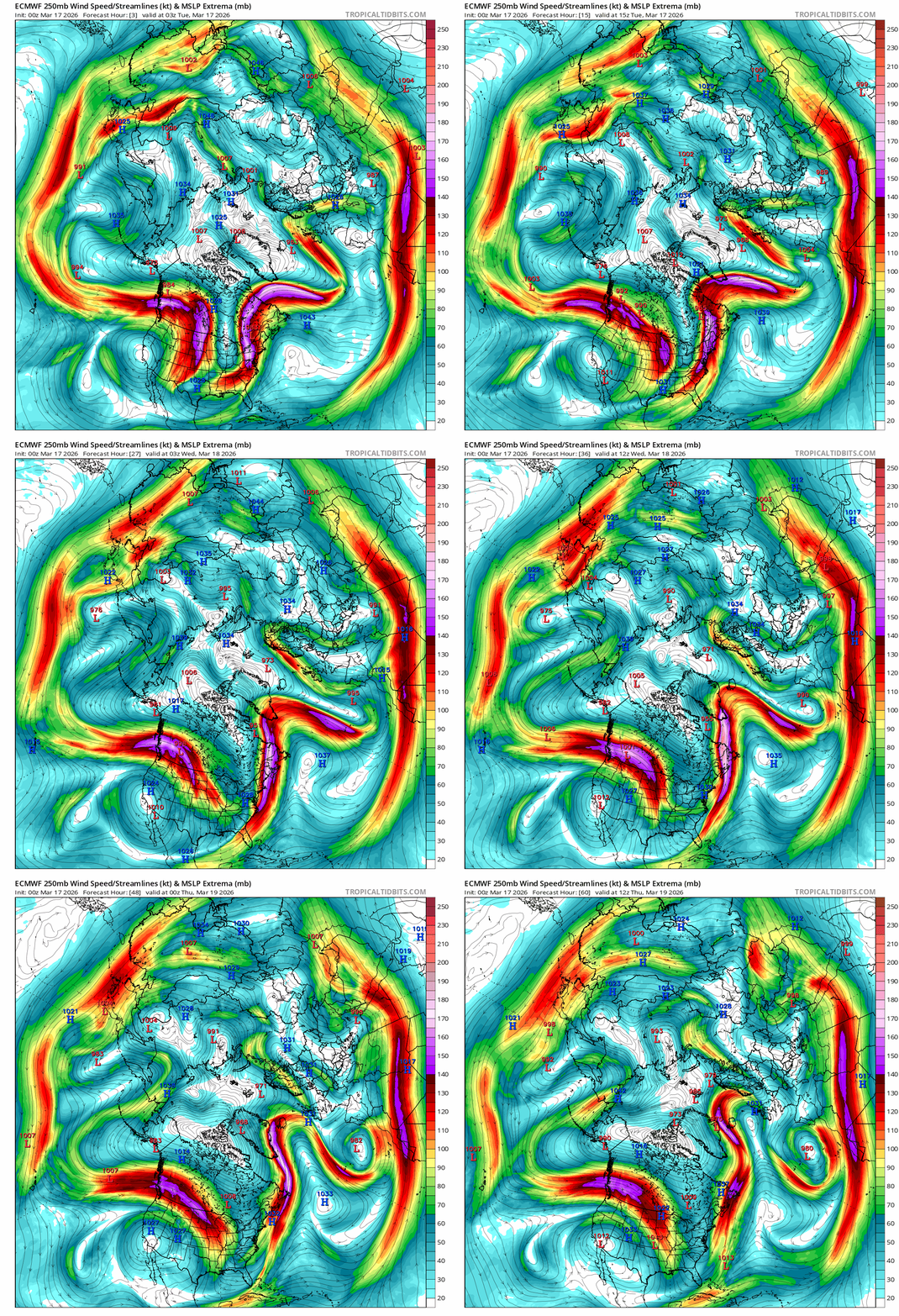
A potentially record-shattering March heatwave will impact western half of the United States, with temperatures spiking 20 to 30 degrees Fahrenheit above seasonal norms. Forecasters have described this event as one of the most widespread and anomalous heat events for this time of year in U.S. history.
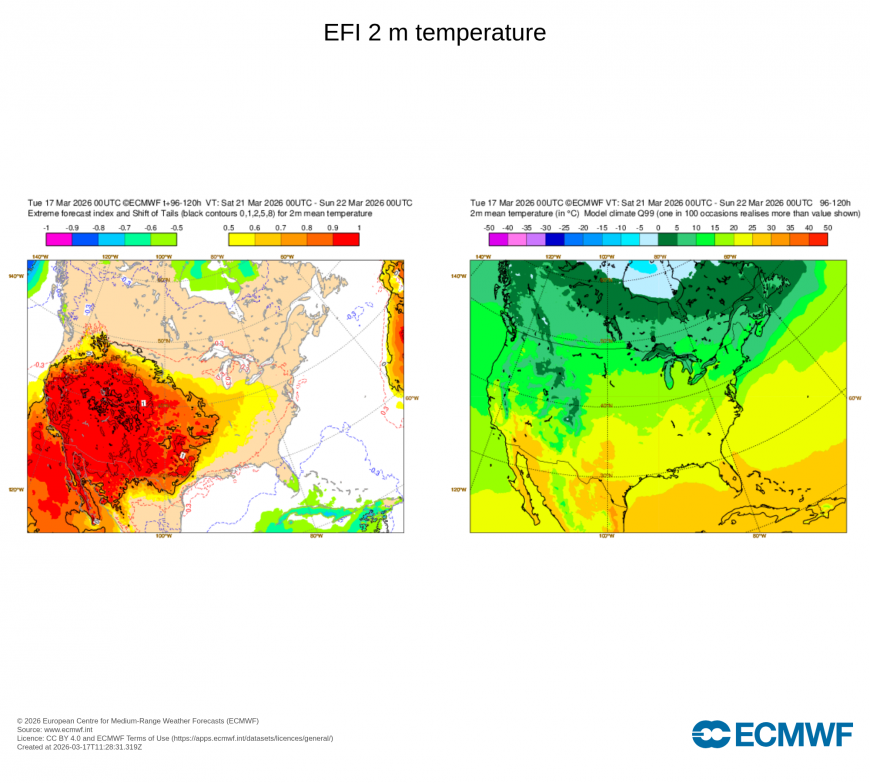
An historic heat dome is building across the western half of the USA this week, peaking Thursday and Friday, but the heating also continues well into next week. Many cities in the west may break all-time March and even April heat records. And the heat dome itself will likely be the strongest in the US prior to early June.
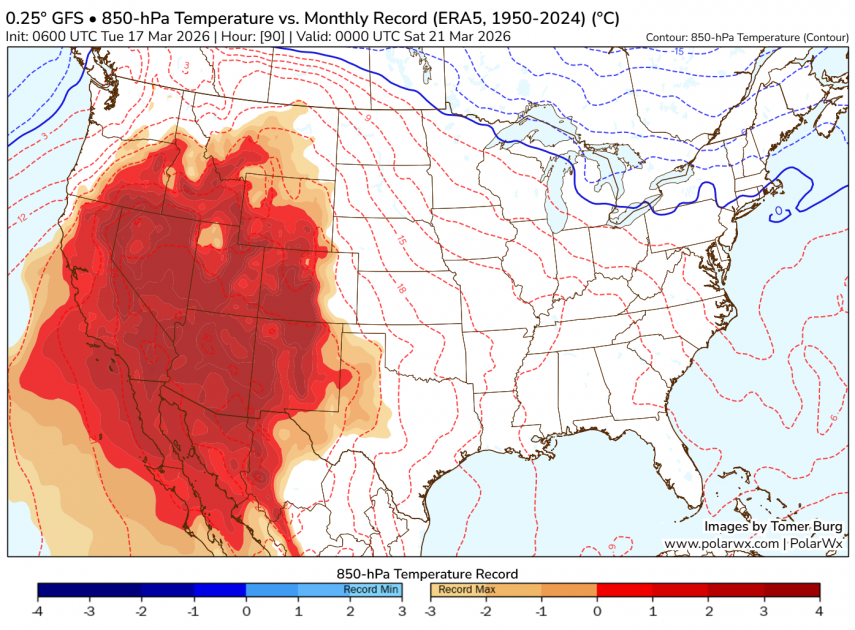
Temperatures are expected to climb into the 90s and even past 100 degrees in some cities, levels more typical of late spring or early summer. A large area of high pressure is developing through much of the atmosphere across southwest USA, referred to as a heat dome - where the air becomes very stable. Clouds struggle to form and as the heat dome strengthens, temperatures continue to climb.
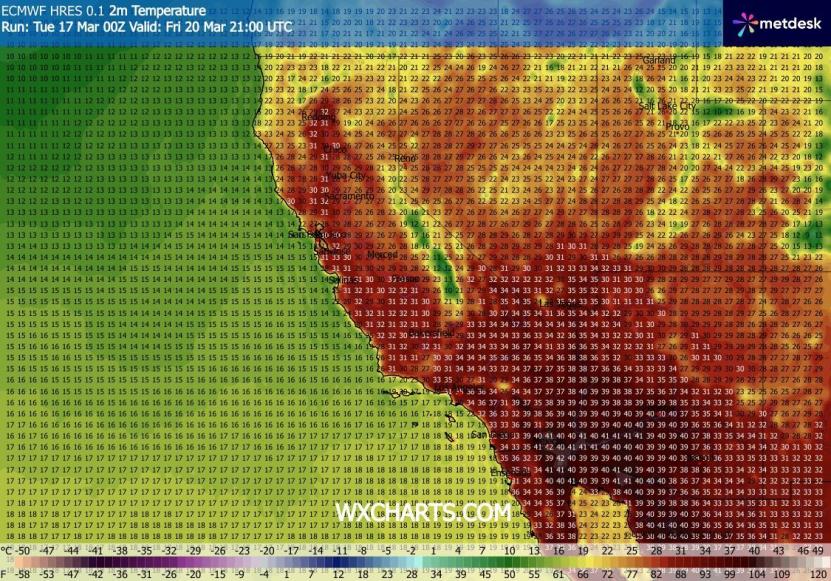
In downtown Los Angeles, record highs will be challenged or broken on multiple days through to Friday as temperatures climb into the upper 90s. The all-time March record high of 99 degrees, set on March 29, 1879, may be challenged in L.A. The earliest 100-degree reading downtown occurred on April 4, 1989.
Las Vegas is forecast to reach 90 degrees or higher from Tuesday through to next Monday. If Las Vegas reaches 100 on Friday, it would beat the city's earliest 100-degree temperature by several weeks. Forecasters are predicting highs near 106 degrees in Phoenix from Thursday through Saturday, which would break daily records by around 10 degrees. The earliest 100-degree reading in Phoenix occurred on March 26, 1988.
Meanwhile, over the pond, the UK will see some warm weather this week, courtesy of the meridional jet stream pattern over the N Atlantic carving out a deep trough southwards the Canary Islands over the next 24 hours. This will lead winds backing southeasterly for a time tomorrow, pulling in warm air from the Mediterranean and allowing temperatures to rise into the high teens across England and Wales.
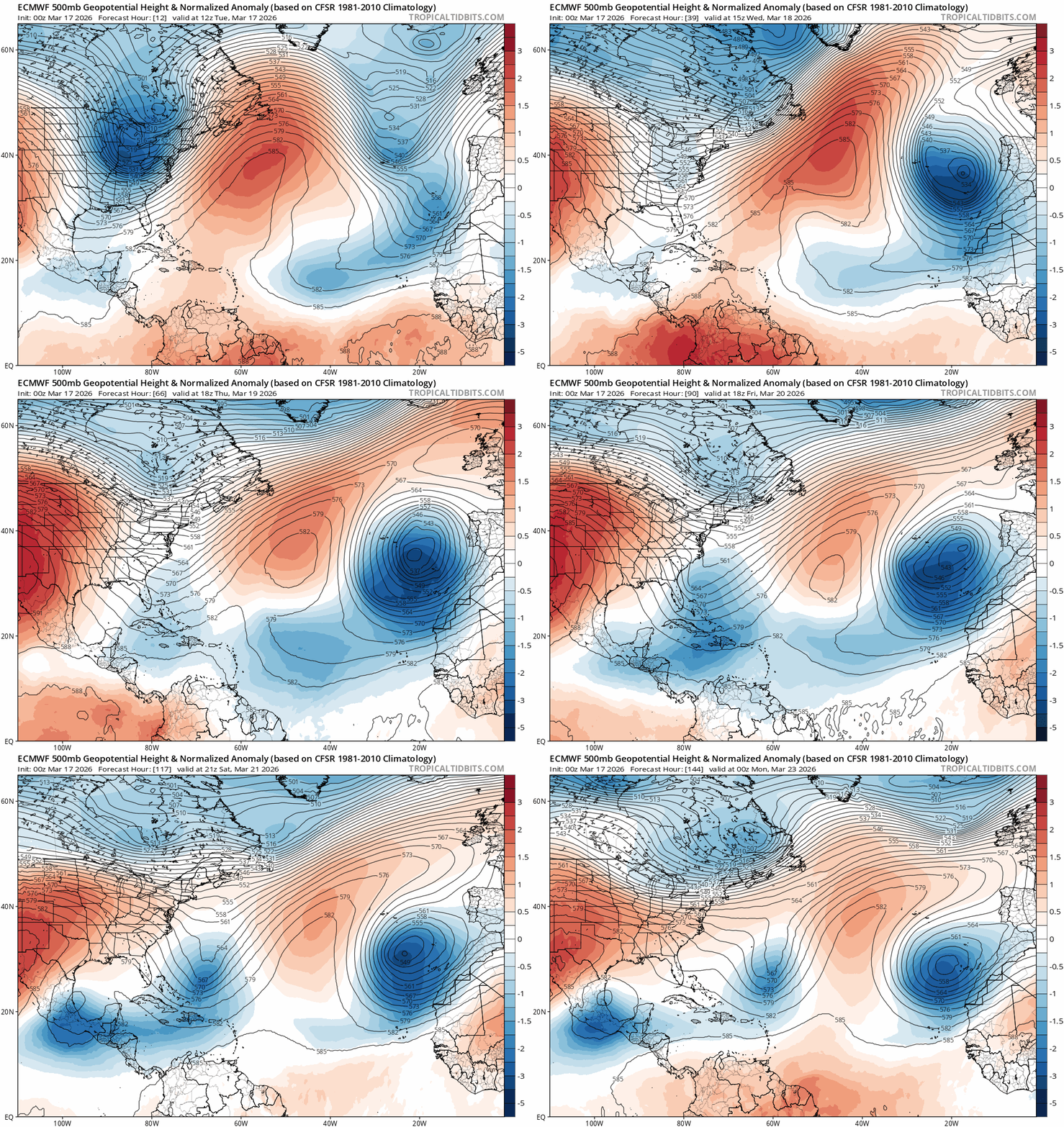
The upper trough extending south will also lead to a low pressure system to develop to the west of Iberia, a new DANA (high-altitude isolated depression) weather system named Storm Therese by the Portuguese weather service IPMA.
The centre of Storm Therese will generally drift around to the northeast then north then northwest of the Madeira archipelago region right through to Sunday before drifting south towards the Canary Islands. Spells of rain, showers and possible thunderstorms are forecast to affect mainly mainland Portugal, particularly for the south and centre of the country and also the Portuguese islands in the Atlantic from later today through to Sunday and perhaps parts of southern Spain later in the week.
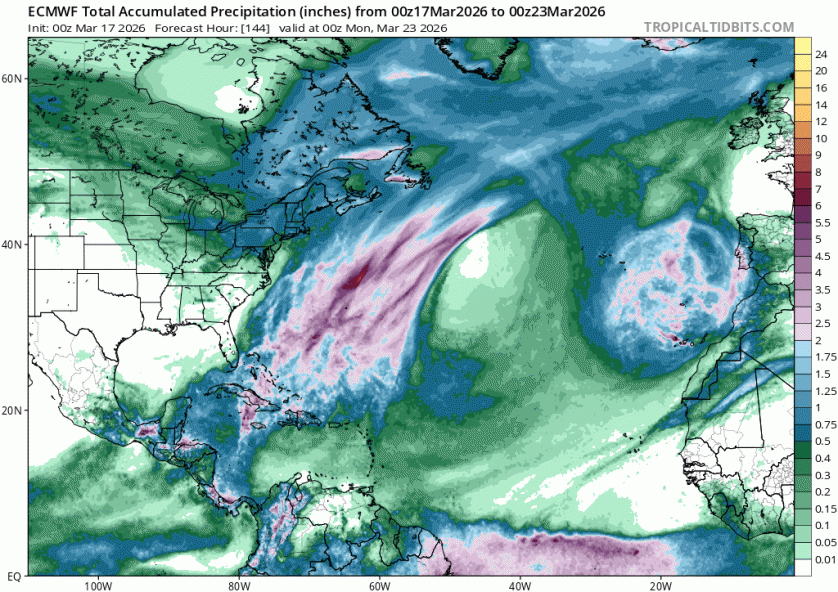
Heavy showers and thunderstorms accompanied by hail locally will also affect Madeira and the Azores, gusts of 45-55mph are forecast, while large swells are expected to develop, with wave heights of 4-5m.
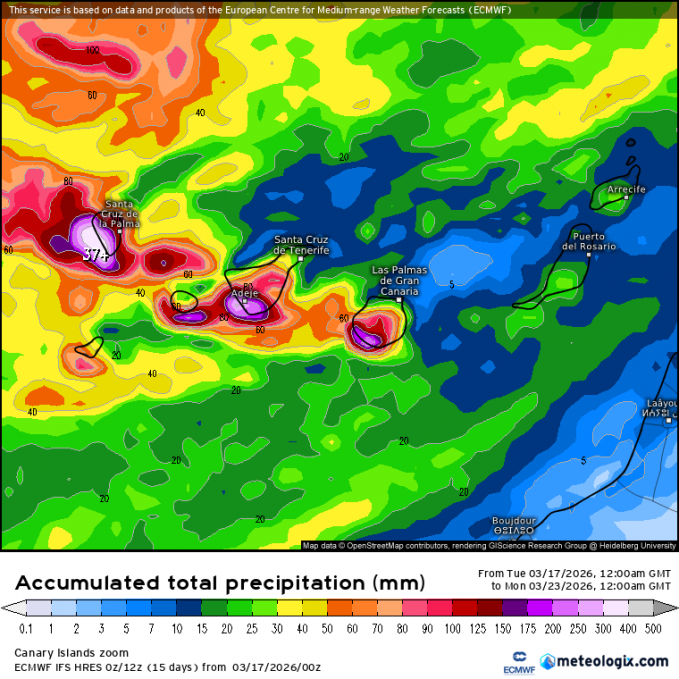
The Canary Islands will be the most affected area of Spain, with locally heavy rainfall, storms, strong winds, and rough seas starting from Wednesday. As the low of Storm Therese drops down to the Canary Islands over the weekend, heavy rainfall could become the main issue, with some models forecasting 200-300mm of rain for Gran Canaria and Tenerife, not great for those that are on holiday there over the coming week!
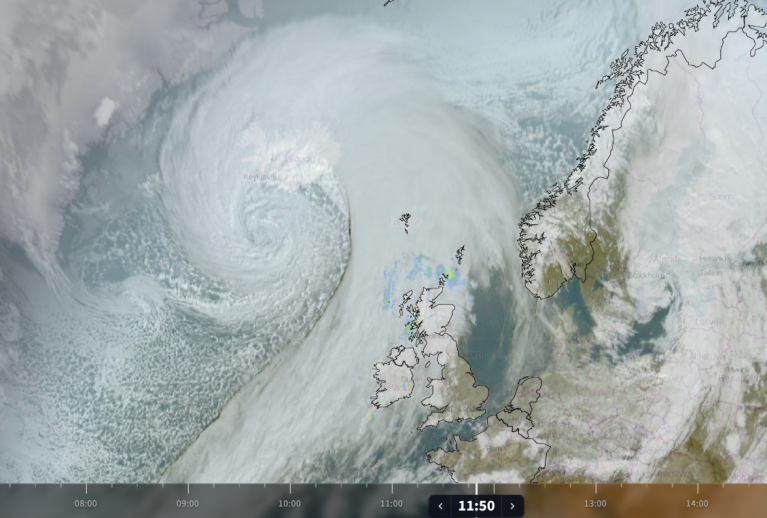
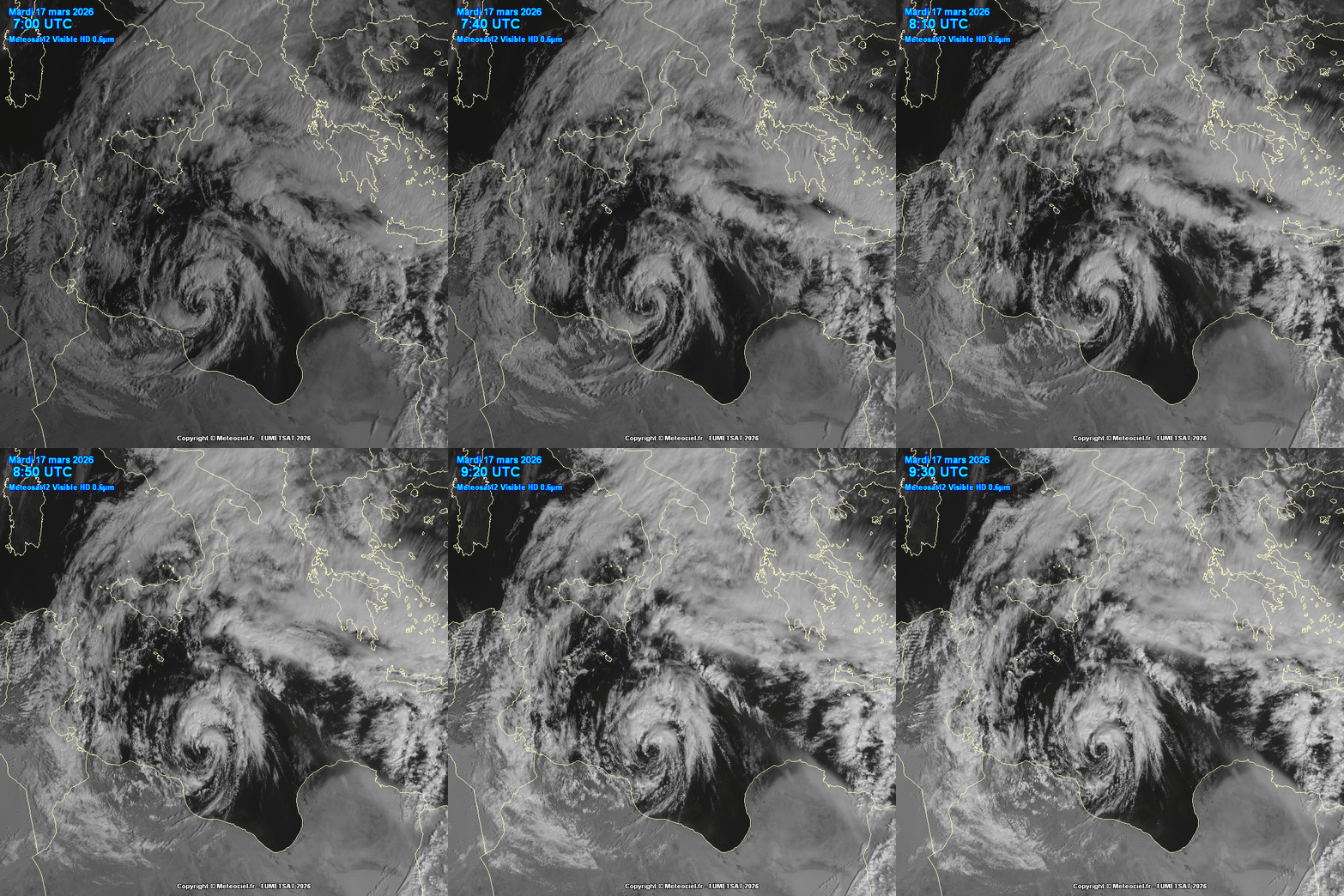
Further east across the Mediterranean, a depression with characteristics of a Medicane, named Jolina, has been evolving over the south of the central Mediterranean between Italy and Libya since yesterday. The swirling is clearly visible on the satellite image from this morning.
Loading recent activity...