


The official stats for winter 2025/26 are in.
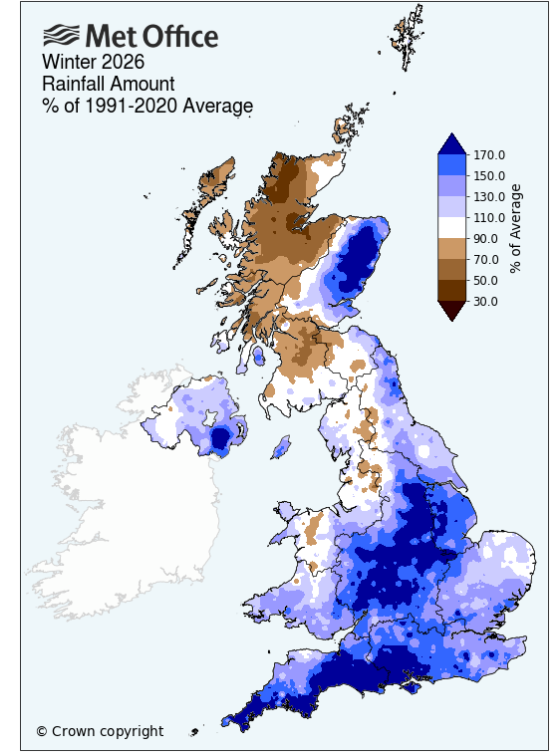
Officially, the winter quarter of 2025/26 (December, January, February) ended up cloudy and wet for most of the UK, but drier than average for much of western Scotland, and slightly sunnier than average for an area of south-west England. Temperatures were well above the 1991-2020 long-term average in most regions, especially the south, but came out close to average in the north of Scotland.
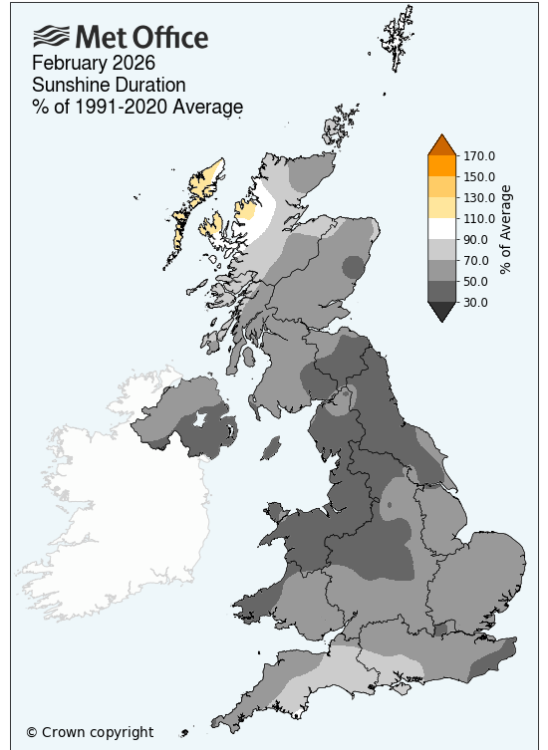
The shortage of sunshine came mainly from February for much of the country, with December and January seeing closer to average sunshine overall. Parts of eastern Scotland and north-east England were cloudiest relative to the long-term normal, with just 60 to 70% of the normal sunshine amount.
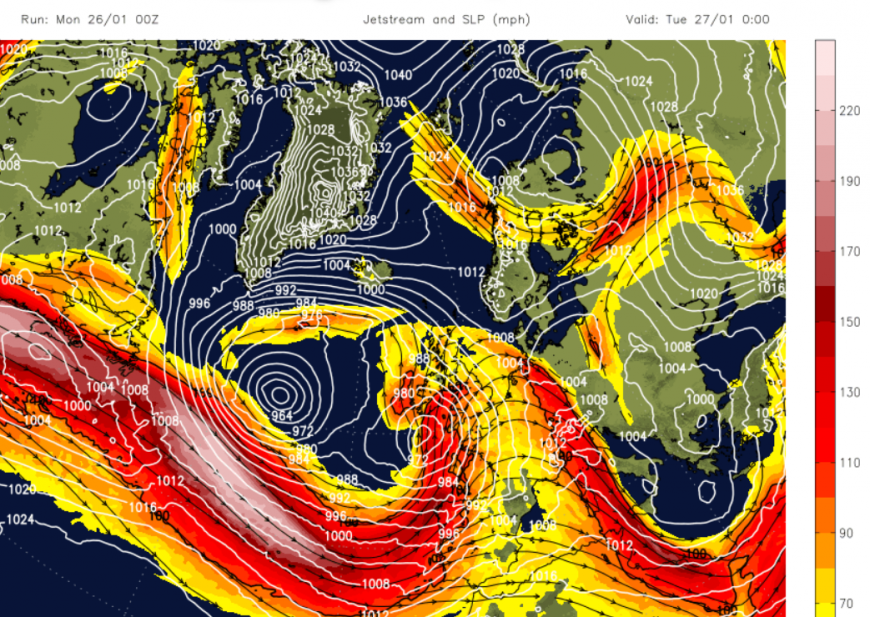
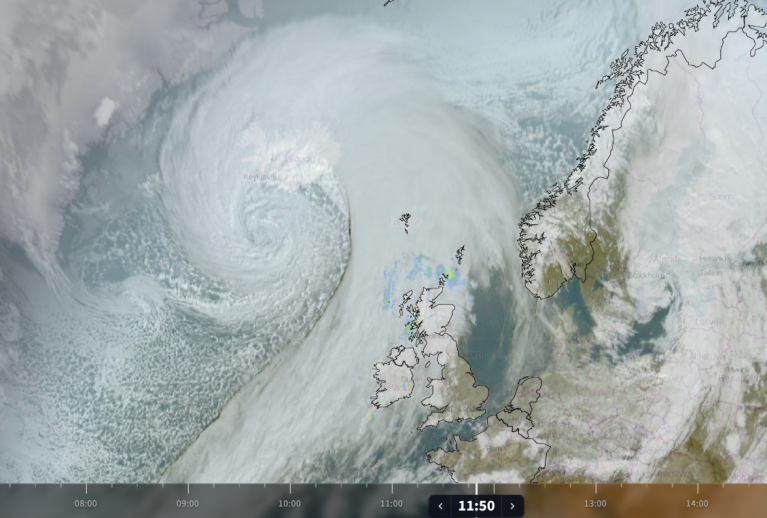
Jetstream and Storm Chandra late January 2026
A centrepiece of the winter was the stuck jet stream between mid-January and mid-February, when low pressure systems tracked over central and southern Britain and often stalled close to the west or south-west. Traditionally, weather types with mainly south-easterly winds have often been colder relative to the long-term average in the south than in the north, because south-easterly winds often blow off a relatively cold continent, and the track over the comparatively warm North Sea is shorter in the south. But this south-easterly type was different, because the south ended up getting relatively mild air from the Mediterranean for much of the time, while cold easterlies from eastern Europe and Scandinavia came closest to making it into the north of Britain. As a result, the enhanced north-south temperature gradient tended to persist during that spell as well.
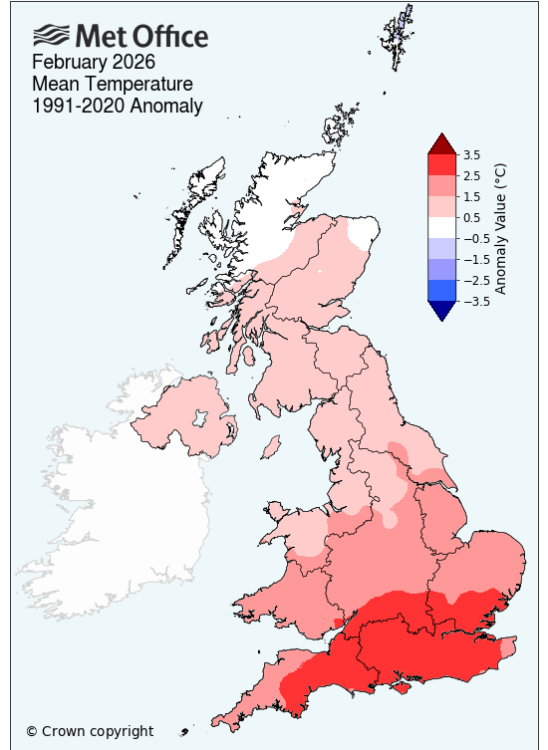
A mild February, especially in the south
February ended up as another very mild month for the southern half of Britain, as the weather pattern abruptly switched around midmonth and subsequently brought frequent warm southerly and south-westerly winds, though it again ended up with much closer to average temperatures in Scotland. In the Central England Temperature series, which is meant to roughly represent the English Midlands, the mean temperature for February crept above 7C. There have been a number of mild Februarys recently with 2019, 2020, 2022, 2023, 2024 and 2026 having all recorded 6.5C or higher, while the other two, 2021 and 2025, came in above 5C. For comparison, the 20th century average was close to 4C.
Some of these other Februarys also had a marked enhanced north-south temperature gradient. February 2024 was the warmest February on record for much of southern Britain, but again in Scotland temperatures were much closer to normal.
In most parts of Scotland and northern England, the warmest February was back in 1998. Unlike many recent Februarys, February 1998 ended up warmer relative to normal in the north. This was because it was dominated by high pressure to the south-east and had a broad "warm sector" bringing mild and moist south-westerlies to the north of Britain. Most of central, southern and eastern England and south Wales had a very dry and sunny month, which resulted in high daytime temperatures but also some cold nights under clear skies and light winds. In Scotland, Northern Ireland and over a large area of northern England and north Wales, it was generally much cloudier, and so the night time minimum temperatures were also high.
A warm start to March, but turning more changeable
Much of the UK has had an exceptionally warm start to March. In the long-running Central England Temperature series, which is meant to roughly represent the English Midlands, the highest mean temperature for March has been 9.2C back in 1957, and the first five days of March reached an average of 9.5C. Frequent southerly winds contributed to this result. The highest temperature of the year so far was 19.2C in Northolt, west London.
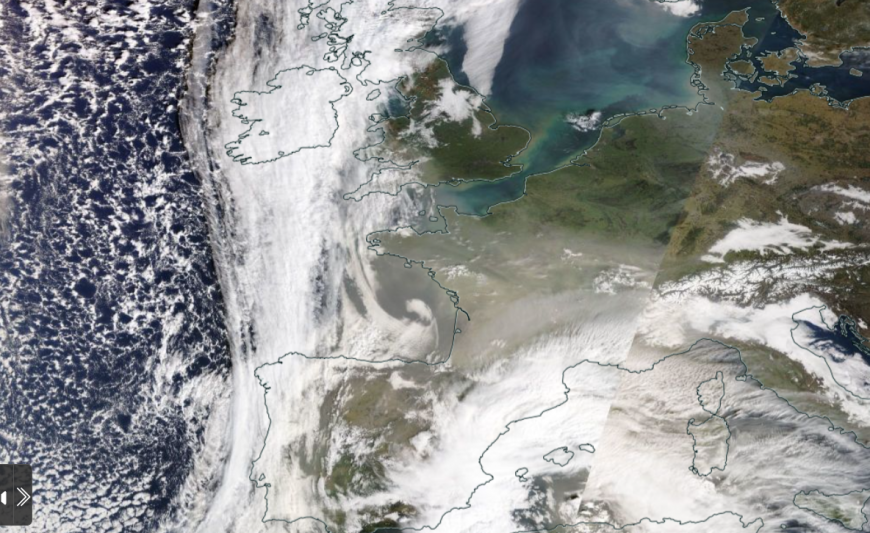
NASA WorldView 5th March 2026 Saharan dust plume
There has been a notable plume of Saharan dust in the last couple of days. In Lincoln, in the East Midlands, it was very noticeable on the Thursday, when there were clear blue skies and sunshine until around 3-4pm, and then the sky abruptly went very hazy, with much weaker sunshine and not much blue sky visible overhead, despite very little cloud cover. Much of eastern England was affected, particularly the south-east. This also helps to explain why, particularly in areas which had some rain afterwards, dust deposits have been widely noted on surfaces.
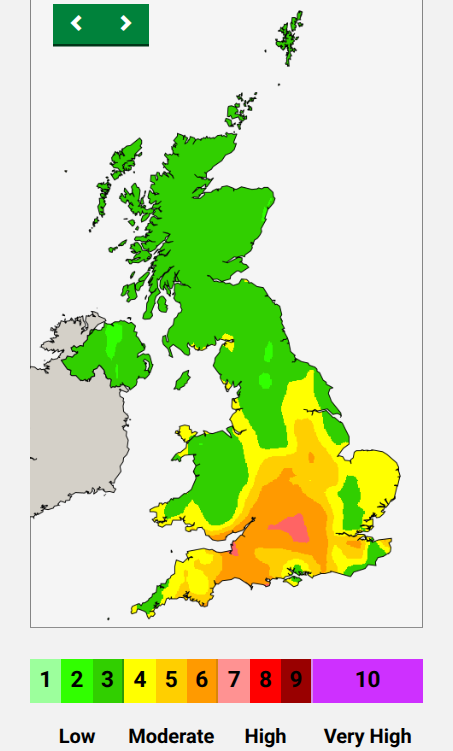
DEFRA air pollution forecast Sunday 8th March : Risk of Moderate to possibly locally High air pollution across England and parts of Wales during Sunday, with the continued potential influence of elevated Saharan dust. Otherwise Low air pollution.
It is currently looking unlikely that this level of warmth will be sustained going forward, as we look set to move into a more changeable westerly type as the coming week progresses, with temperatures falling closer to the long-term normal, though still mostly near or above normal. It is unlikely to bring a return to the stuck jet stream and persistently cloudy and wet weather that many of us had from mid-January to mid February, though. Low pressure systems will generally be tracking to the north of Britain and bringing a more normal mix of weather, with some rain bearing frontal systems moving through quickly followed by brighter weather with showers, and some dry sunny interludes as well, particularly in the south and east of Britain, when ridges of high pressure move through in between low pressure systems.
Loading recent activity...