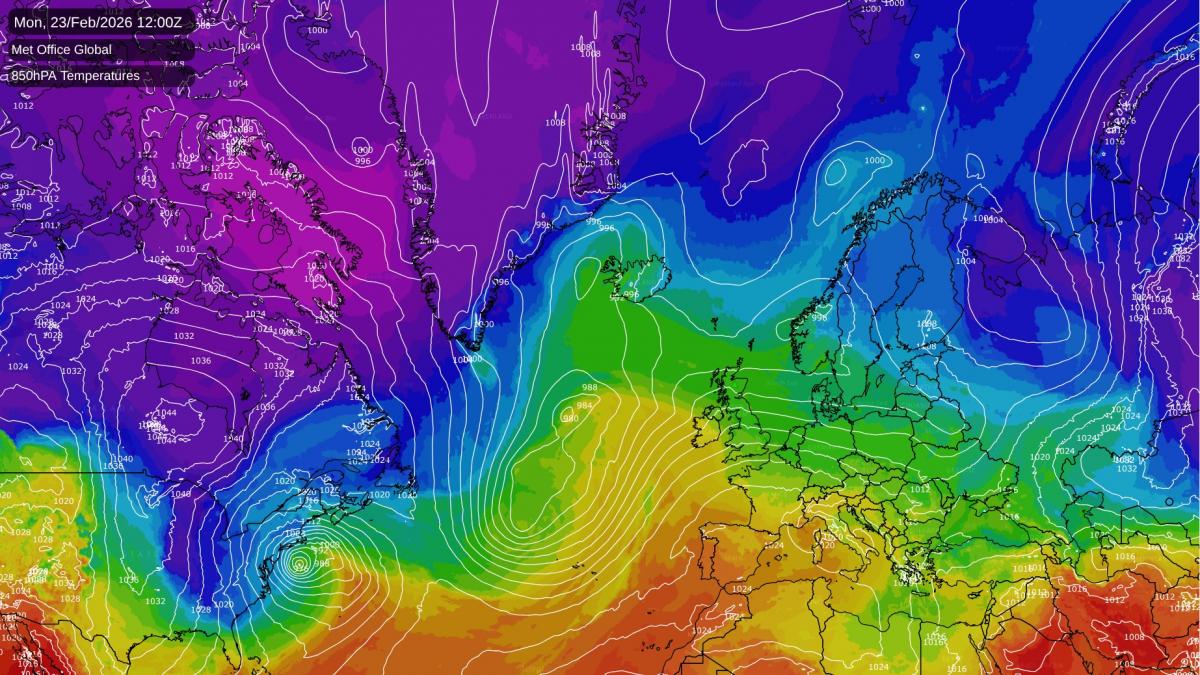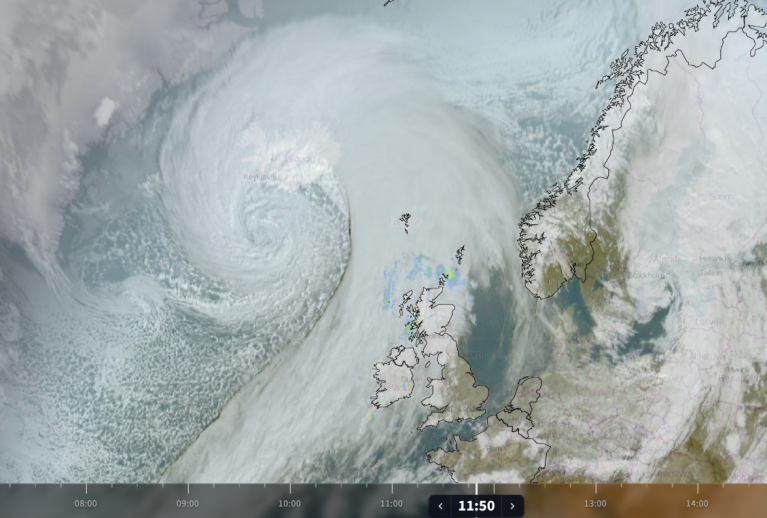



Britain's weather looks set to be predominantly mild for the foreseeable future, but we currently have a strong blocking high over northern Siberia which is keeping some very cold air locked in place over central parts of Eurasia. This high is looking set to remain in place for about a week from now, keeping the cold air locked in. There is also set to be a persistent warm southerly flow in between a strong Iceland/Greenland low and the Siberian high. This is set to send anomalously warm conditions high into the Arctic, especially during the back end of next week, producing another example of the "warm Arctic, cold continents" pattern.
Meanwhile, during the coming few days, there will be a persistent northerly airflow over the east of North America, bringing another substantial pool of cold air southwards through the region. A deep low is also forecast near the east coast of North America for Sunday and Monday, which will strengthen the northerly flow and generate strong winds near the coast, with potential for considerable snowfall at the boundary between the cold Arctic air and milder air circulating around the low.

The weather is set to turn milder in the eastern USA late next week, with a south-westerly setting in, but the long range outlook shows potential for the eastern USA to have another cold northerly outbreak as we head into early March. Meanwhile, the western half of North America will tend to stay on the mild side for the time of year, as has often been the case during the past two months. The cold air coming out of the east of Canada and North America will clash with warm seas over the North Atlantic Ocean and will help to power up the jet stream, keeping Britain locked in a predominantly mild and changeable regime.
The jet stream has been locked in place for several weeks across north-western Europe, taking a more southerly track than normal but not far south enough to allow substantial inputs of cold air into the British Isles. This has kept most parts of Britain dull and wet since the cold Arctic outbreak of early January receded. However, the current forecast is for the jet stream to push further north. This means that, although the weather will be quite changeable, most parts of Britain won't be as relentlessly cloudy or wet as has generally been the case during recent weeks. Some ridges of high pressure to the south and east may produce spells of dry quiet weather at times especially for southern and eastern parts of Britain.
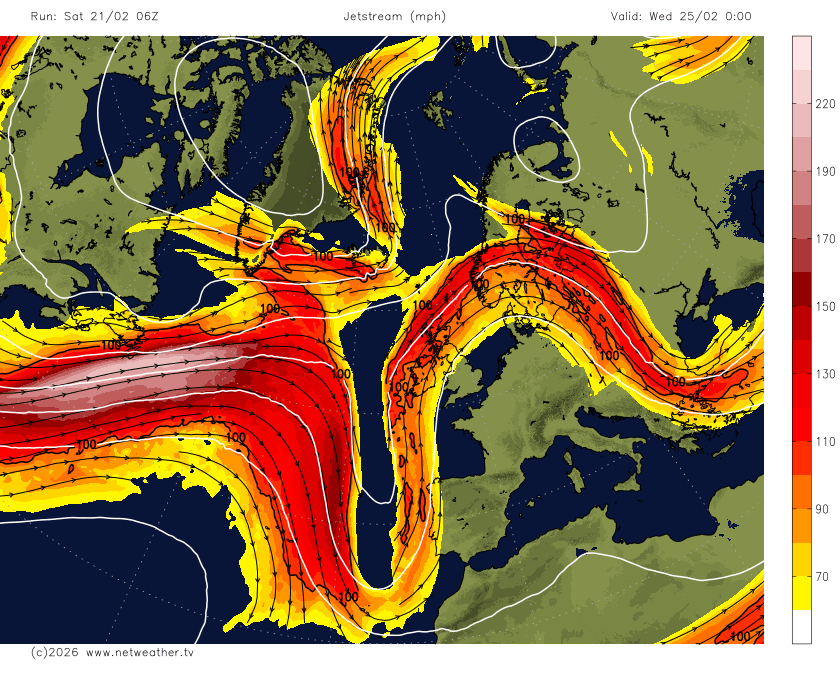
Winds will be predominantly south-westerly during the coming week or two, keeping temperatures mostly above the long-term seasonal average. As we head towards March, there is an increasing likelihood of us seeing some incursions of colder polar maritime air via a west to north-westerly airflow. These have potential to bring some wintry showers to northern Britain, particularly in Scotland, and some overnight frosts when ridges of high pressure build from the south afterwards. However, these are likely to be short lived, and there is no strong signal for any sort of prolonged cold weather - just occasional bouts of colder weather, especially in the north, separated by mild interludes. Temperatures into early March look set to stay above the long-term average overall, especially in the south of Britain.
February looks set to be a dull wet one for most of Britain, as many areas are currently running with considerably below average sunshine totals for 1-20 February, and although sunshine totals will pick up during the last week of February, this is unlikely to offset the shortage of sunshine earlier in the month for most of the country.
It also looks set to end up as another mild February temperature wise, especially in the south. For much of the country, the last colder than average February was in 2018, assisted by the notorious "Beast from the East" at the end of the month. February 2021 also had a notably cold easterly in the first half of the month, but a warm second half raised the mean temperature close to or rather above the long-term average. The other near average February for temperature in recent years was that of 2025, but the spell of easterlies in the middle part of February 2025 was not cold enough to deliver widespread snow. Those of 2019, 2020 and 2022-24 were generally very mild, though with contrasting weather patterns.
Loading recent activity...