


Updated 16th November - Covering 23rd November - 15th December 2026
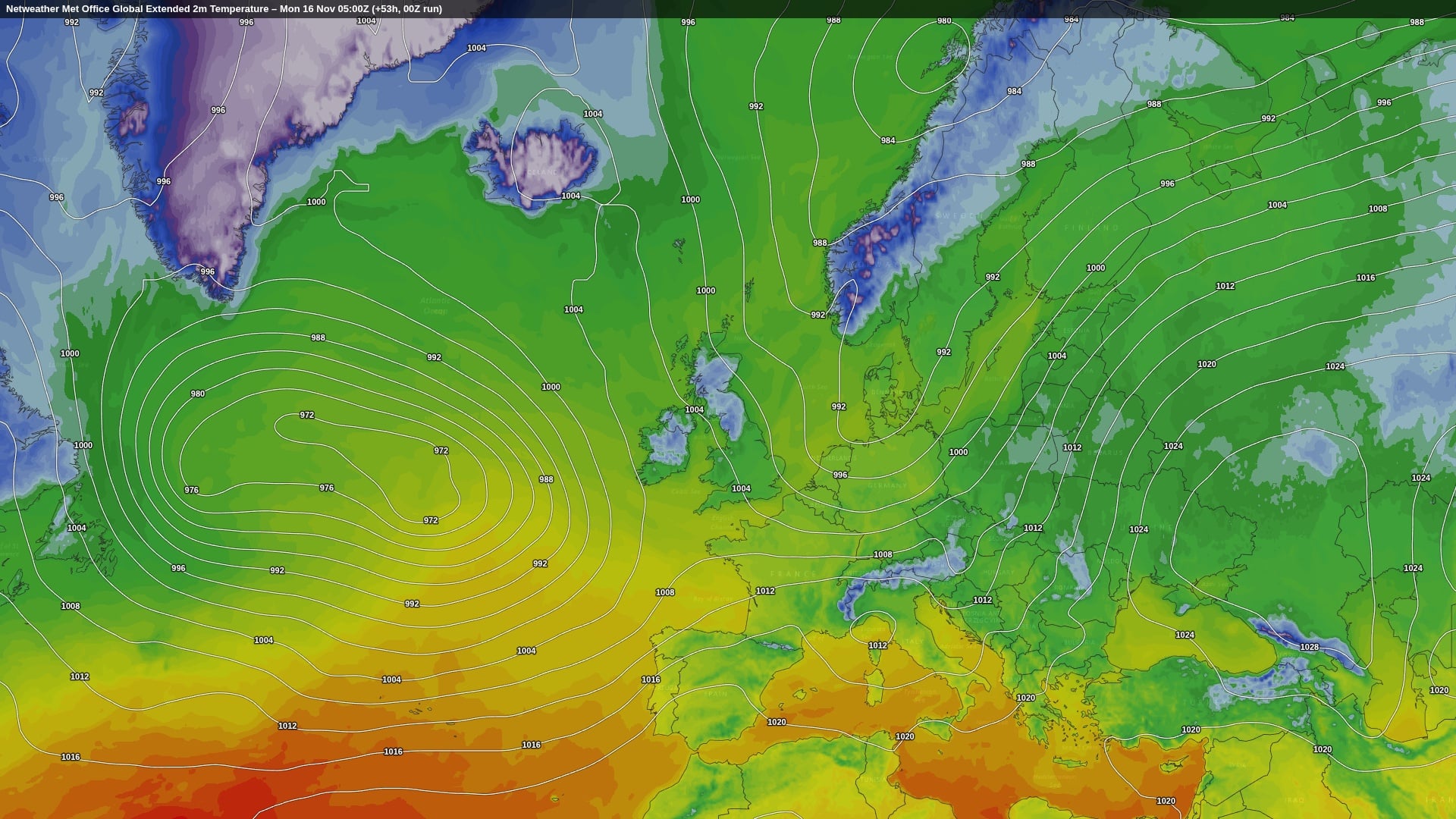
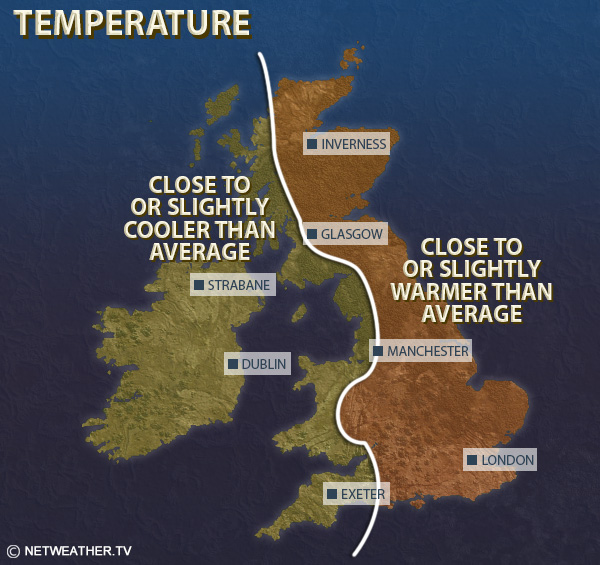
There is forecast to be an enhanced north-south temperature gradient during this period, due to cold air outbreaks heading into the north at times but struggling to penetrate into southern Britain. Relative to the 1991-2020 long-term average, temperatures are forecast to be 1 to 2C above normal in south Wales and southern England, but about 1C below normal in northern Scotland.
Precipitation totals are forecast to be well above normal over most of England and Wales, particularly towards the south-west, but it will probably be drier than normal in western and northern Scotland.
Sunshine totals are forecast to be above normal in western and northern Scotland, probably substantially so in north-west Scotland, but near or below normal in most other regions, with much of England and Wales seeing below-average sunshine overall.
This week looks set to see quite a common pattern for El Nino years (late November 1997 was similar for example), with some blocking highs to the north, particularly centred on Scandinavia, and a persistent trough in the eastern North Atlantic. Frontal systems will repeatedly push in from the west, but will often make slow progress into northern and eastern Britain, as they stall against the blocking high to the north-east.
There may be some brief colder, quieter interludes with easterly or south-easterly winds via the Scandinavian high, but it looks unlikely that they will pull in cold enough air to give widespread snow at low levels. There may be hill snow at times, particularly in Scotland and northern England, when frontal systems push in and collide with relatively cold air coming in from the east. Many areas of the UK tend to be predominantly cloudy in this type of setup, with low cloud and fog during quieter spells, and cloud and rain when frontal systems move through. The south-west is likely to be wettest overall, but not necessarily particularly cloudy, as this region will also be most prone to seeing brighter, showery weather come in behind the rain belts.
Mean temperatures are forecast to be 1 to 2C above the 1991-2020 long-term normal in some western and southern areas of the UK, but up to 1C below in Scotland.
It is forecast to be drier than normal in northern and eastern Scotland, but wetter than normal in most other regions, particularly south Wales and south-west England.
Sunshine totals are forecast to be below normal in most regions, but they are likely to be above normal in parts of northern Scotland, and near to slightly above normal in south-western Britain despite well above-average rainfall.
High pressure will remain quite extensive to the north of Britain, and looks likely to extend towards Greenland to a greater extent than during Week 2. Consequently, while the week is expected to start off relatively mild and wet for most, there is a chance of some colder drier weather, with wintry showers near north and east-facing coasts, developing for a time, particularly in the north of Britain. This has potential to bring fairly widespread snowfall, especially in the north, when frontal systems push in from the south-west and collide with the cold air mass, though any snow will probably be short lived at low levels. However, there is a substantial chance of southern Britain staying in relatively mild air throughout the week.
The week is forecast to be milder than average in the south, but probably colder than average overall in Scotland and northern England. It is expected to be wetter than average in most parts of England and Wales, particularly the south, but drier than average in northern and western Scotland. Sunshine will probably be above normal in most parts of Scotland, but below normal over most of England and Wales and Northern Ireland.
There remains quite a strong signal for high latitude blocking during this period, especially around Greenland, which may be related to the recent exceptionally early sudden stratospheric warming event. At the same time, low pressure systems are forecast to frequently track close to the British Isles, but further south than is typical for the time of year. As a result, we can most likely expect a mix of mild and cold spells, with mild and wet weather tending to be most prevalent in western and southern Britain, while Scotland and northern England will be most prone to seeing colder drier weather head in, most likely from the north rather than the east, potentially accompanied by wintry showers near north and east-facing coasts. Substantial snowfall is most probable over high ground in the north, but short-lived snowfalls at low levels are also a possibility. Sunshine amounts are likely to increase in Scotland, Northern Ireland and northern England due to the colder outbreaks tending to arrive via northerly, rather than easterly, winds, which tends to result in clearer conditions. However, it is likely to be cloudier and wetter than average in southern Britain.
Monthly weather forecast
The month ahead forecast is written by Ian Simpson and is updated every Monday.